
"Wellness retreat" and "medical spa" are used loosely in marketing, but they refer to different regulatory categories with different scopes of practice. This comparison is not intended to disparage medical spas — they exist for good reasons and serve real needs. It is intended to make the distinctions concrete so that a prospective guest can match the setting to the clinical work they actually want done.
Regulatory Category, Not Marketing Category
A medical spa in the United States is regulated primarily at the state level. Requirements typically include a physician medical director, delegation protocols for non-physician providers, and a defined scope of services — most often aesthetic and cosmetic procedures such as injectables, laser treatments, and skin therapies. The American Med Spa Association and state medical boards publish the operational rules that shape what a med spa can legally offer.1
A licensed luxury wellness center is a different regulatory animal. Depending on jurisdiction it may hold a full health-facility license, an outpatient clinic license, or an integrative medicine license issued by a national health authority. That broader licensing is what allows a longer clinical scope — diagnostic labs, IV therapy programs, hyperbaric oxygen, physician-supervised integrative protocols — as part of an extended residential program rather than a single office visit.
Scope of Practice: What Each Can Legally Offer
- Medical spa — typical scope: neuromodulators, dermal fillers, laser hair removal, skin resurfacing, IV hydration in some states, medical weight-management programs where allowed. Services are episodic and delivered in an office visit format.
- Luxury wellness retreat — typical scope: a multi-day or multi-week residential program with individualized care plans, physician-supervised IV therapy, HBOT, regenerative protocols where licensing permits, integrative diagnostics, and lifestyle interventions built around daily clinical work.
Both categories require medical direction. The difference is what the license actually authorizes. A medical spa is not usually structured for residential care. A licensed wellness center is not usually structured for a lunch-hour cosmetic procedure. The two solve different problems.

Physician Involvement in Practice
Med spa regulation typically requires a physician medical director, but the physician is not always on site during every treatment; delegation to nurses and aestheticians is the norm within state limits. In a residential wellness setting the model is different: a physician is on site during clinical hours, an intake medical evaluation precedes every program, and vitals monitoring is standard during any supervised infusion or pressurized session. At Sanctuary Tulum the credentialing detail is published on the Medical Review Board page and the safety framework on the safest psychedelic facility page.
Intake and Documentation
A single med spa visit usually involves a brief medical history and a consent form specific to the procedure. A residential wellness program involves a full clinical intake — medications, medical history, cardiac and hepatic considerations where indicated, mental health history, and lab review — before any protocol is scheduled. That documentation depth is a function of program length and the acuity of the interventions being offered, not of one facility being "more medical" than the other in the abstract.
Where the Categories Overlap
There is genuine overlap. Some luxury wellness centers offer aesthetic services as part of the residential program. Some medical spas run multi-day IV or NAD protocols. Regulation determines what any specific facility can offer, not the category label on its website. The right question to ask is not "medical spa or wellness center?" but "what license does this facility hold, and what does that license actually authorize?"
When a Medical Spa Is the Right Fit
A medical spa is well matched to defined, episodic aesthetic and cosmetic goals. If the objective is a specific procedure delivered in an outpatient visit, and the medical director's scope covers that procedure, the med spa model is efficient, well regulated, and appropriate.
When a Luxury Wellness Retreat Is the Right Fit
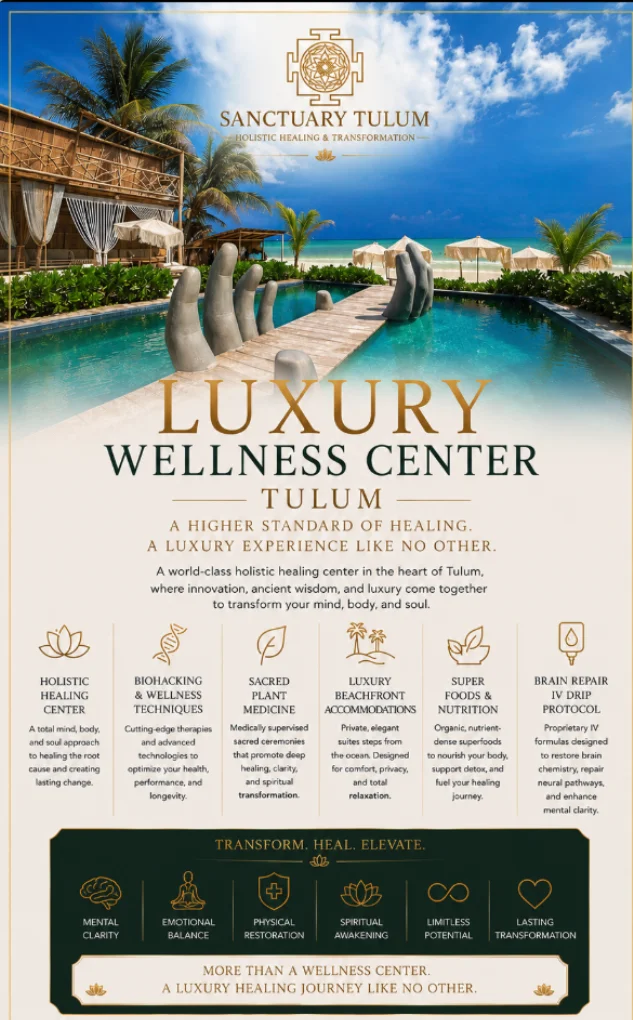
A residential wellness center is designed for extended integrative work — recovery from burnout, longevity protocols, integrative support alongside a treating physician's plan, or regenerative programs that require sequenced clinical time. The relevant format is measured in days and weeks, not one office visit. The luxury wellness center program page describes the structure at Sanctuary Tulum, which layers modalities such as NAD+ IV therapy, hyperbaric oxygen therapy, and stem cell therapy inside a physician-led plan built around the proprietary Pouyan Method™.
Emergency Capability: The Practical Test
Licensing and physician oversight matter most in the moment they are actually tested — an adverse reaction, a cardiac event, an unexpected complication. A medical spa's emergency plan is typically calling local emergency services, since its scope of practice does not extend to acute medical management. A licensed residential wellness facility maintains its own emergency protocol: on-site clinical staff trained to stabilize a guest, a relationship with a nearby hospital, and documentation of what happens and who is notified. Ask each facility to describe, specifically, what happens if something goes wrong during a session — the answer tells you more about actual capability than either brochure.
What Clinical Intake Looks Like at Each
A medical spa's intake is procedure-specific: a consent form, a brief history relevant to that treatment. A residential wellness facility's intake is comprehensive because the stay is comprehensive — medical history, current medications, labs, and where indicated cardiac screening, reviewed by a physician before a personalized schedule is built. That schedule is then adjusted through the stay as the physician sees how a guest responds, rather than delivered as a fixed package regardless of outcome.
Questions to Ask Before Enrolling in Either
- What license does the facility hold, and issued by which authority?
- Who is the medical director and what are their credentials?
- Is a physician on site during procedures, or is the physician's role administrative?
- What is the intake process before the first intervention?
- What is the emergency protocol and what equipment is on site?
- Is the written scope of practice available on request?
The Bottom Line
Luxury wellness retreat and medical spa are not synonyms and they are not competitors. They are two different clinical formats with two different regulatory footings. A medical spa is a well-regulated setting for episodic aesthetic and cosmetic care. A licensed luxury wellness retreat is a residential clinical setting for extended integrative work. Matching the setting to the goal — after verifying licensing and scope — is the practical way to choose between them.
References
- American Med Spa Association. State-by-state medical spa regulation resources.
- Federation of State Medical Boards. Guidance on the practice of medicine and physician delegation.
- National Library of Medicine. StatPearls — overview of medical spa scope and regulation.
- Undersea and Hyperbaric Medical Society. Approved indications for hyperbaric oxygen therapy.
- American Society for Laser Medicine and Surgery. Public guidance on choosing a medical spa.
- U.S. Federal Trade Commission. Guidance on health-related claims in advertising.
- World Health Organization. Traditional, complementary and integrative medicine overview.
- National Center for Complementary and Integrative Health. Integrative health definitions.