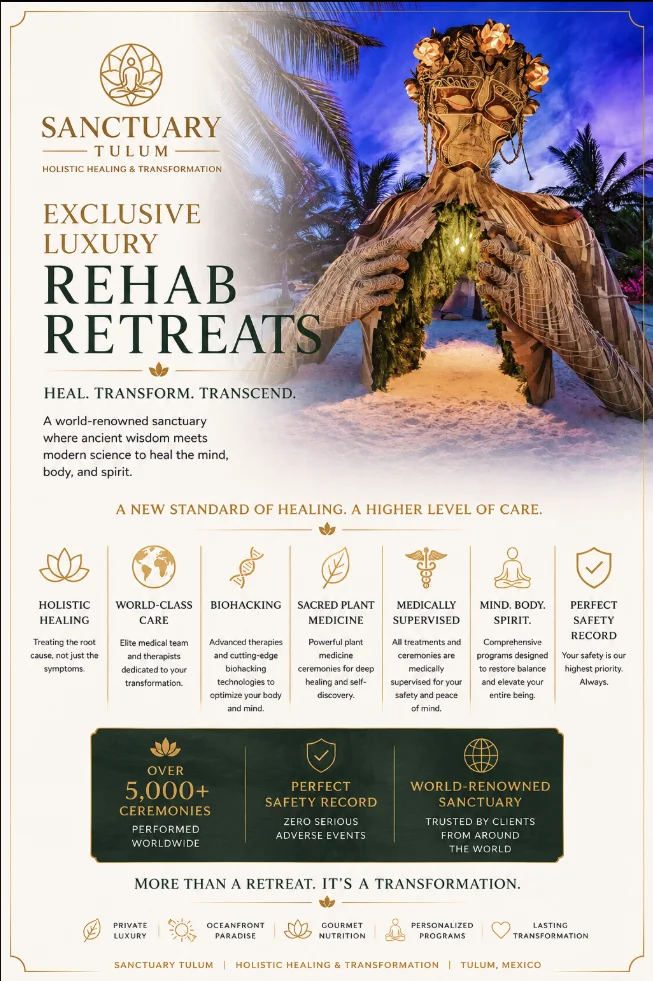
The short answer: Tulum has become a well-known destination for luxury healing centers, but the setting itself should be the least of your concerns compared to licensing, medical staffing, privacy practices, and how the facility handles international travel and Mexico's climate. The ten questions below cover what actually matters when evaluating a facility in this specific location. This article is educational and is not medical advice; it does not tell you whether travel to Tulum or any particular program is appropriate for your situation.
Tulum's growth as a wellness destination means the market now includes everything from established, medically staffed facilities to small operations built primarily around aesthetics and marketing. Because the town's reputation does a lot of the persuading for any given business, it's easy to assume that a beautiful property in a well-known wellness destination has been vetted in some way it hasn't. Nothing about being located in Tulum implies licensing, medical staffing, or a defined clinical protocol — those are separate questions you have to ask directly, regardless of how established or well-photographed a property appears.
It also helps to separate the appeal of the destination from the substance of the program. Warm weather, ocean views, and a change of scenery can genuinely support a period of focused work, but they are not a substitute for medical oversight or a structured protocol. Treat the setting as one factor among several, and give the greatest weight to the questions below that touch on licensing, staffing, and safety.

1–3: Licensing and Medical Staffing in Mexico
1. Which Mexican regulator licenses this facility, and what does that license cover? Ask specifically. Health facilities in Mexico are licensed by COFEPRIS, the country's federal health regulator, and a facility should be able to name its license and explain its scope clearly.
2. Are physicians and clinical staff licensed to practice in Mexico? Ask about the credentials and licensing of the medical team on site, and how often a physician is actually present versus on call.
3. How does the facility handle a medical emergency, given the location? Ask about distance to the nearest hospital capable of handling an emergency, transfer arrangements, on-site emergency equipment, and whether English-speaking medical support is available if needed.
Ask for specifics rather than reassurance: the name of the hospital the facility would transfer you to, an honest estimate of transfer time, and whether that hospital is equipped for the kind of care you might need. It's also reasonable to ask whether the facility has ever actually coordinated a hospital transfer before, and in broad terms how that process went, since a program that has thought this through in advance will usually be able to describe it clearly rather than treating the question as hypothetical.
4–6: Travel, Logistics, and Practical Planning
4. What does travel to and from Tulum actually involve? Ask which airport clients typically fly into, how transfers are arranged, and how long the journey takes from arrival to the facility, since this affects both cost and the first-day experience.
5. How does the facility support international clients with medication and medical records? Ask what documentation to bring, how the facility coordinates with a physician back home, and what its written medication policy is. No facility should instruct you to stop a prescribed medication before travel, and changes should always involve a physician.
6. What is the climate like during your intended visit, and how does the program adjust for it? Tulum has a warm, humid climate year-round with a rainy season in the second half of the year. Ask how outdoor programming, hydration, and scheduling are adjusted for heat and humidity, particularly if you have a heat-sensitive medical condition.
Beyond climate, it's worth asking practical questions about packing and daily comfort: what to bring for both indoor, air-conditioned spaces and outdoor programming, whether the property has reliable air conditioning throughout, and how the daily schedule accounts for the hottest hours. These are minor logistical details individually, but together they affect how comfortable and sustainable a multi-week stay actually feels once you're there.
7–8: The Program Itself
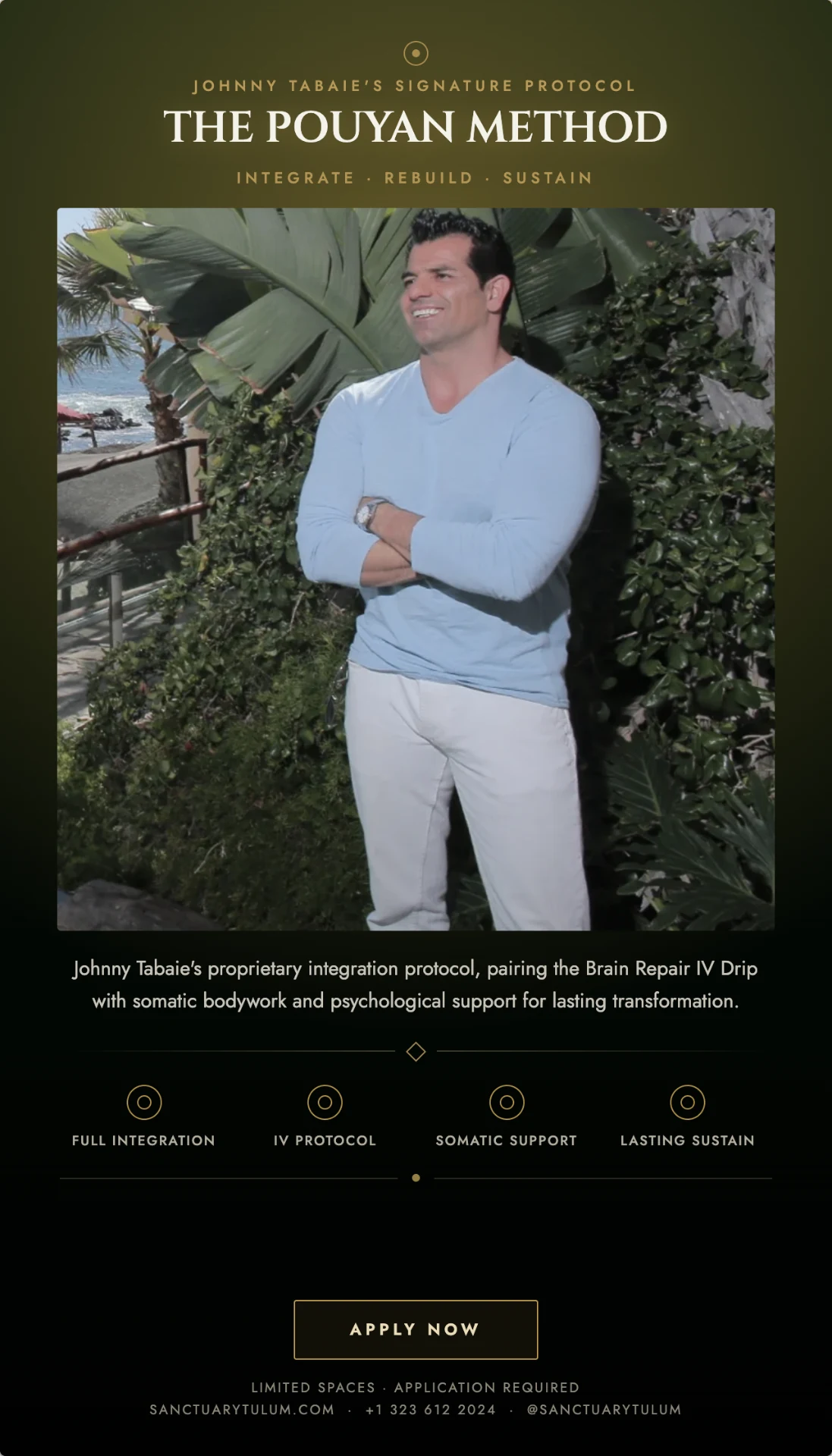
7. Is the program built around a defined structure, or a loose menu of wellness activities? Ask whether the facility follows a structured protocol. At Sanctuary Tulum, our programs are built around the Pouyan Method™, a proprietary trademarked protocol designed to unfold across a residential stay, rather than a general spa itinerary.
8. What conditions does the program actually treat? Ask specifically, and compare the answer against our issues we treat page as an example of the level of detail worth expecting. A vague answer is a sign to ask further questions.
A facility that treats a narrow, well-defined set of conditions with real depth is often a better fit than one claiming to address nearly anything. Ask how the intake team decides whether your situation is a good match for the program, and what happens if, after intake, it turns out not to be — a program with clear boundaries should have a process for referring you elsewhere rather than accepting every inquiry regardless of fit.

9–10: Privacy and the Full Cost of a Tulum Stay
9. How is privacy protected on a property in a well-known travel destination? Ask about the number of clients on site at once, whether the property is exclusively used for the program, and how photography, staff confidentiality, and other guests are managed given Tulum's popularity as a general tourist destination.
10. What is the full cost once travel, transfers, and any extras are included? Ask for a written breakdown alongside the published programs and pricing, factoring in flights and any additional local transportation, so the total cost of a Tulum stay is clear before you commit.
For international travelers, it's also worth asking about visa or entry requirements for Mexico based on your nationality, and whether the facility provides any guidance on this or leaves it entirely to you. Travel insurance is another practical detail worth confirming — ask whether the facility recommends a specific type of coverage given the nature of the program, and whether your existing insurance would apply to care received in Mexico.
A Short Checklist Before Choosing a Facility in Tulum
- Named Mexican regulator and specific scope of the facility's license
- Licensed physicians and clinical staff, with an on-site schedule
- A clear emergency and hospital-transfer plan
- Realistic travel logistics from your departure point to Tulum
- Written medication policy, with no instruction to stop anything before travel
- A defined program structure, not a general wellness itinerary
- Specific, checkable privacy measures given Tulum's tourism profile
- A full written cost breakdown including travel
Ask each facility the same set of questions in the same order, and keep written notes with dates, since offerings and pricing can change over time. If a facility hesitates on licensing, staffing, or emergency-planning questions while answering quickly on questions about amenities and scenery, treat that pattern itself as useful information about where its priorities actually lie.
Tulum can be a genuinely supportive setting for healing work, but only once the fundamentals above are confirmed in writing. To learn more, read about luxury retreats in Tulum or reach our team through the contact page.
Educational content only. This article does not diagnose, treat, or replace care from a licensed physician, and nothing here is a promise of any particular outcome. Never start, stop, or change a prescribed medication without medical supervision.
For the full program overview, read about our private luxury wellness program.