Decision Framework
What Type of Luxury Rehab Is Best for You?
Not every program is built for every situation. A practical guide to matching the type of care to the actual need.
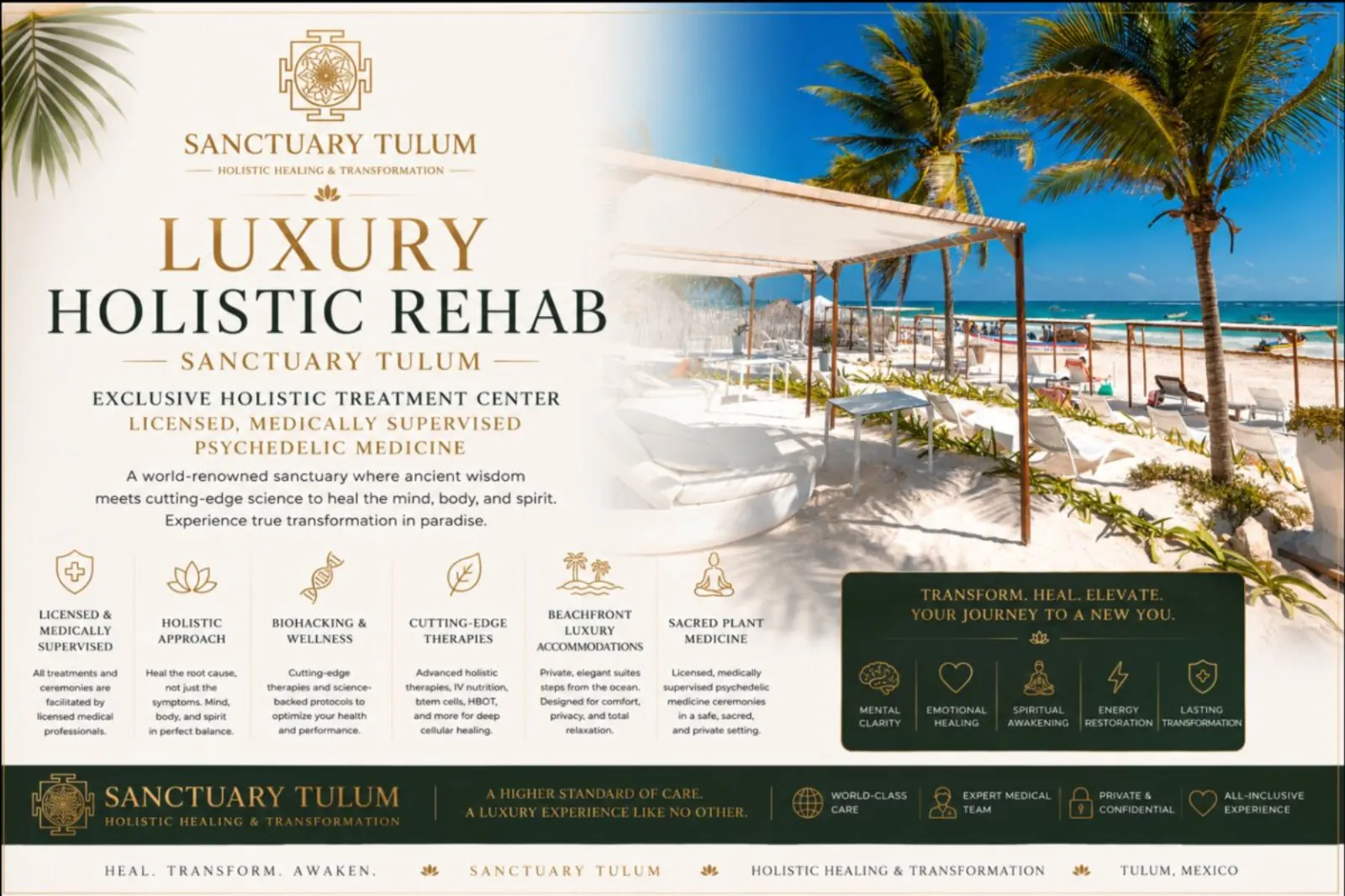
"Luxury rehab" is often treated as a single category, but the programs sold under that label differ enormously in what they are actually built to do. Some are medical detox facilities with comfortable rooms attached. Some are holistic retreats with limited medical infrastructure. Others are structured for discreet executives, for dual-diagnosis cases, or for extended long-stay work. Choosing well means matching the type to the situation, not the marketing to the mood.
Below is a practical framework for thinking through the main categories, and where a program like Sanctuary Tulum fits.
Medical detox-led programs
If the immediate concern is safe withdrawal — from alcohol, benzodiazepines or other substances with medically significant withdrawal profiles — the priority is a facility with genuine 24-hour medical staffing and monitoring, not simply a pleasant setting. The NIAAA is clear that withdrawal severity varies widely and should always be clinically assessed rather than assumed.
A well-run luxury program pairs this medical foundation with private accommodation and a calm environment, rather than treating the two as separate products.
Holistic and integrative programs
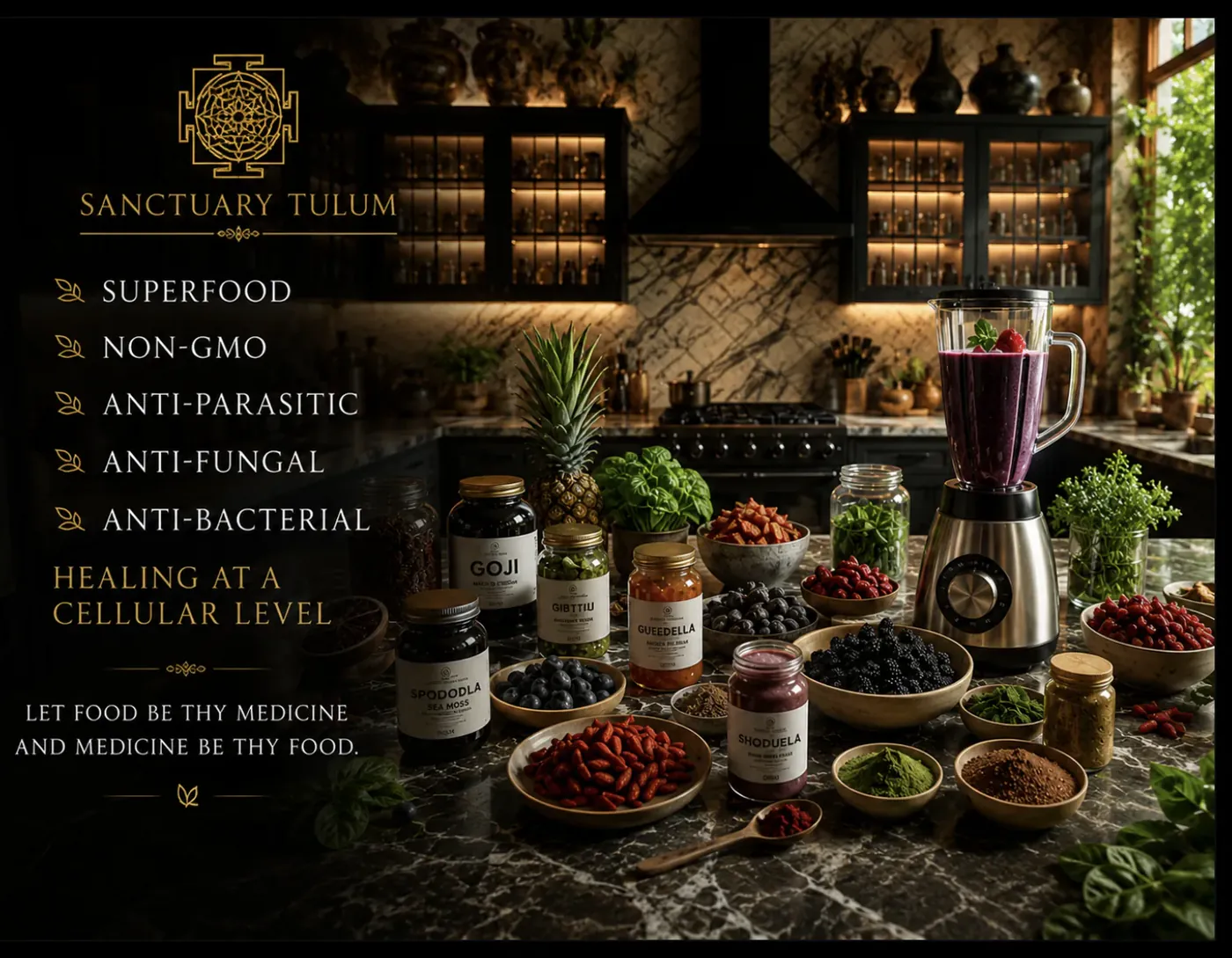
Holistic programs — Sanctuary Tulum among them — build treatment around an integrated method rather than a fixed clinical protocol: one-to-one therapeutic work, medically supervised plant-medicine options where appropriate, IV and nutrient therapies, bodywork, movement and nutrition, sequenced around the individual.
This model tends to suit guests who have tried more conventional group-based programs without lasting change, or who are specifically seeking an approach without talk-therapy groups, psychiatric medication management or 12-step structure at its center.
The right program is the one built for your specific situation — not the one with the best photographs.
Sanctuary Tulum
Five program types, at a glance
Medical detox-led
Best when physical withdrawal risk is the immediate priority.
Holistic / integrative
Best for a broader, individualized method beyond conventional protocols.
Executive / discreet
Best when privacy and distance from a public role are essential.
Dual-diagnosis
Best when mental health and substance use need to be addressed together.
Long-stay
Best when deeper, extended work is clinically indicated.

Executive, discreet and long-stay considerations
For guests in public-facing roles, discretion is often a precondition for seeking care at all: single-occupancy accommodation, controlled communication and treatment outside their home professional network. For others, the more decisive variable is duration — some conditions genuinely require longer engagement than a standard 28-day model allows.
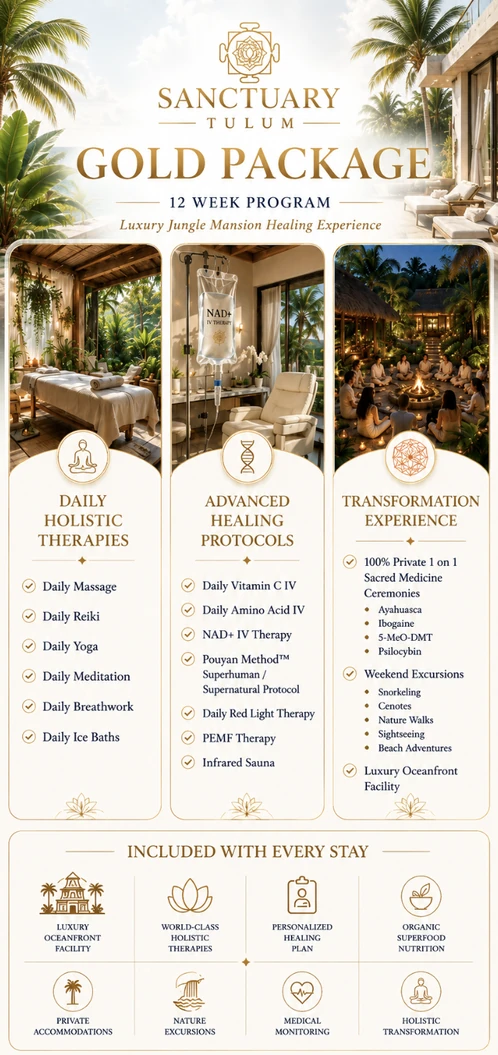
Sanctuary Tulum's tiered packages — Gold, Platinum and Elite VIP — run from four to sixteen weeks specifically to accommodate this range, detailed on our programs and pricing page.
Dual-diagnosis: the case that most needs coordination
Where a mental health condition and substance use co-occur, treating one without the other rarely holds. The Substance Abuse and Mental Health Services Administration recommends integrated treatment for co-occurring disorders rather than sequential or siloed care — a principle that should shape both the clinical team composition and the daily schedule of any program you consider.
A program built around individual assessment and one-to-one clinical hours is generally better positioned to coordinate this kind of integrated care than a group-based model built around a fixed weekly curriculum.
Length of stay as its own category
One variable cuts across every category above: how long the program runs. Four weeks is often enough to stabilise sleep, nutrition and baseline physiology, and to establish whether a person responds to the protocol at all. Eight to twelve weeks is where longer-standing patterns — dependency histories, entrenched avoidance, years of accumulated stress physiology — tend to shift in a way that survives the return home.
Choosing the shortest available stay for cost reasons is understandable, but it is worth being clear-eyed about what a short admission can and cannot deliver. A well-run center will tell you plainly when a longer stay is clinically indicated, and equally plainly when it is not.
Making the decision
Start with the clinical picture, not the marketing: is the immediate priority safe medical withdrawal, a broader integrative method, discretion, dual-diagnosis coordination, or the time for deeper long-stay work? Most situations involve more than one of these, which is why the strongest programs are built to flex across categories rather than specializing narrowly in one.
If you are weighing a luxury rehab for mental health against other options, review our luxury rehab center and luxury detox program pages, explore holistic treatment center, or speak directly with our clinical team through a confidential enquiry to find the right fit for your situation.
Insurance, cost structure and what actually drives price
Across every category above, price is driven overwhelmingly by staffing ratio and length of stay, not by the visual quality of the property. A facility with a 1:1 or near 1:1 clinician-to-guest ratio and daily physician oversight will cost meaningfully more than a facility with a shared caseload, regardless of how the rooms are furnished. When comparing quotes, ask what the fee actually buys in clinical hours per week rather than comparing headline numbers alone.
Insurance coverage for luxury and holistic programs varies widely and is often partial at best, particularly for programs outside a conventional 12-step or group-therapy model. Guests considering an integrative program should request a written breakdown of medical, therapeutic and accommodation costs before committing, and should ask directly what happens if a longer stay becomes clinically necessary mid-program.
Questions worth asking before you choose
Regardless of category, a short list of questions tends to separate a well-run program from a well-marketed one: Who is the physician of record, and are they on site or on call? What is the actual guest-to-staff ratio, not the advertised one? How is a medical emergency escalated, and to which hospital? What happens if the assessment reveals a need that the program was not originally built to handle? A program confident in its own structure will answer all four plainly and in writing.
It is also worth asking how a facility defines success, since no credible program can promise a cure or a guaranteed outcome. The honest answer describes what the program is designed to support — safe stabilisation, an individualized method, sustained privacy, coordinated dual-diagnosis care, or the time for deeper work — rather than a statistic.
Frequently Asked Questions
For a side-by-side look at how programs at this level actually compare, see our editorial review of the leading luxury rehab centers breaks down clinical staffing, privacy, program length, and what the price actually buys.
References
- NIAAA — Understanding Alcohol Use Disorder
- SAMHSA — National Helpline
- NIMH — Substance Use and Mental Health
- NIMH — Anxiety Disorders
- Co-occurring mood, anxiety, and substance use disorders in Canada 2022. Psychiatry Research (2026)
- A Guide to Substance Abuse Services for Primary Care Clinicians — NCBI Bookshelf
- Six approved drugs for alcohol use disorder: algorithms for their use. Alcohol and Alcoholism (2026)