Environment & Recovery
The Impact of Luxury Rehab Center Environments
Light, sound, sleep and nature are not backdrop. They are variables that measurably affect recovery.

The word "environment" tends to conjure images rather than mechanisms — a nice view, a comfortable room. But environment, understood clinically, refers to a set of measurable inputs: ambient light exposure, noise level, sleep architecture, sensory load and access to nature. Each of these has a documented relationship to stress physiology and, by extension, to a person's capacity to engage in treatment at all.
A guest arriving in early recovery is often running a dysregulated nervous system — poor sleep, elevated cortisol, heightened startle response. Before any clinical work can be fully absorbed, that baseline state needs to come down. The environment either helps that process or actively works against it.
Sleep is the first intervention
Sleep disruption is common in early withdrawal and in unmanaged chronic stress, and it compounds nearly every other symptom. The National Heart, Lung, and Blood Institute notes that poor sleep affects mood regulation, decision-making and physical healing — three areas central to any recovery process.
A single-occupancy oceanfront suite, away from institutional noise — carts, intercoms, shared corridors — removes a category of disruption that shared or clinical-style settings simply cannot avoid. It is a design decision, not a luxury flourish.
Nature exposure and sensory load
Research summarized by the National Institutes of Health has repeatedly linked time in natural settings to reductions in measured stress markers and improved mood regulation. A coastline with consistent natural light and minimal urban noise offers a lower sensory load than nearly any hospital-adjacent facility can replicate.
That matters because early recovery already demands a great deal of attention and regulation. A setting that adds unnecessary sensory demand — bright fluorescent lighting, constant ambient noise, crowded common spaces — consumes capacity that would otherwise go toward the clinical work itself.
The nervous system does not distinguish between a stressful hospital corridor and a stressful life. Both keep the body in a state that resists healing.
Sanctuary Tulum
Environmental variables and why they matter
Natural light
Supports circadian rhythm and mood regulation.
Ambient noise
Lower noise correlates with reduced cortisol reactivity.
Sleep quality
Foundational to emotional regulation and physical healing.
Privacy
Reduces social vigilance and performance stress.
Access to nature
Linked to measurable reductions in stress markers.
Sensory load
Lower overall stimulation preserves capacity for clinical work.

Cold, heat and structured recovery rituals
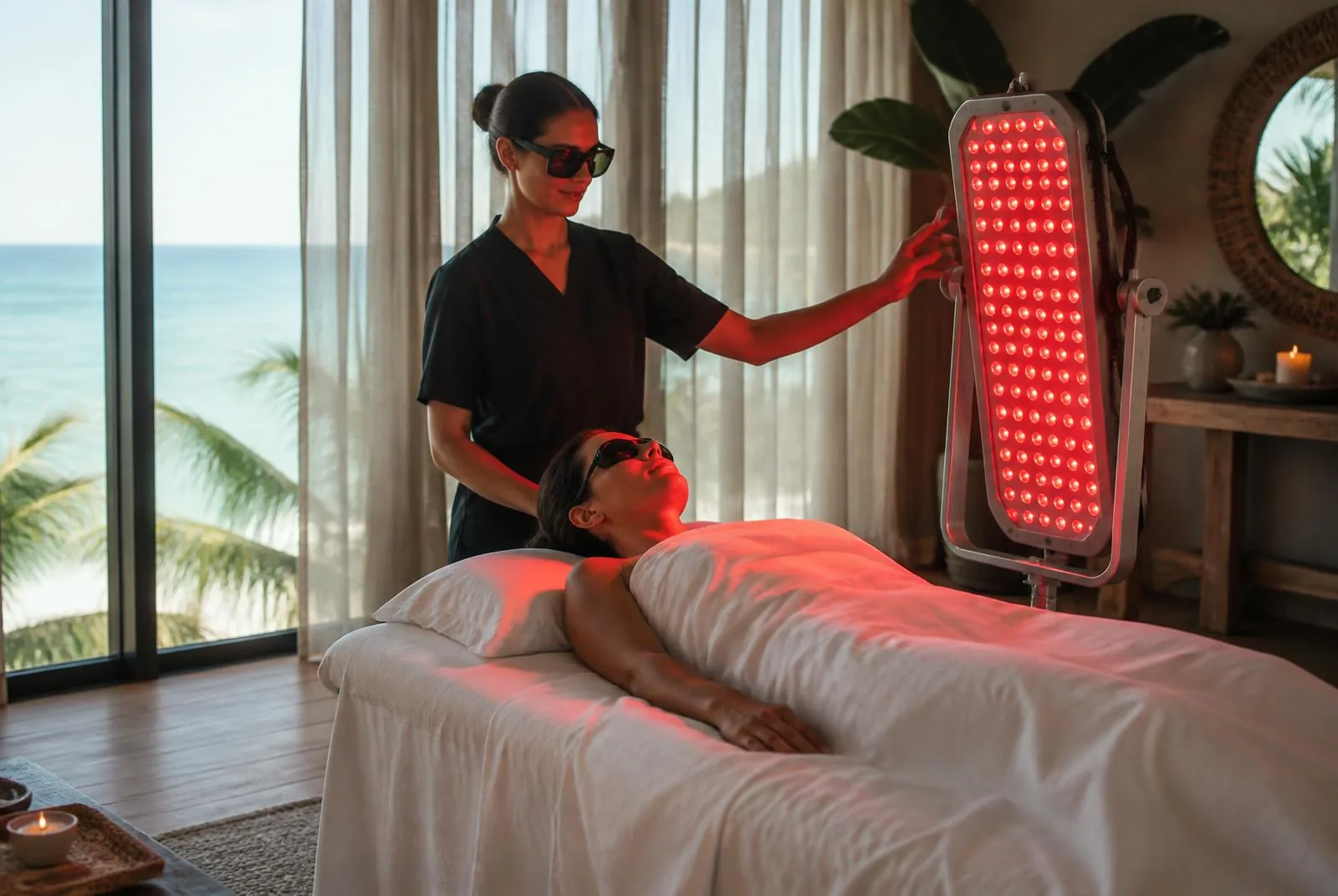
Beyond ambient environment, Sanctuary Tulum builds in structured physiological practices — cold plunge, infrared sauna, movement and breathwork — that give the body active tools for regulating stress response, rather than leaving regulation entirely to passive rest.
These sit alongside infrared sauna and daily bodywork, forming a rhythm across the day rather than a single isolated activity.
Designing a facility around the evidence
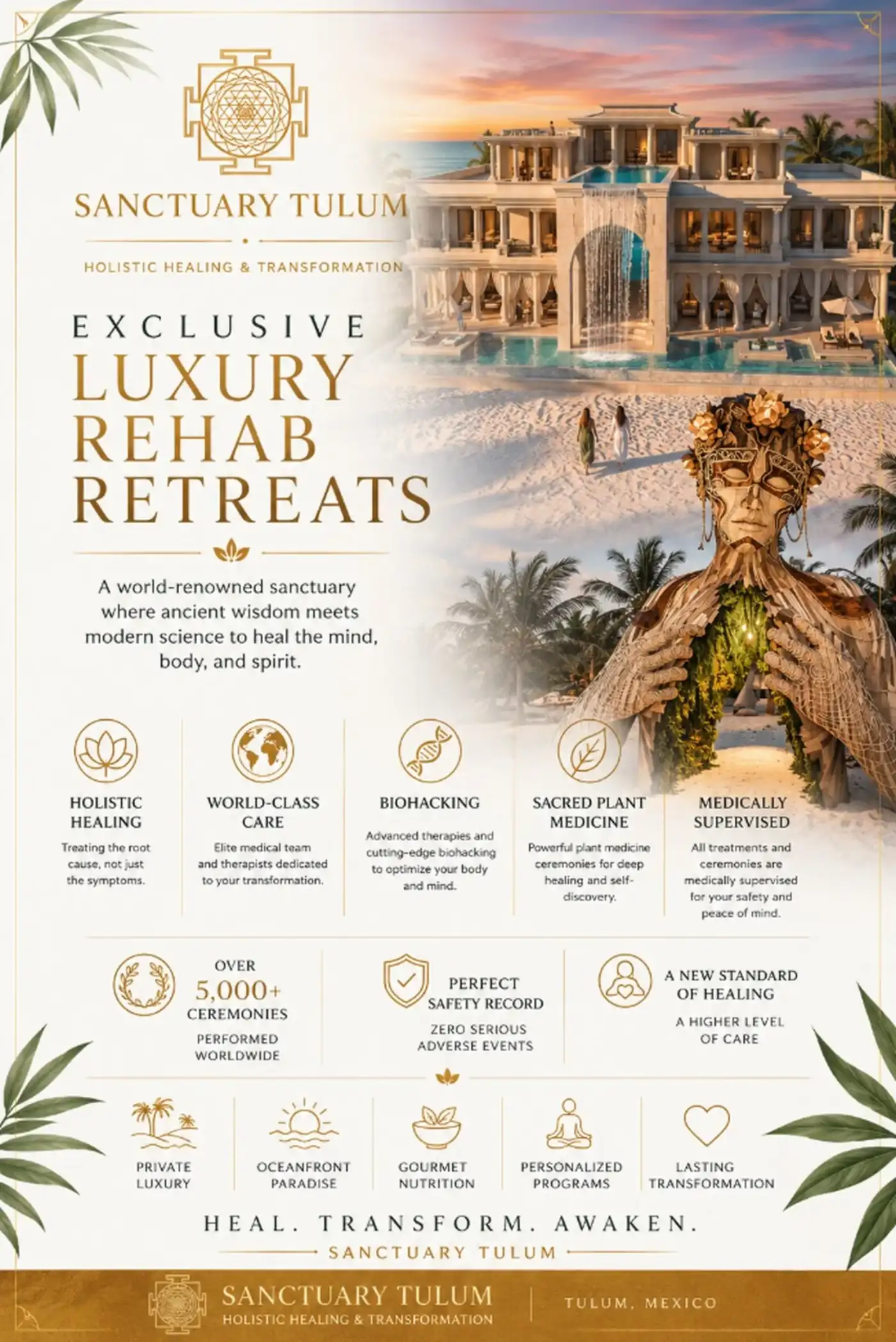
None of this is decorative. Sanctuary Tulum's physical layout — single-occupancy oceanfront suites, low guest census, structured outdoor time, and a working day built around natural light rather than institutional scheduling — is a direct response to what the evidence on stress physiology and recovery consistently shows. See our luxury wellness center overview for how the physical environment integrates with clinical care.
It is also why guests frequently describe the first week as feeling like rest before it feels like treatment. That is intentional: the environment is doing real clinical work before the more demanding one-to-one sessions begin in earnest, detailed further on our luxury rehab center page.
Density, privacy and the arithmetic of attention
Much of what people experience as atmosphere is actually arithmetic. A center with a low guest census can give each person more clinical hours, quieter shared spaces and a schedule built around one individual rather than a cohort. A high-density facility, however beautifully finished, cannot do this — the day has to be organised around throughput.
Privacy matters for the same practical reason. Single-occupancy accommodation removes the constant low-level social vigilance of shared rooms, and that vigilance is expensive for a nervous system already running near capacity. Guests who sleep alone in a quiet room recover sleep architecture faster, and almost everything else improves downstream of sleep.
What to look for in any setting
If you are assessing a luxury mental health rehab for yourself or someone you care about, ask specific questions about the physical environment: How many guests share this space? What is the noise level like at night? Is there daily unstructured time outdoors? These questions get past the marketing photography and toward the variables that actually affect how a person heals.
Explore holistic treatment center, review programs and pricing, or reach out through our confidential enquiry form to discuss what a setting like this could mean for your situation.
Circadian rhythm and the treatment day
Circadian regulation is one of the more overlooked variables in a treatment setting. A schedule that keeps guests indoors under artificial light for most of the day works against the very sleep-wake regulation that early recovery depends on. Structuring the day around natural light exposure — outdoor movement in the morning, clinical sessions timed around energy peaks, and a wind-down period without screens or bright light in the evening — is a design decision with a measurable physiological rationale, not an aesthetic preference.
Guests frequently notice this shift before they can articulate why: falling asleep more easily, waking without an alarm, and experiencing steadier energy across the day. These are the kinds of small, cumulative signals that a well-designed physical environment is expected to produce.
Comparing settings honestly
Not every guest needs, or benefits from, an oceanfront setting specifically — but every guest benefits from an environment that has been deliberately assessed against these variables rather than left to chance. When comparing a executive rehab option to a more institutional alternative, it is worth asking how the physical space was chosen and what, if anything, was measured before it was built or leased.
Sanctuary Tulum's setting was chosen specifically to support the elements described above, and the clinical program is built to take advantage of them rather than existing separately from them, as detailed on the luxury detox center page.
Confidentiality, Staffing, and the First Week
Environment and clinical structure are not separate topics. A low guest census that supports quiet and privacy is the same operational choice that allows a facility to staff overnight coverage properly and to run one-to-one sessions instead of group curricula. Confidentiality has to be built into how a program runs — a small census, written staff confidentiality agreements, and admissions handled directly — not just implied by a private setting. The first week at Sanctuary Tulum is intentionally unhurried for this reason: medical assessment, stabilization where a substance is involved under physician supervision, and protected sleep come before the more demanding clinical work begins, because a dysregulated nervous system in a chaotic environment cannot absorb it. Due diligence here is practical: ask how many guests share the space, what overnight staffing looks like, and whether detox, where relevant, is physician-supervised rather than left to a wellness team without medical oversight.