Alcohol · Research
Innovating Alcohol Rehab: Psychedelic-Assisted Therapy Research
A measured summary of where the research stands, what it does not yet establish, and how that shapes responsible practice.
Alcohol treatment has changed less in fifty years than most fields of medicine. That is partly why research into psychedelic-assisted therapy has attracted so much attention — and why it deserves to be described carefully rather than enthusiastically.
The most cited work is a randomised, double-blind trial published in JAMA Psychiatry in 2022, which examined psilocybin-assisted psychotherapy in adults with alcohol use disorder and reported a reduction in heavy drinking days compared with an active placebo. It is a single trial, in a modest sample, with an acknowledged difficulty in maintaining blinding. It is promising. It is not settled.
The National Institute on Drug Abuse maintains an accessible overview of what is and is not known about this class of compounds. Anyone considering treatment should read a source like that before reading any facility's marketing, including ours.
What the research does suggest
Across several small trials the pattern is consistent enough to be interesting: a structured psychological process, supported by preparation and integration sessions, appears to produce change in some participants that conventional approaches had not. Researchers generally attribute the effect to the therapeutic process as much as to the compound.
That framing matters. In the trials, sessions are long, prepared for in advance, supervised throughout, and followed by structured integration work. What is being studied is a protocol, not a substance taken in isolation.
What it does not establish
It does not establish long-term durability across large populations, optimal dosing, or safety for people with cardiac conditions, seizure history, psychosis risk or on serotonergic medication. It does not establish that these approaches replace medical withdrawal management, and it does not make anyone a candidate by default.
Nor does it justify the language used in much of this industry. There is no basis for describing any of this as a cure, and no honest facility can quote a success rate for it.
The right conclusion from the current evidence is interest and caution in equal measure — not certainty in either direction.
Sanctuary Tulum
How this shapes practice here
Research informs the program; it does not licence shortcuts.
Stabilisation first
No ceremonial or psychedelic work during acute alcohol withdrawal.
Medical screening
Cardiac, neurological and medication review before eligibility is considered.
Not universal
Many guests with alcohol-centred histories do not include this element at all.
Preparation
Structured sessions before, not a single event in isolation.
Integration
The weeks afterwards are where most of the therapeutic work happens.
Honest framing
Described as supportive and investigational, never as a guaranteed outcome.
The unglamorous parts that still do most of the work
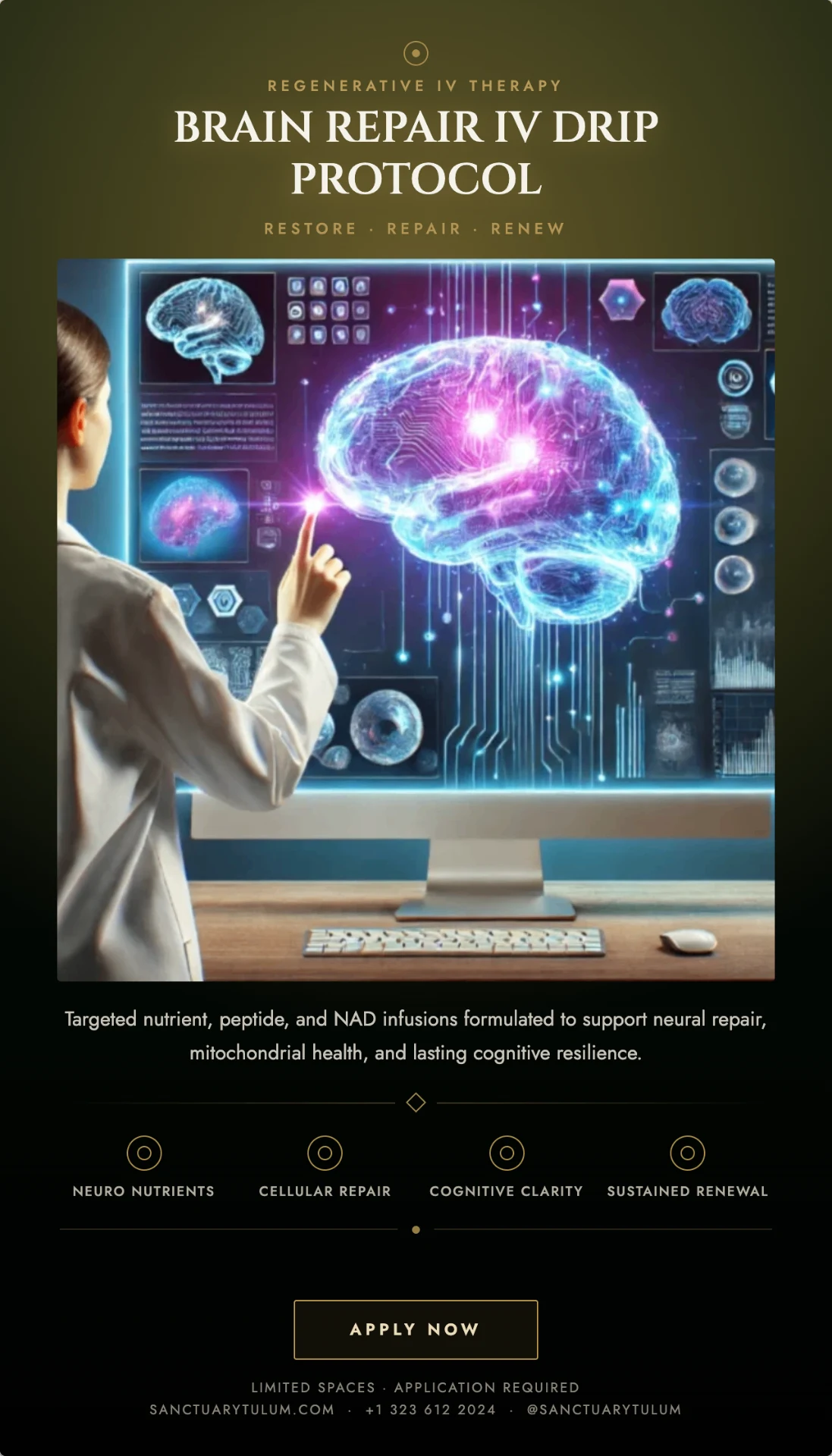
Whatever role newer approaches eventually play, the durable gains in alcohol recovery still come from the same places they always have: medically managed withdrawal, restored sleep, corrected nutrition, daily one-to-one attention, physical rebuilding through hyperbaric oxygen and NAD+ IV protocols, and a clear plan for the return home.
Innovation in this field is most useful when it is added to that foundation rather than sold as a replacement for it.
Where to read next
If you want the practical version rather than the research summary, our holistic alcohol rehab page sets out the program, and psilocybin therapy explains how supervised sessions are handled where they are clinically appropriate.
Sanctuary Tulum is a licensed luxury mental health facility with physicians on site, operating since 2011. We would rather describe this area accurately and lose an enquiry than overstate it and gain one.
The less exciting innovations that matter
Innovation in this field also arrives in less headline-friendly forms, and some of it is better evidenced. Medications for alcohol use disorder — naltrexone, acamprosate and disulfiram among them — are supported by decades of trial data and remain underused in practice. Any program discussing what is new should be able to discuss what is established, including approaches it does not itself offer.
Digital monitoring, structured aftercare, contingency-based support and better management of co-occurring insomnia and anxiety are similarly unglamorous and similarly effective. A facility that talks only about the most exciting intervention available is usually telling you something about its marketing rather than its medicine.
For guests, the practical translation is a set of questions. What in this program is established? What is investigational? What is offered because the evidence supports it, and what is offered because guests ask for it? A program should be able to answer without discomfort.
Our position is straightforward. Established practice forms the spine of every stay. Newer, medically supervised approaches are considered case by case, after screening, and described honestly as what they are. You can read how the whole program is assembled on the Pouyan Method page and how it applies to drinking specifically on luxury alcohol treatment center.
How to read early results
One last caution about reading trial results. Small early studies in any field tend to report larger effects than the larger studies that follow, and psychedelic research has additional methodological difficulties — participants can usually tell whether they received an active compound, and expectation is a powerful contributor in its own right.
None of that makes the findings uninteresting. It makes them provisional. The responsible position, for a facility and for a person considering treatment, is to follow the research closely, describe it accurately, and build the program on what is already known to work.
Medically managed withdrawal comes first
None of the research discussed above changes the first step of alcohol treatment: medically supervised withdrawal. Alcohol withdrawal carries genuine medical risk, including seizure and, in severe cases, delirium tremens, and it should always be managed by physicians with appropriate monitoring and medication support where indicated. Any facility discussing newer, investigational approaches while skipping over this foundational step is not describing a serious program.
At Sanctuary Tulum, stabilization is handled first and separately from any decision about later protocol elements. Guests are not considered for ceremonial or psychedelic-adjacent work until the medical team confirms it is appropriate, and many guests complete a full program without that element at all.
Rebuilding after the acute phase
Once withdrawal is complete, the more gradual work begins: restoring sleep architecture, correcting nutritional deficits common in long-term heavy drinking, and rebuilding the daily structure that supports sustained change. This phase benefits from consistent one-to-one attention because the pace of recovery varies enormously between individuals — some guests stabilize within days, others need weeks before deeper clinical work is appropriate.
Physical rebuilding through hyperbaric oxygen therapy and structured bodywork often runs alongside this phase, supporting the nervous system while the more demanding clinical and, where appropriate, ceremonial work is introduced gradually.