
Sertraline — sold under the brand name Zoloft — is a selective serotonin reuptake inhibitor (SSRI) first approved by the U.S. Food and Drug Administration in 1991. It is now one of the most widely prescribed antidepressants in the United States, with labeled indications spanning major depressive disorder, obsessive-compulsive disorder, panic disorder, PTSD, social anxiety disorder, and premenstrual dysphoric disorder. Its discontinuation profile is documented in the FDA-approved prescribing information and mirrors the class-wide pattern for serotonergic antidepressants. The information below is educational only. Never stop or change a prescribed antidepressant without consulting your prescriber.
The FDA Label on Sertraline Discontinuation
The current FDA prescribing information for Zoloft describes discontinuation-associated adverse reactions occurring after cessation of serotonergic antidepressants, particularly after abrupt discontinuation. The label enumerates: nausea, sweating, dysphoric mood, irritability, agitation, dizziness, sensory disturbances (including paresthesia — described in the label as electric shock sensations), tremor, anxiety, confusion, headache, lethargy, emotional lability, insomnia, hypomania, tinnitus, and seizures. Prescribers are directed to reduce the dose gradually rather than stop treatment abruptly whenever possible, and to consider resuming the previously prescribed dose followed by a more gradual reduction if intolerable symptoms emerge per the FDA-approved prescribing information for Zoloft (sertraline). A 2025 reanalysis of the antidepressant discontinuation evidence base cautions that label-reported rates should not be read as a ceiling on real-world severity (Moncrieff J, et al. Evidence on antidepressant withdrawal: an appraisal and reanalysis of a recent systematic review. Psychol Med. 2025;55:e191).
Sertraline's Half-Life in Context
Sertraline's elimination half-life is approximately 26 hours in adults, with the active desmethyl metabolite contributing modestly to overall exposure. That places sertraline in the middle of the SSRI class: shorter than fluoxetine — whose active metabolite norfluoxetine persists for 7–15 days and effectively self-tapers — and modestly shorter than escitalopram (~27–32 hours), but longer than paroxetine (~21 hours) and substantially longer than short-half-life SNRIs like venlafaxine (parent-drug half-life ~5 hours). Half-life is the single strongest pharmacokinetic predictor of discontinuation severity: shorter half-lives produce steeper plasma-concentration drops after a missed dose or dose reduction, which is the mechanistic basis for more frequent and more intense acute discontinuation symptoms. This is a factual contrast intended to inform taper planning, not a value judgment about any specific medication.
For a side-by-side look at the longer-half-life end of the SSRI class, see the companion post on Lexapro (escitalopram) withdrawal. For the shorter-half-life SNRI end of the spectrum, see the posts on Effexor (venlafaxine) withdrawal and Cymbalta (duloxetine) withdrawal.

The Boxed Warning
Sertraline carries the same class-wide antidepressant Boxed Warning that applies to all SSRIs and SNRIs: an increased risk of suicidal thoughts and behaviors in pediatric and young adult patients (through age 24) during initial treatment and after dose changes. The Boxed Warning was implemented in 2004 following the FDA's pooled analysis of pediatric antidepressant trials and expanded to young adults in 2007. It is a monitoring directive — it does not describe dependence or addiction, and it does not apply to older adults, in whom the pooled data suggested a neutral or possibly protective effect on suicidality. Patients starting sertraline or changing dose should be monitored closely for worsening mood, new-onset agitation, or emergent suicidal ideation, particularly during the first several weeks per the FDA-approved prescribing information (National Institute of Mental Health. Post-Traumatic Stress Disorder).
Seizure Disorders and Sertraline
The FDA label notes that sertraline has not been systematically evaluated in patients with a seizure disorder — such patients were excluded from the clinical studies that supported approval — and directs prescribers to use sertraline with caution in that population. Seizures also appear in the enumerated discontinuation-associated adverse reactions after abrupt cessation. This is not a contraindication, but it is a documented reason to disclose any personal or family history of seizure disorder to the prescribing physician before starting or discontinuing sertraline.


The Mechanism Behind SSRI Discontinuation Symptoms
SSRI discontinuation is not a single-receptor phenomenon; it is the nervous system's response to the removal of chronically elevated synaptic serotonin. During sustained treatment, serotonin reuptake blockade produces compensatory downregulation of post-synaptic 5-HT receptors — particularly the 5-HT1A autoreceptor — alongside adaptations across cortical, limbic, and brainstem serotonergic circuits. When the drug is withdrawn and synaptic serotonin drops back toward baseline, the previously adapted receptor landscape is transiently mismatched to the available neurotransmitter, and symptoms emerge until the system re-adapts and the underlying receptor re-adaptation can, for a subset of patients, extend well beyond the acute window (Rennwald A, et al. Post-acute withdrawal syndrome (PAWS) after stopping antidepressants: a systematic review. Epidemiol Psychiatr Sci. 2025;34:e29).
Cholinergic rebound is one accepted explanation for the flu-like features and gastrointestinal upset commonly reported during SSRI withdrawal. Secondary effects on norepinephrine and dopamine circuits are invoked to explain agitation, low mood, and difficulty concentrating. The characteristic "electric shock" or "brain zap" sensation described in the sertraline label is thought to involve transient dysregulation of cortical and cerebellar serotonergic and GABAergic circuits, though the exact neurophysiology remains an active area of investigation. Because multiple systems are involved and each re-adapts at its own pace, symptoms tend to be heterogeneous rather than a single stereotyped syndrome.
Common Zoloft Withdrawal Symptoms
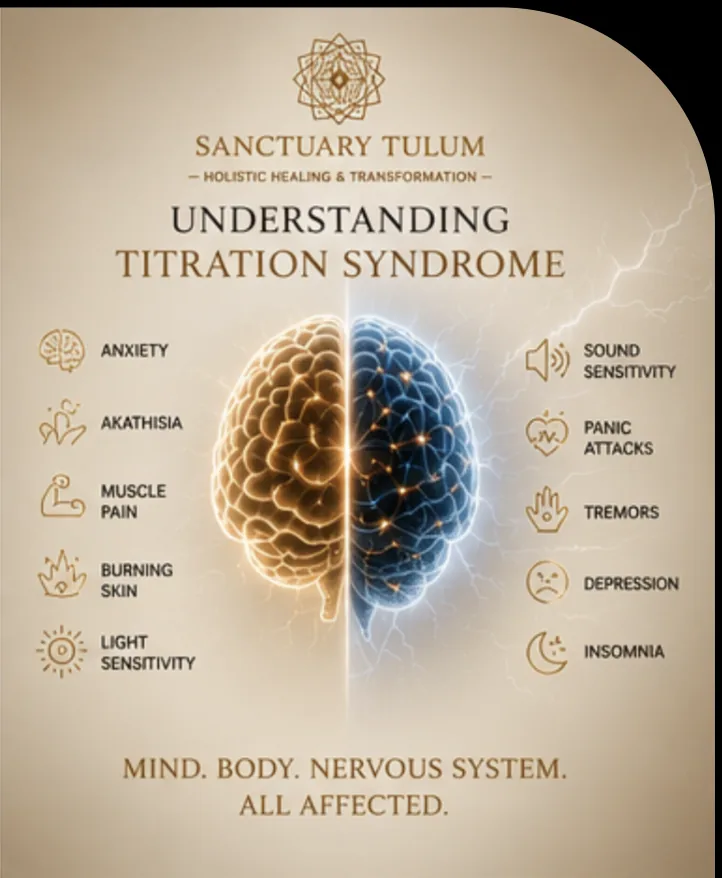
Drawing directly from the FDA label and consistent with the broader SSRI discontinuation literature, patients discontinuing sertraline most commonly report:
- Nausea and gastrointestinal upset
- Sweating
- Dysphoric mood, emotional lability, tearfulness
- Irritability and agitation
- Dizziness and light-headedness
- Sensory disturbances — paresthesia and electric shock sensations
- Tremor
- Anxiety and confusion
- Headache
- Lethargy
- Insomnia and vivid dreams
- Hypomania
- Tinnitus
- Rare: seizures reported on abrupt discontinuation per FDA labeling
Discontinuation Symptoms Are Not Relapse
The clinical distinction between sertraline discontinuation symptoms and relapse of the underlying depression or anxiety is important — and frequently missed. Discontinuation symptoms emerge within days of a dose change, are often somatic (dizziness, nausea, paresthesia, headache), and typically resolve when the previous dose is reinstated or with continued time. Relapse of the underlying condition, by contrast, usually develops more slowly over weeks and reproduces the original symptom pattern. Misattributing discontinuation symptoms to relapse is one of the most common reasons patients are re-started on indefinite antidepressant therapy — a point emphasized in modern tapering literature and in the broader antidepressant discontinuation syndrome overview.
Tapering Considerations
The FDA label directs prescribers to reduce the sertraline dose gradually rather than stop abruptly whenever possible. Contemporary hyperbolic-tapering pharmacology — developed most extensively for benzodiazepines and Z-drugs but now applied broadly to serotonergic medications — holds that discontinuation symptoms most commonly emerge at the low end of a taper, and that proportional (rather than fixed-milligram) dose reductions can meaningfully reduce that risk (Horowitz M, et al. Pharmacological principles for safe benzodiazepine and Z-drug dose reduction. Psychol Med. 2026;56:e198). Where a taper proves especially difficult, some clinicians bridge to a longer-half-life agent such as fluoxetine before the final wean (Shapiro B, et al. Fluoxetine substitution for deprescribing antidepressants: a technical approach. J Psychiatry Neurosci. 2025;50(4):E202-E209). Practical implementation can require compounded liquid formulations or bead-counted doses at the low end. Because sertraline's half-life is intermediate — not as long as fluoxetine's, not as short as paroxetine's or venlafaxine's — patients often tolerate a straightforward physician-supervised taper, but a slow low-dose finish remains a reasonable option for anyone with a history of discontinuation-sensitive symptoms.
Physician-Supervised Support at Sanctuary Tulum
Sanctuary Tulum coordinates sertraline tapers with each guest's prescribing physician. On-site medical oversight, the neuro-restorative Brain Repair IV drip protocol, and integrative modalities are combined to support the nervous system during discontinuation. For the broader clinical context, see the page on SSRI and antidepressant treatment, the program overview at holistic treatment center, and the companion posts on Lexapro (escitalopram) withdrawal, Effexor (venlafaxine) withdrawal, and Cymbalta (duloxetine) withdrawal.
References
- Moncrieff J, et al. Evidence on antidepressant withdrawal: an appraisal and reanalysis of a recent systematic review. Psychol Med. 2025;55:e191.
- Shapiro B, et al. Fluoxetine substitution for deprescribing antidepressants: a technical approach. J Psychiatry Neurosci. 2025;50(4):E202-E209.
- Rennwald A, et al. Post-acute withdrawal syndrome (PAWS) after stopping antidepressants: a systematic review. Epidemiol Psychiatr Sci. 2025;34:e29.
- Horowitz M, et al. Pharmacological principles for safe benzodiazepine and Z-drug dose reduction. Psychol Med. 2026;56:e198.
- National Institute of Mental Health. Major depression statistics.
- National Institute of Mental Health. Post-Traumatic Stress Disorder.
- World Health Organization. Depressive disorder (depression) fact sheet.
Medical disclaimer: This article is for educational purposes only and does not constitute medical advice, diagnosis, or treatment. Never stop or change a prescribed antidepressant without consulting a qualified physician.