
Diazepam — sold under the brand name VALIUM — is one of the oldest and most extensively studied benzodiazepines. It is FDA-approved for anxiety disorders, acute alcohol withdrawal, skeletal muscle spasm, and as an adjunct for convulsive disorders. Because of its long half-life and long-acting active metabolites, diazepam produces persistent physical dependence, and its withdrawal syndrome — while often slower to peak than that of short-acting benzodiazepines — can be severe. The information below is drawn from the FDA-approved prescribing information for VALIUM and is provided for educational purposes only. It is not medical advice.
The FDA Black Box Warning on Diazepam
The current FDA prescribing information for VALIUM carries a Boxed Warning — the FDA's strongest warning — on the risks of concomitant use with opioids. The label states that combining benzodiazepines and opioids may result in profound sedation, respiratory depression, coma, and death. Prescribers are directed to reserve concomitant prescribing for patients for whom alternative treatment options are inadequate, to limit dosages and durations to the minimum required, and to monitor patients closely for respiratory depression and sedation. (Source: FDA prescribing information for VALIUM, accessdata.fda.gov.)
The FDA's 2020 class-wide Boxed Warning update also added benzodiazepine-class labeling on abuse, misuse, addiction, physical dependence, and withdrawal reactions, applicable across diazepam and every other benzodiazepine on the U.S. market.
Discontinuation Symptoms Documented by the FDA
The VALIUM prescribing information documents withdrawal symptoms following abrupt discontinuation, including:
- Tremor
- Abdominal and muscle cramps
- Vomiting and sweating
- Headache
- Extreme anxiety, tension, and restlessness
- Confusion and irritability
The label further documents that in severe cases — particularly in patients receiving excessive doses over an extended period — additional symptoms may occur, including derealization, depersonalization, hyperacusis, numbness and tingling of the extremities, hypersensitivity to light and noise, hallucinations, and epileptic seizures. These severe presentations are exactly the pattern that turns unsupervised diazepam discontinuation into a medical emergency.
Why Diazepam's Pharmacokinetics Complicate Discontinuation
Diazepam is metabolized to several pharmacologically active metabolites — most importantly desmethyldiazepam (nordazepam) — with combined half-lives that can exceed 100 hours in adults. This produces a smoother pharmacologic profile during regular dosing, but it also means that dose reductions take days to reach steady state and that acute withdrawal onset is delayed. Patients who "feel fine" for the first several days after stopping diazepam can destabilize sharply as tissue levels finally fall — a pattern that leads unsupervised patients to misjudge how much benzodiazepine has actually left their system.
Because of its long half-life, diazepam is frequently used clinically as a cross-taper agent when transitioning patients off shorter-acting benzodiazepines such as alprazolam (Xanax) or clonazepam (Klonopin) before reducing the total benzodiazepine dose.
Diazepam's FDA-Labeled Role in Acute Alcohol Withdrawal
A clinically relevant note for dual-dependence patients: diazepam is one of the benzodiazepines FDA-labeled for the symptomatic relief of acute alcohol withdrawal, including agitation, tremor, and impending or acute delirium tremens. This is why guests presenting with combined benzodiazepine and alcohol dependence require particularly careful assessment — the two substances share GABA-A receptor targets, cross-tolerance is common, and unsupervised concurrent withdrawal is high-risk. Sanctuary Tulum's medical team evaluates every arriving guest for both benzodiazepine and alcohol history before initiating any taper.

The DailyMed and NIH Record
For clinicians and patients seeking primary-source documentation, the National Library of Medicine maintains the DailyMed diazepam label archive, which mirrors the current FDA-approved prescribing information. FDA safety communications on the benzodiazepine class are indexed at fda.gov/drugs/drug-safety-and-availability.
Physician-Supervised Taper at Sanctuary Tulum
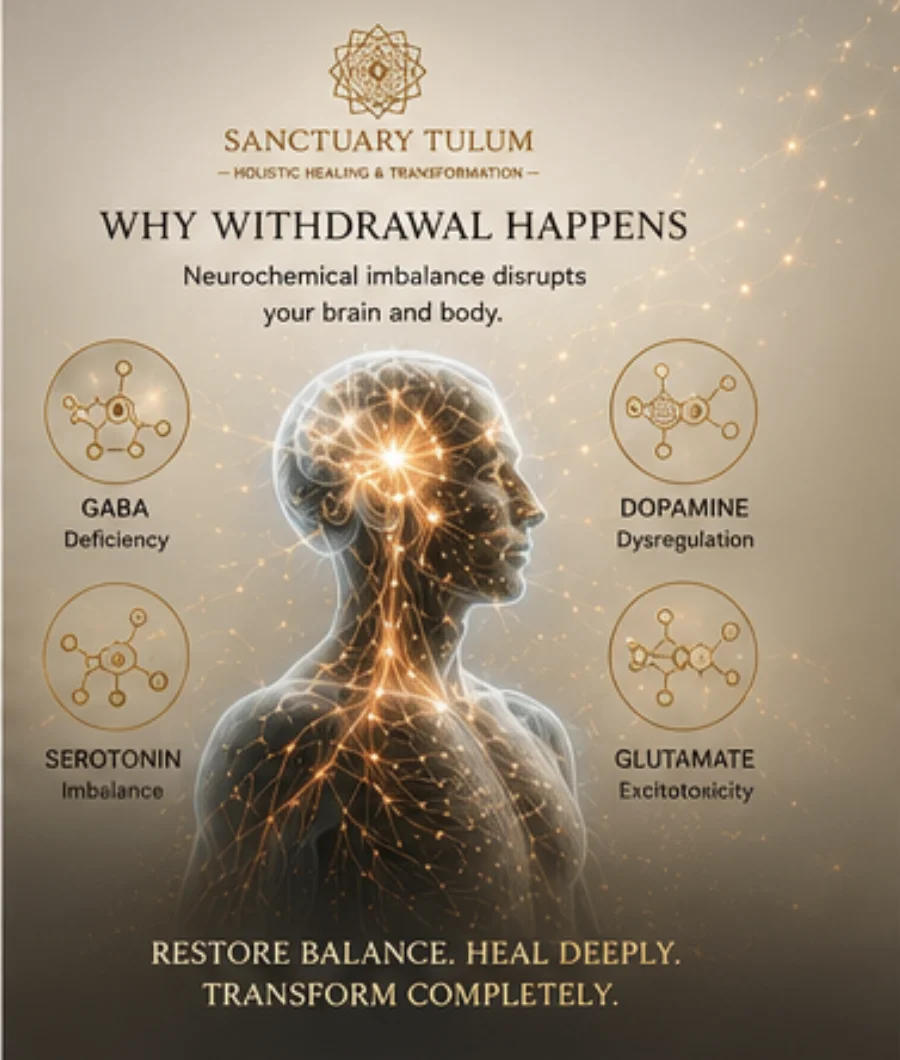
Sanctuary Tulum operates a physician-supervised benzodiazepine taper protocol as part of its luxury benzo detox program. Each guest arriving on diazepam or another benzodiazepine is medically screened, stabilized on an individualized taper schedule, and supported with amino-acid, magnesium, and neuro-restorative IV therapies designed to support GABA-glutamate rebalancing during dose reduction. For a broader clinical overview of benzodiazepine dependence and recovery, see our page on benzo withdrawal.
The Sanctuary Tulum medical team integrates Brain Repair IV therapy, NAD+ IV therapy, and hyperbaric oxygen therapy alongside the taper. For guests with combined alcohol and benzodiazepine dependence, dual-substance stabilization is delivered within the broader framework of the Pouyan Method, under a federal health license.

References
- U.S. Food and Drug Administration. VALIUM (diazepam) tablets, for oral use — Prescribing Information. accessdata.fda.gov (PDF).
- U.S. Food and Drug Administration. FDA requiring Boxed Warning updated to improve safe use of benzodiazepine drug class (2020). fda.gov.
- National Library of Medicine, DailyMed. Diazepam label archive. dailymed.nlm.nih.gov.
Medical disclaimer: This article is for educational purposes only and does not constitute medical advice, diagnosis, or treatment. Never stop or change a prescribed benzodiazepine without consulting a qualified physician. If you experience seizure symptoms during benzodiazepine reduction, seek emergency care immediately.
Valium tapers are often complicated by concurrent alcohol use — a scenario we address by combining benzo protocols with our holistic alcohol rehab track.