
Duloxetine — sold under the brand name Cymbalta — is a serotonin-norepinephrine reuptake inhibitor (SNRI) approved for major depressive disorder, generalized anxiety disorder, diabetic peripheral neuropathic pain, fibromyalgia, and chronic musculoskeletal pain. It has a well-characterized discontinuation profile that is documented in its FDA-approved label and quantified in peer-reviewed pooled analyses of the drug's own clinical trials. The information below is educational only. Never stop or change a prescribed antidepressant without consulting your prescriber.
The FDA Label on Duloxetine Discontinuation
The current FDA prescribing information for Cymbalta explicitly describes discontinuation-emergent adverse events. The label lists symptoms occurring at ≥1% and at a rate significantly higher than placebo in short-term clinical trials: dizziness, headache, nausea, diarrhea, paresthesia, irritability, vomiting, insomnia, anxiety, hyperhidrosis, and fatigue. The label further references reports of seizures upon treatment discontinuation and recommends gradual dose reduction rather than abrupt cessation whenever possible. (Source: FDA prescribing information for Cymbalta (duloxetine), accessdata.fda.gov (PDF).)
Quantifying the Incidence — Perahia et al.
A pooled analysis of duloxetine clinical trial data (Perahia DG et al., J Affect Disord. 2005;89(1-3):207-212) reported that discontinuation-emergent adverse events occurred in approximately 44% of patients abruptly discontinuing duloxetine at the end of trials, compared with roughly 23% of patients discontinuing placebo. That approximately 20-percentage-point excess over placebo is one of the largest, best-documented signals for any SNRI in the published literature and remains widely cited in reviews of antidepressant discontinuation syndrome (PubMed 16266741).

Why Duloxetine's Half-Life Matters
Duloxetine has an elimination half-life of approximately 12 hours. That is longer than venlafaxine's parent-drug half-life but still short relative to fluoxetine, which is the classic example of a long-half-life antidepressant with a mild discontinuation profile. In general, shorter half-lives produce steeper plasma-level drops between doses and after cessation, which is the mechanistic basis for more intense discontinuation symptoms. Practically, this means end-of-taper reductions (the last small doses) frequently drive the worst symptoms and require the slowest, most careful reduction.

Common Cymbalta Withdrawal Symptoms
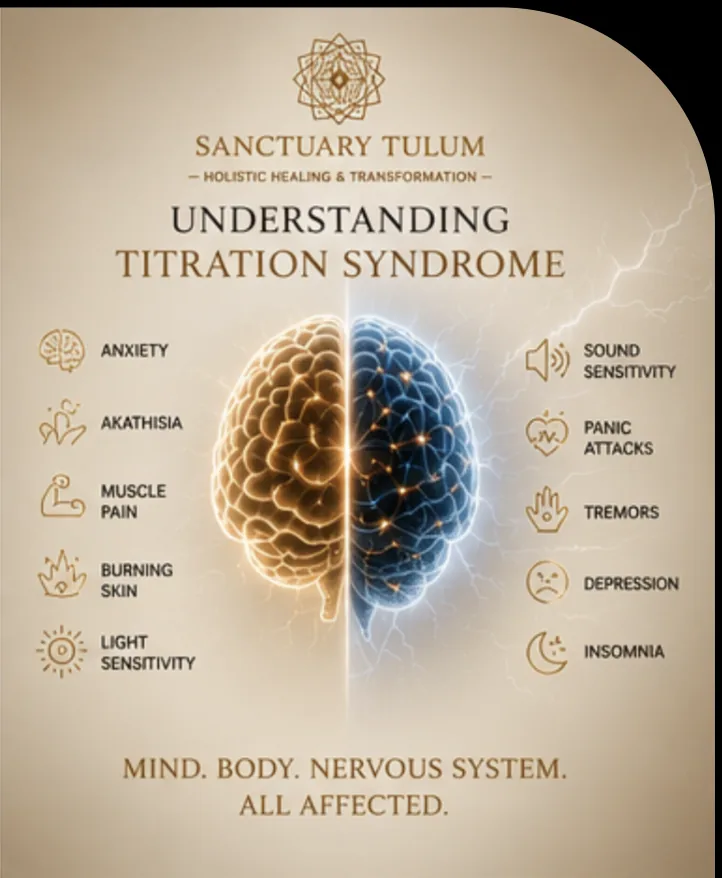
Drawing on the FDA label and the broader literature, patients discontinuing duloxetine most commonly report:
- Dizziness and light-headedness (often the earliest and most prominent symptom)
- Nausea, vomiting, and diarrhea
- Headache
- Paresthesia — including "brain zap" sensations
- Insomnia and vivid dreaming
- Anxiety, agitation, and irritability
- Hyperhidrosis (excessive sweating)
- Fatigue and flu-like malaise
- Rare: seizures reported at discontinuation
The Capsule Problem
Duloxetine is commercially formulated as delayed-release capsules containing enteric-coated pellets. Achieving fine-grained dose reductions below the smallest commercial strength requires either compounded liquid formulations or bead-counting strategies — approaches that should be discussed with the prescribing physician. The practical difficulty of achieving small final-dose reductions is one reason end-of-taper symptoms are so commonly reported with duloxetine specifically.
Physician-Supervised Support at Sanctuary Tulum
Sanctuary Tulum coordinates duloxetine tapers with each guest's prescribing physician. On-site medical oversight, the neuro-restorative Brain Repair IV drip protocol, and integrative modalities are combined to support the nervous system during discontinuation. For the broader clinical context, see the page on SSRI and antidepressant treatment, the companion posts on Effexor (venlafaxine) withdrawal, Lexapro (escitalopram) withdrawal, Zoloft (sertraline) withdrawal, and Seroquel (quetiapine) withdrawal, and the overview at antidepressant discontinuation syndrome.

References
- U.S. Food and Drug Administration. Cymbalta (duloxetine) — Prescribing Information. accessdata.fda.gov (PDF).
- Perahia DG, Kajdasz DK, Desaiah D, Haddad PM. "Symptoms following abrupt discontinuation of duloxetine treatment in patients with major depressive disorder." J Affect Disord. 2005;89(1-3):207-212. PubMed 16266741.
- Fava GA, Gatti A, Belaise C, et al. "Withdrawal symptoms after selective serotonin reuptake inhibitor discontinuation: a systematic review." Psychother Psychosom. 2015;84(2):72-81. PubMed 25721705.
- Horowitz MA, Taylor D. "Tapering of SSRI treatment to mitigate withdrawal symptoms." Lancet Psychiatry. 2019;6(6):538-546. PubMed 30850328.
- National Library of Medicine, DailyMed. Duloxetine label archive. dailymed.nlm.nih.gov.
Medical disclaimer: This article is for educational purposes only and does not constitute medical advice, diagnosis, or treatment. Never stop or change a prescribed antidepressant without consulting a qualified physician.