
Z-drugs — zolpidem (Ambien), eszopiclone (Lunesta), and zaleplon (Sonata) — were introduced through the 1990s and early 2000s as "non-benzodiazepine hypnotics" and marketed as safer sleep aids than traditional benzos. Two decades of post-marketing data have made clear that the pharmacological distinction is real but narrow, and that the dependence and withdrawal risks are far closer to benzodiazepines than the original marketing implied. This article summarizes what the FDA labels, safety communications, and peer-reviewed literature actually document.
This is educational content, not medical advice. Never discontinue a prescribed hypnotic without physician supervision.
What Z-Drugs Actually Are
Z-drugs are chemically unrelated to benzodiazepines — zolpidem is an imidazopyridine, zaleplon a pyrazolopyrimidine, and eszopiclone a cyclopyrrolone. Despite the different scaffolds, all three bind the benzodiazepine site on the GABA-A receptor complex, potentiating GABA-mediated inhibition. The functional difference is that Z-drugs preferentially bind receptor subtypes containing the α1 subunit, which mediates sedation, while binding α2, α3, and α5 (which mediate anxiolytic, myorelaxant, and anticonvulsant effects) more weakly.
That selectivity is the entire pharmacological justification for calling them "non-benzodiazepines." From the standpoint of dependence, tolerance, and withdrawal, they interact with the same core receptor machinery, and the same adaptive changes are observed with chronic use.
Zolpidem (Ambien)
Zolpidem has an elimination half-life of about 2.5 hours. It is one of the most-prescribed hypnotics in the United States. The FDA label includes warnings about complex sleep behaviors (sleep-driving, sleep-walking, sleep-eating), next-day impairment, dependence, and withdrawal on abrupt cessation. In 2019 the FDA required a Boxed Warning on zolpidem, eszopiclone, and zaleplon specifically for complex sleep behaviors (FDA, 2019).
Clinical guidance on Z-drug abuse and dependence documents withdrawal seizures on abrupt discontinuation in long-term high-dose users, and rebound insomnia on discontinuation is well-established even at therapeutic doses (Stelzer et al., 2025).

Eszopiclone (Lunesta)
Eszopiclone has a longer half-life than zolpidem — approximately 6 hours — giving it a longer duration of hypnotic effect and a slightly different withdrawal profile. It is the active S-enantiomer of racemic zopiclone (marketed outside the US as Imovane and elsewhere). The FDA label documents dependence, withdrawal, complex sleep behaviors, and next-day impairment, and the drug shares the 2019 Boxed Warning.
Unlike zolpidem, eszopiclone was studied and approved for longer-term use in the US, which has contributed to a larger population of long-duration daily users — the population most at risk for dependence and difficult discontinuation.
Zaleplon (Sonata)
Zaleplon has the shortest half-life of the three — approximately 1 hour — and is prescribed primarily for sleep-onset insomnia. Its very short duration makes daytime sedation less common but does not eliminate dependence risk in daily users, and the FDA label carries the same class warnings.

Withdrawal Profile
Z-drug discontinuation after chronic daily use produces a symptom profile that clinicians will recognize from short-acting benzodiazepine withdrawal: rebound insomnia (frequently more intense than the pre-treatment sleep problem), rebound anxiety, sensory hypersensitivity, tremor, sweating, and in high-dose long-duration users, seizure activity. The taper strategy — including cross-titration onto a longer-acting benzodiazepine, followed by gradual dose reduction — is functionally the same as for short-acting benzos, because the underlying receptor pharmacology is functionally the same.
Head-to-Head: Z-Drugs vs. Short-Acting Benzos
| Property | Z-Drugs (zolpidem/eszopiclone/zaleplon) | Short-Acting Benzos (alprazolam/lorazepam) |
|---|---|---|
| Site of action | GABA-A benzodiazepine site (α1-preferential) | GABA-A benzodiazepine site (α1/2/3/5) |
| Primary indication | Insomnia | Anxiety, panic, insomnia |
| Half-life | 1–6 hours | 6–20 hours |
| FDA Boxed Warning | Yes (complex sleep behaviors, 2019) | Yes (class-wide dependence/withdrawal, 2020) |
| Dependence risk | Established with daily use | Established with daily use |
| Withdrawal seizure risk | Documented in case series | Well-established, Boxed Warning |
| Rebound insomnia | Common on discontinuation | Common on discontinuation |

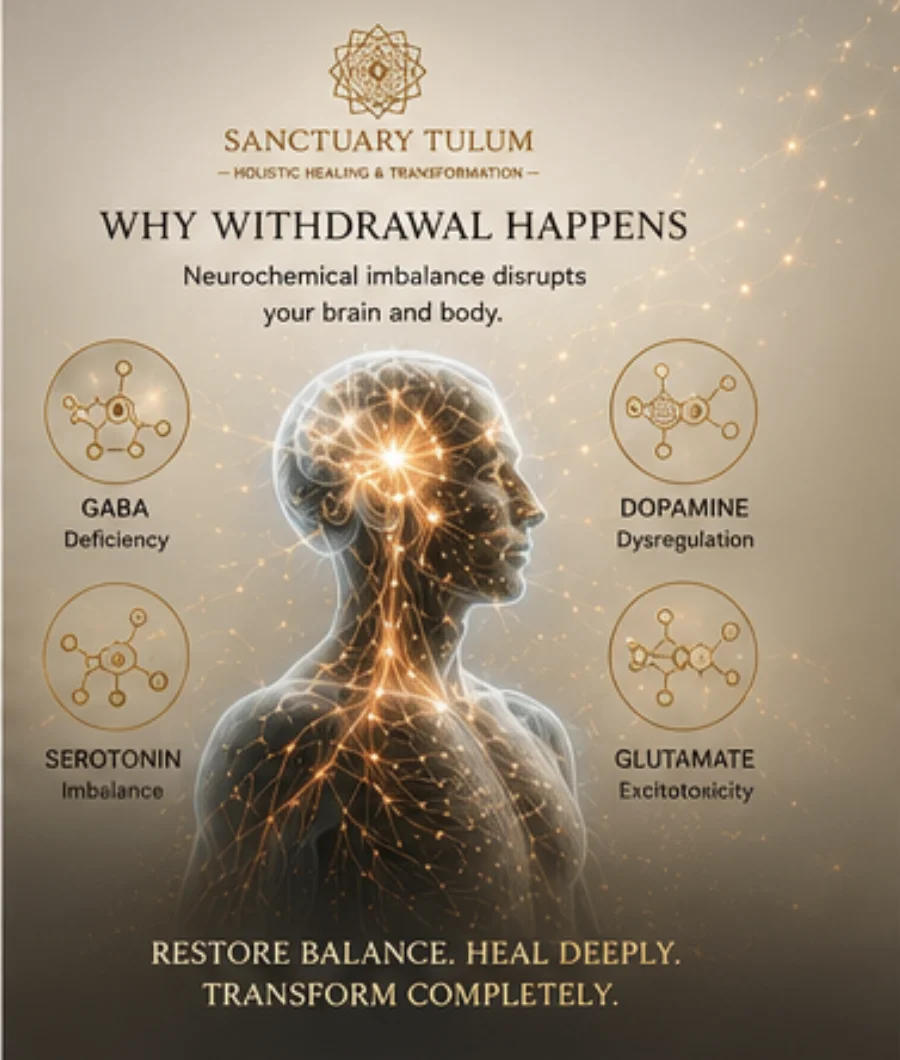
Where Z-Drug Patients Fit in Sanctuary Tulum's Program
A significant number of guests arriving at Sanctuary Tulum for hypnotic dependence are on Z-drugs rather than classical benzodiazepines — often on years of nightly zolpidem or eszopiclone, sometimes stacked with a benzodiazepine and an SSRI. Clinically, these patients are managed under the same framework as benzo-dependent guests: physician-supervised taper, cross-titration where indicated, and neurochemical support during dose reduction.
For the full program, see luxury benzo detox, the benzo withdrawal page, and the class-wide benzodiazepine dangers overview. Neurochemical recovery is supported by the Brain Repair IV Drip Protocol.
What Deprescribing Guidance Recommends for Z-Drugs
Because Z-drugs and benzodiazepines converge on the same receptor complex, current dose-reduction principles apply across both. Rather than fixed linear step-downs, recent pharmacological guidance recommends hyperbolic dose reduction — decrements that get smaller as the absolute dose falls, since a small milligram change near the bottom of the dose range removes a disproportionately large share of receptor occupancy (Horowitz et al., 2026). The Brazilian Academy of Neurology's clinical guideline on Z-drug abuse and dependence similarly treats zolpidem, eszopiclone, and zaleplon withdrawal as requiring the same structured, physician-directed tapering discipline used for benzodiazepines, rather than an abrupt stop (Stelzer et al., 2025).
A modified Delphi consensus among prescribers likewise recommends individualized deprescribing plans for long-term benzodiazepine receptor agonist use — a category that includes Z-drugs by mechanism, even though they are not chemically benzodiazepines (Brandt et al., 2026). The StatPearls clinical reference on benzodiazepine withdrawal management, used widely in emergency and addiction medicine, describes the same escalating-risk pattern with repeated or poorly managed discontinuation attempts, reinforcing why any reduction — Z-drug or benzodiazepine — belongs under medical supervision (StatPearls).
In practice this means a guest tapering off years of nightly zolpidem or eszopiclone should expect the same physician-written schedule, daily monitoring, and unhurried pacing as a guest tapering off a short-acting benzodiazepine — not a faster process just because the drug was marketed as a "non-benzodiazepine."
References
- U.S. Food and Drug Administration. FDA adds Boxed Warning for risk of serious injuries caused by sleepwalking with certain prescription insomnia medicines (2019). fda.gov.
- U.S. Food and Drug Administration. AMBIEN (zolpidem tartrate) — Prescribing Information. accessdata.fda.gov (PDF).
- U.S. Food and Drug Administration. LUNESTA (eszopiclone) — Prescribing Information. accessdata.fda.gov (PDF).
- Stelzer FG, et al. "Z-drug abuse and dependence: clinical guideline of the Brazilian Academy of Neurology." Arq Neuropsiquiatr. 2025;83(10):1-24. PubMed.
- Horowitz M, et al. "Pharmacological principles for safe benzodiazepine and Z-drug dose reduction." Psychol Med. 2026;56:e198. PubMed.
- Brandt J, et al. "Benzodiazepine receptor agonist deprescribing principles for long-term use and dependence: a modified Delphi study." Ther Adv Psychopharmacol. 2026;16. PubMed.
- StatPearls. Benzodiazepine Withdrawal Management. NCBI Bookshelf. ncbi.nlm.nih.gov.
- U.S. Food and Drug Administration. FDA requiring Boxed Warning updated to improve safe use of benzodiazepine drug class (2020). fda.gov.
Medical disclaimer: This article is for educational purposes only and does not constitute medical advice. Never discontinue a prescribed hypnotic or benzodiazepine without physician supervision.
Z-drug and benzo dependency frequently occur alongside alcohol use; those guests are managed through our luxury alcohol rehab program program in parallel.