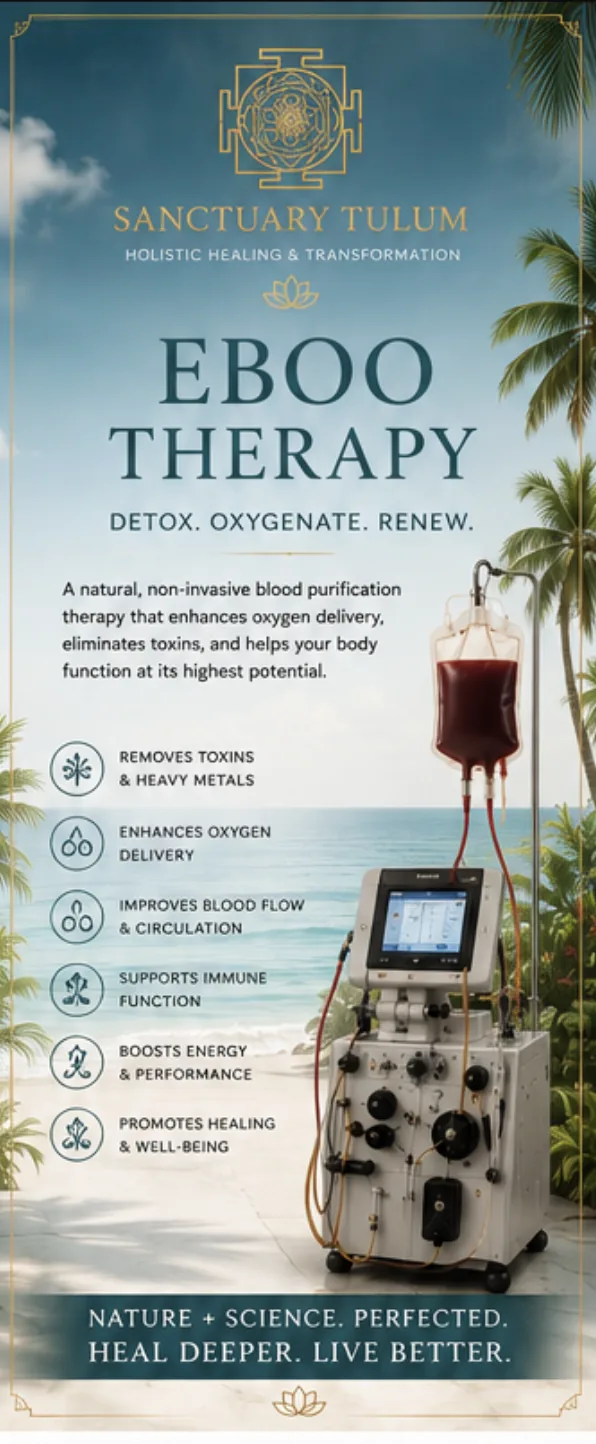
Mold and mycotoxin illness — often diagnosed as Chronic Inflammatory Response Syndrome (CIRS) — is one of the most under-recognized epidemics of modern life. Clients arrive at Sanctuary Tulum after years of misdiagnosis: anxiety, depression, fibromyalgia, "just stress." The truth is almost always biological.
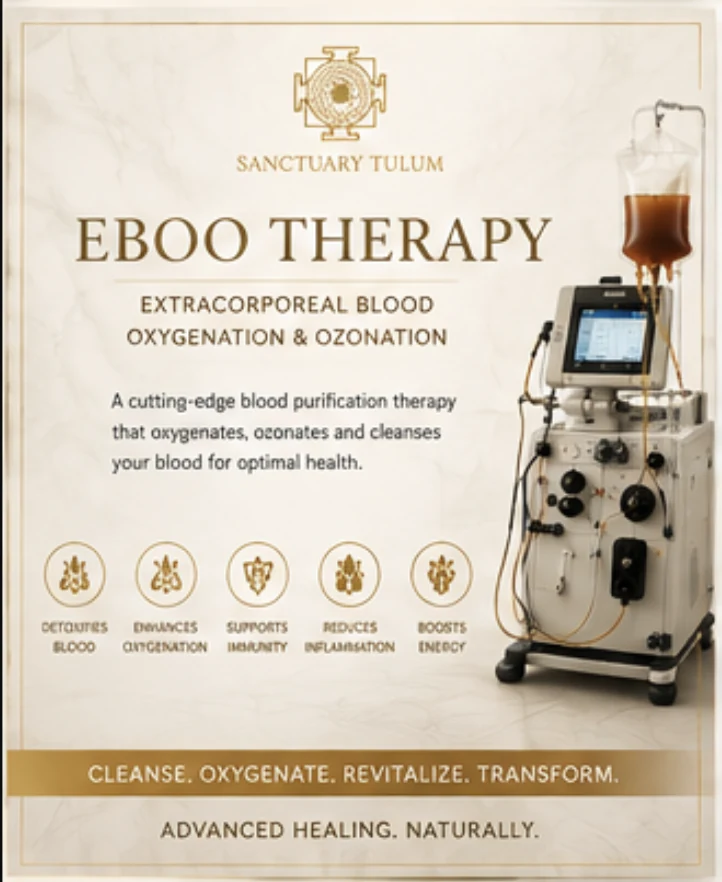
Why Mold Illness Is So Stubborn
Mycotoxins recirculate through bile, hide inside biofilms, and continuously activate the innate immune system. Standard binders alone rarely break the loop. Without an aggressive blood-level intervention, clients can spend years on a treadmill of partial improvement.
How EBOO Breaks the Cycle
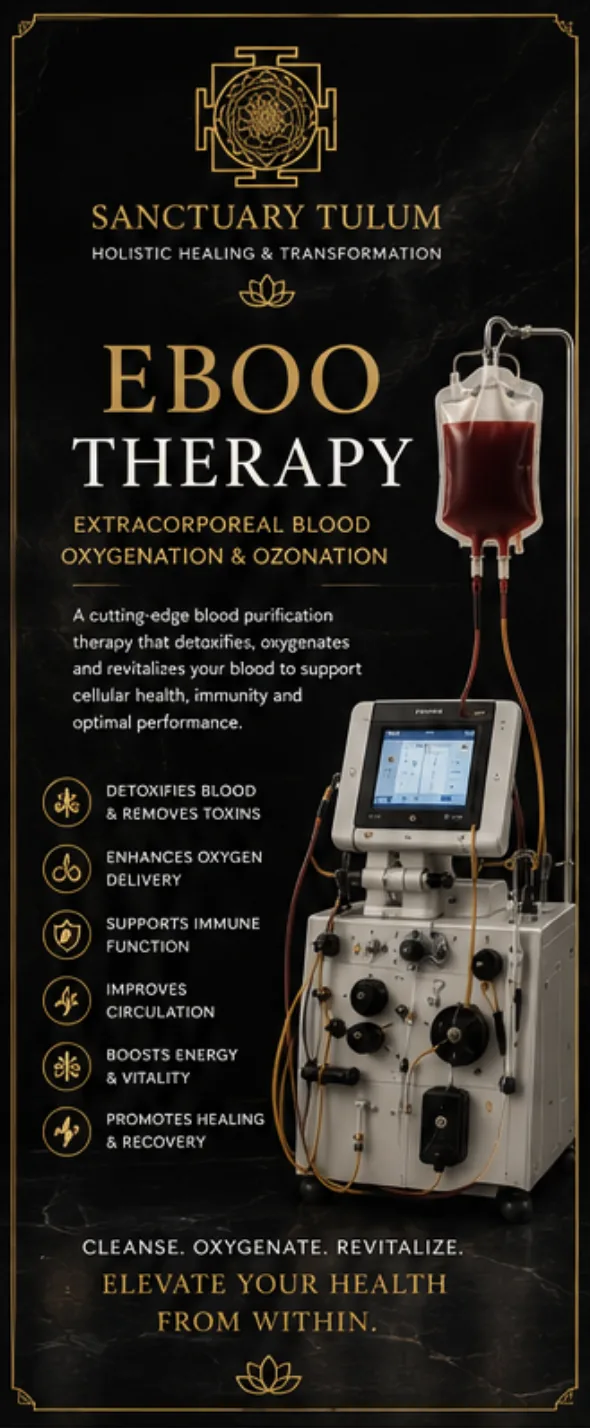
- • Oxidizes biofilms that protect mold colonies
- • Filters circulating mycotoxins from the plasma
- • Calms the runaway innate immune response
- • Restores oxygen and energy production in inflamed tissues
EBOO therapy is integrated with binders, bile support, and colonic detoxification to ensure that mobilized toxins exit the body completely.
EBOO is one component of the broader detox and residential care at Sanctuary Tulum. Learn more about our medically supervised luxury detox and full luxury residential rehab.
Clinical Screening Before Any Session
Every prospective guest at Sanctuary Tulum completes a confidential clinical intake and full medical screening before any EBOO for mold and biotoxins session is scheduled. The intake reviews cardiovascular status, kidney and liver function, current medications, coagulation history, and any recent infections. Guests currently prescribed anticoagulants, immunosuppressants, or SSRIs are reviewed on a case-by-case basis with their treating physician before a session is planned.1 The team never advises anyone to discontinue prescribed medication on their own.
On-Site Medical Oversight
A physician is on site during every session, supported by registered nurses and IV therapy specialists. Vital signs — blood pressure, oxygen saturation, and cardiac rhythm where clinically indicated — are monitored continuously across the session, with emergency medications and airway equipment on hand.2 Credentialing detail lives on the Medical Review Board page, and a broader description of the safety approach is available on the safest psychedelic facility page. Guests are encouraged to review both before deciding whether the program fits them.
How This Fits the Wider Program
EBOO ozone dialysis sits inside a broader biological and neurological protocol at Sanctuary Tulum rather than being offered as a standalone service. That means medical stabilization first, then a physician-scheduled combination of NAD+ IV therapy, HBOT, targeted nutrition, and — where clinically appropriate — medically supervised medically supervised ibogaine treatment, private ayahuasca ceremonies, or psilocybin therapy. The full framework is described in the proprietary Pouyan Method™. The exact sequence is individual and set by the medical team after intake — one guest's plan rarely looks identical to another's.
Honest Limits of the Evidence
Published research on EBOO for mold and biotoxins for the indications discussed here is still evolving. Therapeutic apheresis is well established for specific autoimmune and neurologic conditions in mainstream medicine,3 and ozone therapies have a longer clinical history in parts of Europe than in the United States. For broader wellness applications the evidence base is smaller and largely observational. Sanctuary Tulum does not present these protocols as cures or guaranteed treatments, and no diagnostic or prognostic claim is made outside a clinical evaluation.
Integration and Aftercare
A stay is only useful if it holds. Every program ends with a written integration and aftercare plan — continued check-ins with the integration team, referral to trauma-informed practitioners at home when appropriate, and lifestyle protocols covering nutrition, sleep, movement, and nervous-system regulation. Guests are encouraged to maintain their existing relationship with a treating physician and to return for booster sessions when a specific life transition benefits from it.
Related EBOO Therapy Articles
Mold and biotoxin recovery is a whole-system effort, which is why EBOO is layered into our luxury wellness center program alongside binders, sauna, IV nutrients, and lymphatic work.
Why Testing Matters Before Treatment
Mold and biotoxin illness is frequently misdiagnosed because its symptoms overlap so heavily with anxiety, depression, chronic fatigue and fibromyalgia. Objective testing changes that. Urinary mycotoxin panels identify which specific toxins — ochratoxin A, trichothecenes, gliotoxin, and others — are present, which shapes both the binder protocol and the EBOO scheduling. Visual contrast sensitivity (VCS) testing offers a fast, low-cost proxy for neuroinflammation, and inflammatory markers such as C4a, TGF-beta1, and MMP-9 give a baseline against which improvement can actually be measured rather than assumed.
Retesting after a course of EBOO and binder support is what separates a program that can demonstrate progress from one that simply reports how a guest says they feel. Both matter, but only one is verifiable.
The Role of Environmental Remediation
No blood-level protocol, EBOO included, can outpace continued exposure. A guest who improves significantly during a stay and then returns to a water-damaged home or office will often see symptoms recur within weeks. Any serious mold recovery plan therefore includes a candid conversation about the guest's home environment — whether it has been tested, remediated, or needs to be reassessed — because treating the body while ignoring the source is treating half the problem.
This is also why Sanctuary Tulum's protocol pairs EBOO with binders and bile support rather than positioning it as a standalone fix: mobilized mycotoxins need somewhere to go, and a guest who is not also supporting elimination pathways can temporarily feel worse before feeling better.