
High-functioning alcohol dependence is, by definition, easy to hide from colleagues and difficult to name to oneself — performance at work often remains intact for years while the underlying dependence progresses, which is exactly what allows it to go unaddressed until a professional or health consequence forces the issue.
Why Confidentiality Is the Deciding Factor
Confidential, medically supervised treatment matters here for the same structural reason it does elsewhere in this cluster: disclosure risk is often the actual barrier to seeking help, more than the condition itself.
Where the Work Happens
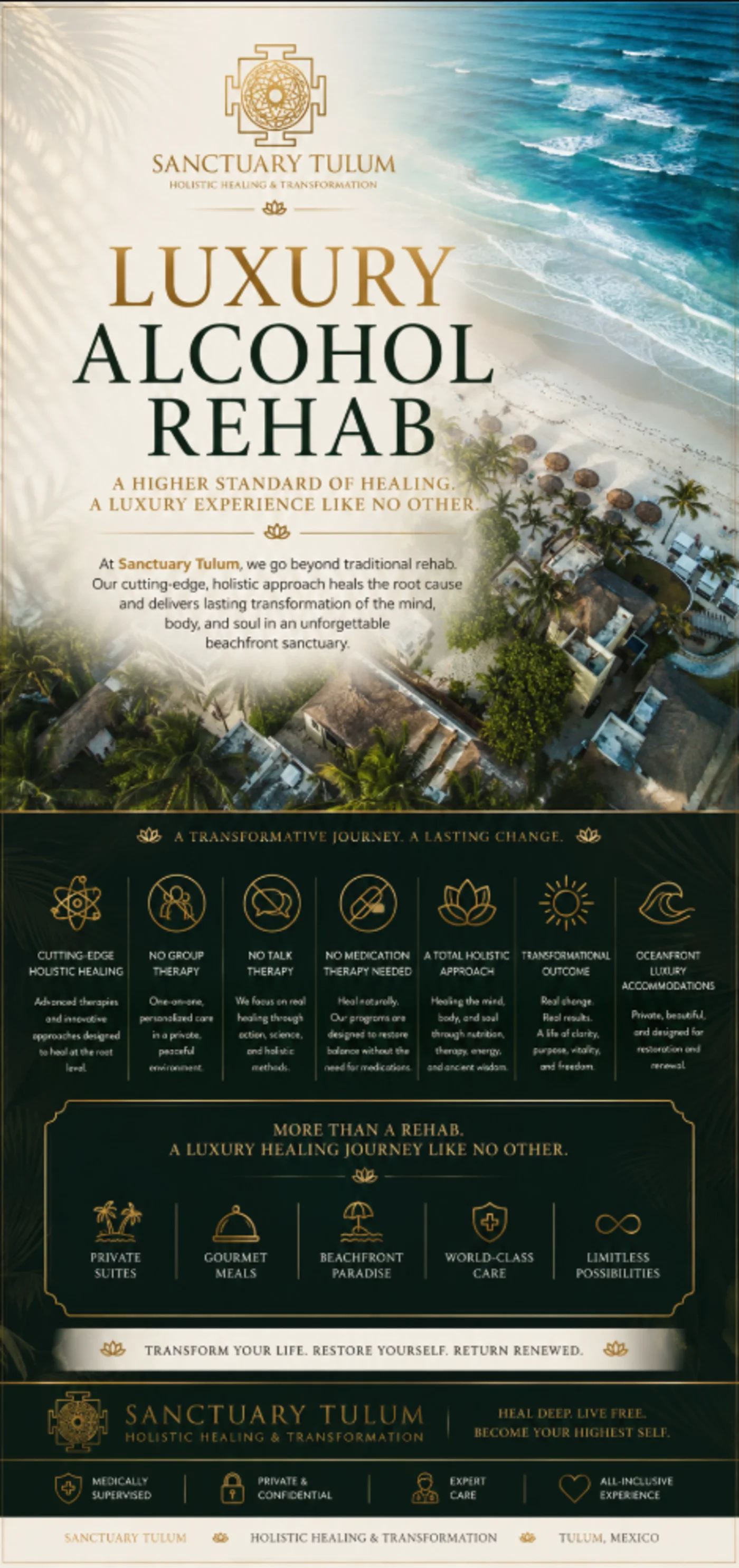
When alcohol is the primary concern, that work happens inside our holistic alcohol rehab track, delivered within the same discreet executive rehab structure.

The Pattern Behind the Performance
High-functioning alcohol dependence follows a recognizable arc even though every case looks different from the outside. Drinking begins as a tool — for sleep, for social ease, for decompressing after a demanding day — and gradually becomes load-bearing. The person does not notice the shift because nothing external changes: deals still close, board decks still get finished, the household still runs. What changes is internal tolerance and the amount of drinking required to reach the same effect, and that escalation is largely invisible to colleagues who see only outcomes, not process.
This is precisely why standard screening questions fail for this population. "Has drinking affected your work?" assumes a visible decline that, for many executives, simply has not happened yet. A more useful question is functional: what would happen if you tried to stop for thirty days, and how would you feel physically in the first week. The answer often reveals dependence that years of strong performance reviews had obscured.
Why Standard Rehab Timelines Don't Fit
Most residential alcohol programs are built around a fixed 28- or 30-day calendar and a group curriculum. For a founder, managing partner, or C-suite executive, a rigid disappearance of that length is itself a professional risk — it invites questions that confidentiality is designed to prevent. The more workable model is a program that scales in length and intensity to the individual rather than the calendar, with scheduling built around what can realistically be protected without lying to a board or a client base.
That does not mean shorter is automatically better. The luxury alcohol treatment center model still requires enough time for medical stabilization, physical restoration and the psychological work underneath the drinking — it simply does not force that time into a template designed for a different population.
The Physical Cost of High-Functioning Drinking
Years of nightly drinking, regardless of maintained performance, still produce the same physiological wear documented broadly in alcohol research: disrupted sleep architecture, nutritional depletion, elevated blood pressure, and liver strain that often goes undetected until routine bloodwork flags it. Restoring that baseline is not incidental to treatment — for executives whose cognitive output is the asset being protected, physical restoration is frequently the fastest lever for regaining clarity and energy.
This is part of why programs pairing medical detox with regenerative therapies see meaningful early gains: sleep and nutrition recover first, and the psychological work becomes more productive once the body is no longer running a deficit. See our executive rehab page for how that sequencing is structured across a full stay.
Returning to the Role Without Returning to the Pattern
The hardest part of executive alcohol treatment is rarely the stay itself — it is resuming exactly the environment, travel schedule and social obligations that surrounded the drinking, often within days of discharge. A realistic plan names the specific situations most likely to test early sobriety — the client dinner, the industry conference, the late board call — and rehearses a concrete response to each before departure, rather than issuing a general instruction to "stay strong."
Ongoing individual support after discharge, described on our one-on-one coaching page, extends that planning into the months when the risk of quietly reverting to the old pattern is highest, precisely because outward performance will look normal again well before the underlying work is finished.
If you are comparing programs, our detailed guide to how to evaluate executive rehab centers breaks down clinical staffing, privacy, program length, and what the price actually buys.