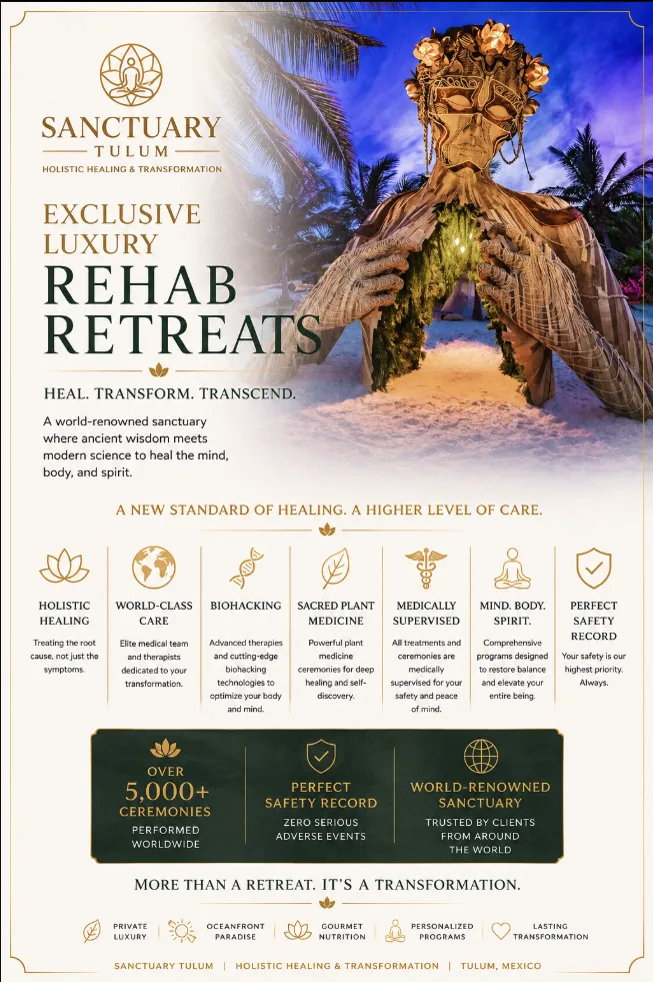
Setting is often treated as the least clinical part of treatment. For nervous-system regulation specifically, it's one of the more relevant ones. Chronic stress and trauma keep the nervous system in a heightened state; consistent access to natural light, ocean, and quiet outdoor space is a genuinely supportive environment for the kind of down-regulation recovery depends on — alongside the medical protocol itself, not a substitute for it.

Separation From Ordinary Life
A private, natural setting also removes a practical variable that matters more than it sounds: nothing about the environment resembles the client's ordinary life, which makes the treatment period feel genuinely separate from day-to-day routine and responsibility.
Part of the Clinical Model
Why the setting is part of the clinical model, not just the amenities, is explained on our executive rehab page; more on the property and its history is on our About Us page.

The Physiology Behind the Claim
Chronic stress keeps the autonomic nervous system tilted toward sympathetic activation — elevated cortisol, disrupted sleep architecture, and a body that stays braced even when nothing immediate is threatening it. Recovery work asks the nervous system to do the opposite: settle enough for sleep, digestion, and reflection to function normally again. Environmental cues that the body reads as safe — daylight, quiet, natural sound, unhurried time outdoors — measurably support that shift, which is why a restorative setting is treated as part of the protocol rather than scenery around it.
Privacy as a Clinical Variable, Not a Luxury
For executives, founders and public-facing professionals, the fear of being recognized in treatment is not abstract — it is a live source of vigilance that competes directly with the down-regulation recovery depends on. A person who is monitoring the room for who might recognize them is, by definition, not settling into the kind of rest that supports sleep, digestion and reflective thinking. Removing that variable through a genuinely private setting is a clinical decision with a physiological rationale, not simply a comfort upgrade layered on top of treatment.
Circadian Rhythm and the Built Environment
Sleep architecture is one of the first things disrupted by chronic stress, trauma and substance use, and it is also one of the most environment-sensitive systems in recovery. Consistent exposure to natural daylight during the day and genuine darkness and quiet at night helps re-anchor a circadian rhythm that has often been running on an irregular schedule for months or years. A setting engineered around natural light cycles rather than artificial lighting and constant indoor stimulation is not incidental to that process — it is one of the more direct environmental levers available for supporting sleep during early recovery.
Movement, Nature Access and Regulation
Recovery protocols increasingly build unstructured time outdoors into the daily schedule rather than treating it as free time between clinical sessions. Walking on natural terrain, being near open water, and simply having unhurried outdoor time appear repeatedly in the broader stress-physiology literature as supportive of parasympathetic activity — the "rest and digest" state that counteracts the sympathetic activation chronic stress produces. None of that replaces therapy, medication management or medical monitoring; it changes what happens in the hours around them, which in a residential program is most of the day.
Why Institutional Settings Can Work Against Regulation
A conventional clinical environment — fluorescent lighting, shared hallways, a visible schedule of comings and goings, limited outdoor access — is not inherently harmful, but it does little to counteract the hypervigilant state many people arrive in. For some conditions that is an acceptable tradeoff against other priorities such as proximity to acute medical infrastructure. For an executive or high-profile client whose primary barriers to treatment are privacy and the ability to actually rest, an institutional setting can work against the very regulation the treatment is trying to produce. That tension is the practical reason setting gets treated as a clinical design decision here rather than a secondary consideration made after the medical protocol is finalized.
How the Property Is Organized Around This
In practice, that means the daily structure alternates between focused clinical work — individual therapy, medical check-ins, group process — and time spent in the natural surroundings of the property, rather than keeping clients indoors between sessions. Guests exploring holistic and integrative approaches alongside conventional treatment, or considering the wellness and recovery amenities on-site, are looking at the same underlying design principle from a different angle: setting is treated as part of the therapeutic infrastructure, integrated with — not separate from — the clinical program.
How This Plays Out Alongside Medical Care
None of this replaces the clinical work itself. At Sanctuary Tulum, guests working through substance dependency typically begin with our medically supervised detox program, and those managing benzodiazepine tapers specifically move through our benzodiazepine withdrawal program under physician oversight. The setting is what makes the hours between those clinical sessions genuinely restorative rather than simply unstructured downtime.
Guests can review the full residential structure on our luxury rehab page, the integrative clinical framework on our Pouyan Method™ page, and reach admissions directly through the contact page for a confidential conversation about whether this environment fits a specific situation.
A Note on Limits
None of this is a claim that setting alone treats anything. The physiological benefits of a calm, natural environment are supportive and adjunctive; they work alongside physician-directed medical care, individual and group therapy, and, where relevant, medication management — not in place of them. A beautiful environment paired with an inadequate clinical protocol is still an inadequate clinical protocol. The reason setting is discussed at length here is that it is genuinely useful and consistently underweighted, not because it substitutes for the medical and therapeutic work that has to happen regardless of where it takes place.