Additional Information
What Makes Us Different
A complete and honest breakdown of why Sanctuary Tulum produces outcomes that no conventional rehab, retreat, or treatment center can replicate.
The Numbers That Tell the Story
15+
Years of uninterrupted operation since 11/11/2011
0
Issues or side effects related in any plant medicine ceremony
5000+
Over 5,000 medically supervised psychedelic ceremonies
4
Sacred plant medicines safely administered under one roof
1-on-1
Individualized care throughout the program — no group therapy, no replacement drugs
0
Pharmaceutical medications or prescribed — ever
Sanctuary Tulum vs. Conventional Treatment
Approach to Healing
Complete, multi-dimensional protocol addressing the body, brain, nervous system, emotions, and spirit simultaneously
Symptom management through medication and/or talk therapy — treating the surface, not the root cause
Medications
Zero pharmaceutical medications. 100% natural, non-toxic, non-invasive therapies
Often replaces one addictive substance with another (methadone, Suboxone, benzodiazepines)
Therapy Model
35+ hours of private, one-on-one care per week — no groups, no shared sessions, no generic protocols
Group therapy, talk therapy, and 12-step models — the same approach used since the 1930s
Plant Medicine
All four sacred plant medicines (Ayahuasca, Ibogaine, 5-MeO-DMT, Psilocybin) under one roof — medically supervised, with zero deaths across 15+ years
Single-medicine retreats, often without medical oversight, screening, or integration support
Safety Record
15+ years of continuous operation. Zero client deaths in any plant medicine ceremony. Ever.
Growing number of incidents at newly opened retreat centers operating without adequate medical oversight
Personalization
Every program is custom-built to the client's specific history, condition, and needs — from 4 to 16 weeks
Standardized 28-day or 30-day programs applied universally regardless of history or severity
Neurological Restoration
Proprietary Brain Repair IV drip, NAD+ IV, stem cell therapy — directly addressing the biological damage
No protocols for neurological repair. Brain chemistry left to recover on its own, if at all
Setting
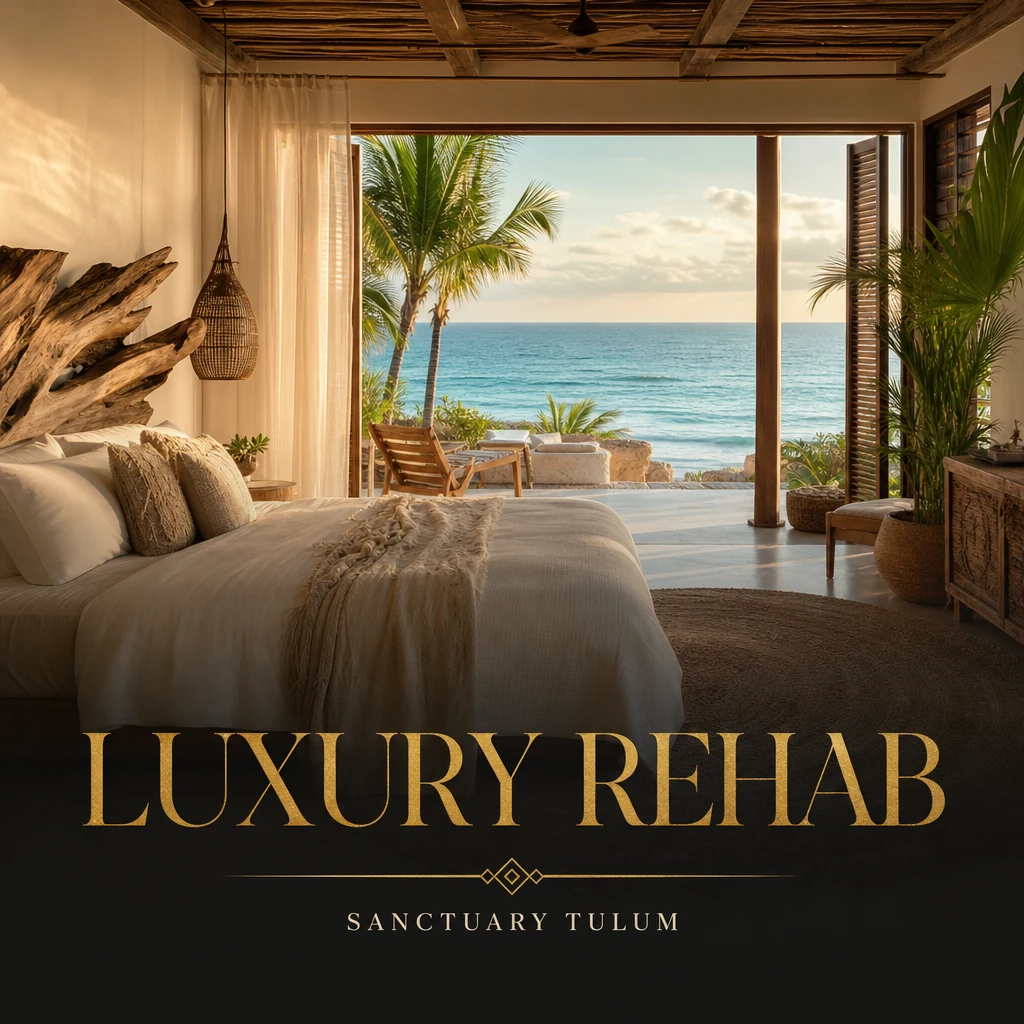
Private, oceanfront luxury suites — Baja California and Tulum, Mexico — with daily nine-hour healing regimens
Institutional environments, shared rooms, hospital settings — environments that rarely support healing
Independence
100% self-funded. No institutional investors, no corporate sponsors, no external pressure shaping outcomes
Often owned by private equity or insurance-driven organizations with financial incentives misaligned with healing
Why This Matters
Conventional treatment models were developed decades ago. Many were built around the pharmaceutical industry's incentive structures — not around what actually helps people heal. The result is a global mental health and addiction crisis that only deepens, despite record levels of spending on treatment.
We are not here to attack conventional medicine. We are here because thousands of people who went through it — sometimes for years, sometimes for decades — still did not heal. They came to us. And they healed here.
The difference is not a single therapy or a single medicine. The difference is the totality of the approach — the precision of the protocol, the depth of the supervision, the refusal to cut corners, and fifteen years of learning what works and what doesn't.
"I can't claim to heal everyone. But if there's a way out, this is it." — Johnny Tabaie
What "One-on-One" Actually Means Day to Day
Group therapy is efficient to staff, which is part of why it became the default model across the addiction and mental-health treatment industry decades ago. It is not, by itself, wrong — many people benefit from shared process work. But it is a fundamentally different structure from a program where every clinical hour is delivered one-to-one, and the difference shows up in practice: a private session can be redirected mid-conversation based on what actually surfaces that day, rather than following a fixed group curriculum built for the average participant in the room.
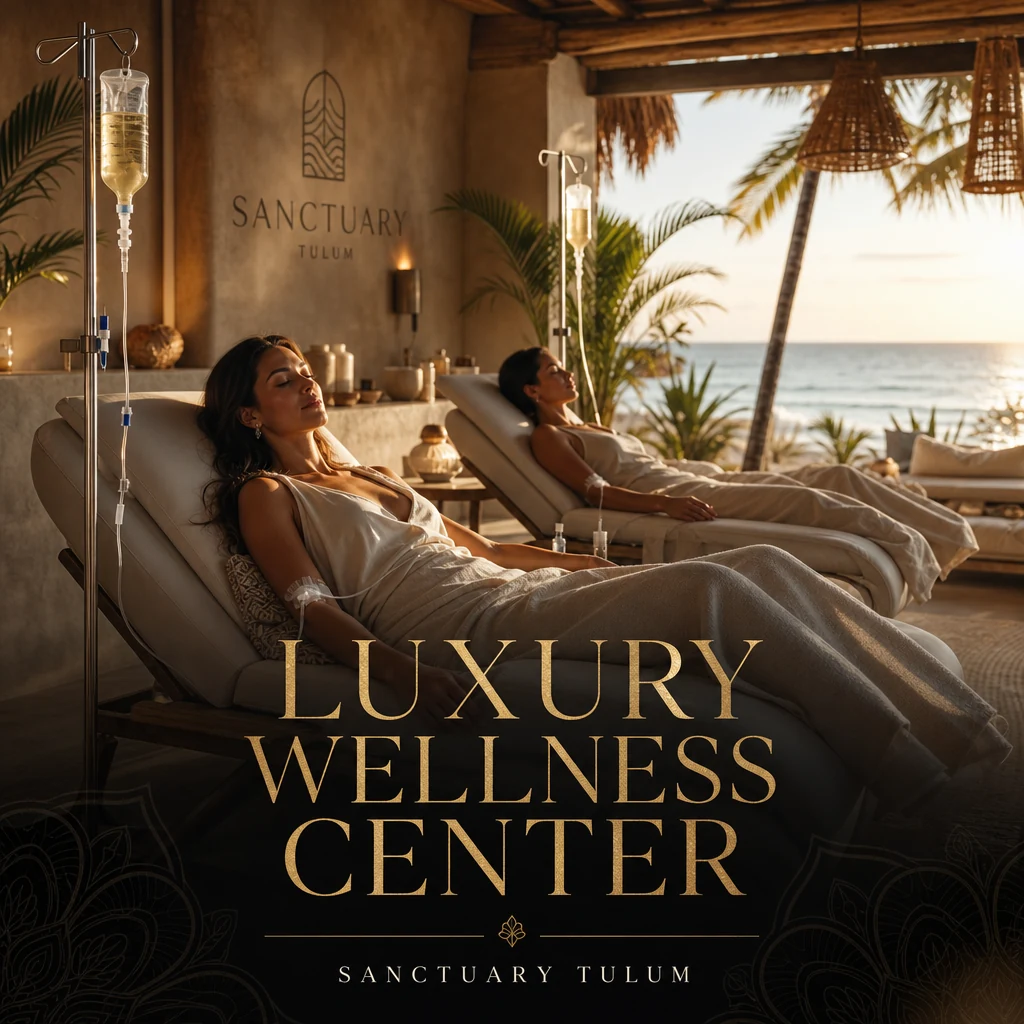
At Sanctuary Tulum, that one-to-one structure extends across every discipline involved in a stay — physician visits, plant-medicine preparation and integration, IV and regenerative therapy sessions, bodywork, and nutrition planning. No guest shares a treatment room, a ceremony, or a therapy session with another guest at any point in the program. See the full residential structure on our luxury rehab page.
The trade-off is capacity. A one-to-one model can only serve a limited number of guests at a time, which is part of why census stays low relative to conventional facilities. That constraint is deliberate rather than incidental — staffing ratios close to one-to-one are structurally impossible to maintain at higher guest volumes, and the program is built around a small, resource-intensive population rather than scaling up.
Regenerative Medicine Alongside Plant Medicine
The physical-restoration side of the program — including Brain Repair IV therapy, hyperbaric oxygen therapy, and stem cell therapy — is designed to support the body's own repair processes rather than mask symptoms. These modalities are offered as part of an integrated plan built around a guest's specific history and lab work, not as a standardized add-on menu applied the same way to everyone.
None of these therapies are presented as a guaranteed cure for any condition. They are tools within a broader, physician-supervised protocol, and outcomes vary by individual history, severity, and adherence to a discharge plan after the residential stay ends. Guests considering the full picture can review our Pouyan Method™ page and the complete range of treatments we offer.
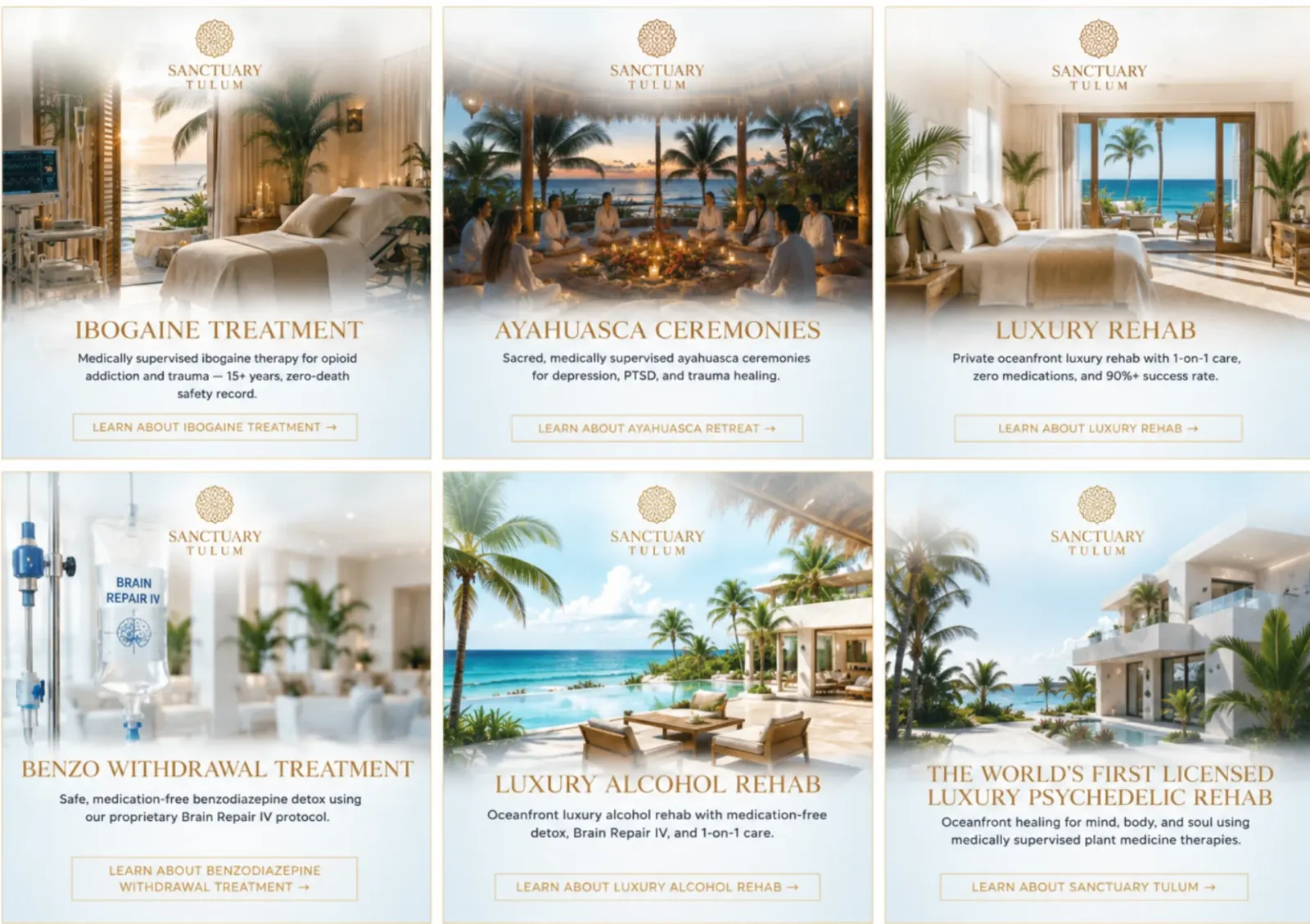
What the Research Says About Individualized Care
The choice to run every session one-on-one rather than in groups is not a marketing position — it reflects a documented gap in how conventional group-based substance use treatment performs across different individuals. A review of the treatment-outcome literature on group therapy for substance use disorders found real variability in results depending on structure, therapist skill, and how well a given format fits a specific client's history, rather than uniform benefit across every participant. That variability is part of why Sanctuary Tulum builds each week of programming around the individual rather than a shared curriculum designed for an average participant in the room. Learn more about how this plays out day to day on our luxury rehab page.
The regenerative side of the program is treated with the same evidence-first posture. Hyperbaric oxygen therapy, for example, has been studied in randomized trials for opioid withdrawal symptoms and for post-concussion syndrome following traumatic brain injury, with outcomes that vary by population, protocol, and severity. NAD+ intravenous administration has likewise been the subject of safety and tolerability research examining different delivery routes. Sanctuary Tulum does not present any single regenerative therapy as a guaranteed outcome; each is offered as one tool inside a physician-supervised plan, described in more detail on our HBOT therapy and NAD+ IV therapy pages.
Licensing and Medical Oversight
Sanctuary Tulum operates in Tulum, Mexico as a facility licensed by COFEPRIS, Mexico's federal health regulator. Every plant-medicine ceremony and regenerative therapy is administered within a medically supervised setting that includes pre-arrival screening, on-site physician oversight, and continuous monitoring rather than being left to a facilitator without clinical training. This is the structural difference that separates a licensed medical facility from an unsupervised retreat: named clinicians, documented protocols, and a written plan for what happens if a session does not go as expected. Guests can review the full scope of our care on the all treatments page or read about our approach to plant medicine specifically on the ayahuasca ceremony and Ibogaine treatment pages.
None of this is presented as a cure or a guaranteed outcome. Every claim on this page is a description of structure and process — how care is delivered, supervised, and documented — rather than a promise about results, which vary by individual history, condition severity, and adherence to a continuing care plan after departure.
References
- Weiss RD, et al. Group therapy for substance use disorders: what do we know? Harv Rev Psychiatry. 2004;12(6):339-350.
- Sonntag D, et al. Group versus individual treatment for substance use disorders. Addict Sci Clin Pract. 2021.
- Hyperbaric Oxygen Therapy for Pain, Opioid Withdrawal, and Related Symptoms: A Pilot Randomized Controlled Trial. J Addict Med. 2022.
- Hyperbaric oxygen therapy for the treatment of traumatic brain injury: a meta-analysis. Med Gas Res. 2015.
- Evaluation of safety and effectiveness of NAD in different administration routes. Rejuvenation Res. 2023.
- COFEPRIS — Mexico's federal health regulator.
What Makes Sanctuary Tulum Different — FAQ
Ready to Experience the Difference?
An honest conversation about whether what we do is right for you — no pressure, no promises we can't keep.