Tulum · Place
Tulum: A Destination for Luxury Retreats
Geography, climate and a decade of wellness infrastructure have made this stretch of Mexican coastline an unusually good setting for serious recovery work.
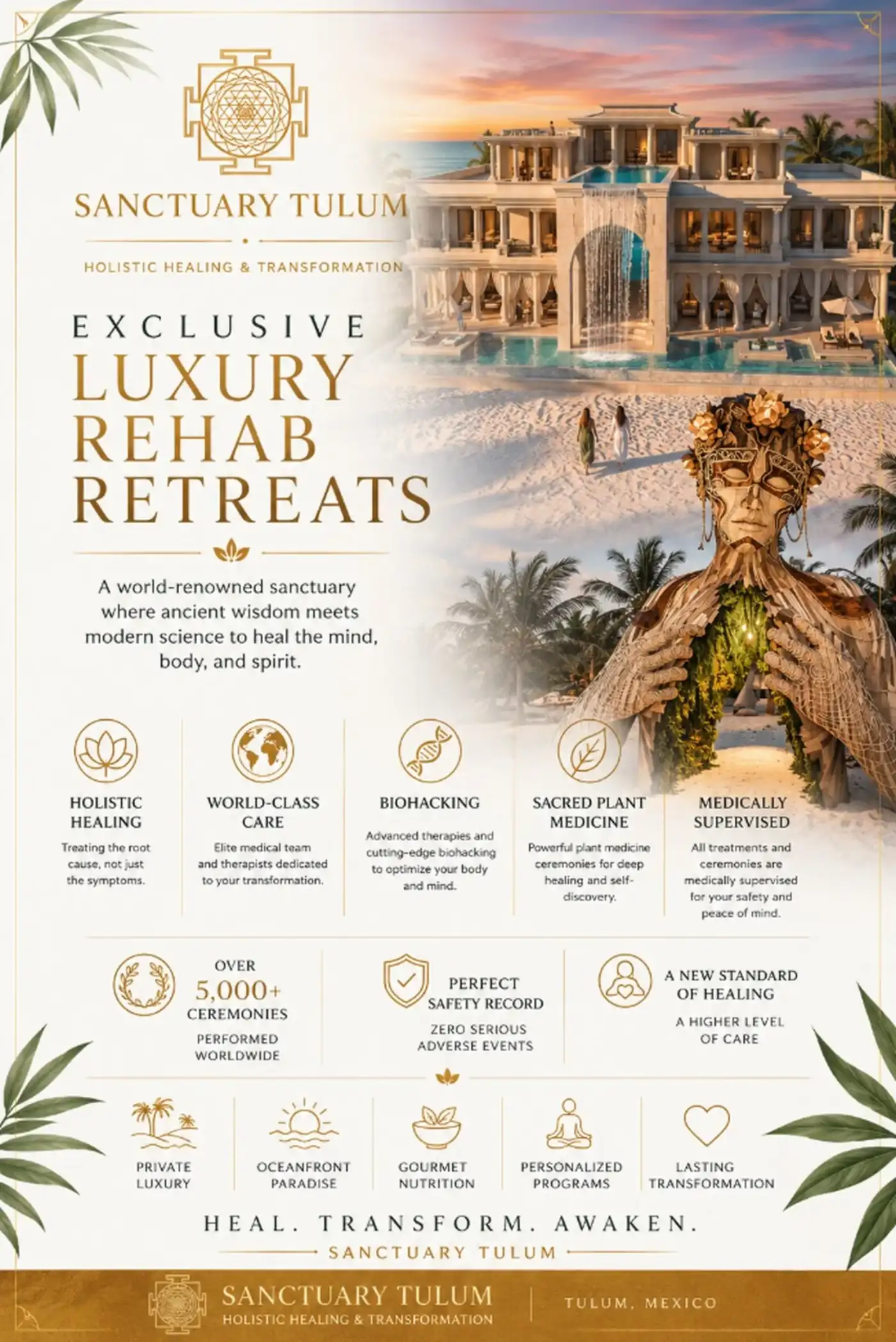
Tulum's reputation as a wellness destination predates the current wave of clinical retreats by at least two decades, built originally on yoga, cenote diving and a coastline largely free of the high-rise development found further north on the Riviera Maya. That earlier reputation matters, because it shaped the infrastructure — practitioners, wellness-literate staff, organic food supply chains — that serious clinical facilities now draw on.
What has changed more recently is the arrival of licensed medical facilities offering genuine clinical retreats rather than purely recreational wellness experiences: physician-led programs combining IV therapy, plant medicine work and structured one-to-one care within the same oceanfront setting that made Tulum attractive to visitors in the first place.
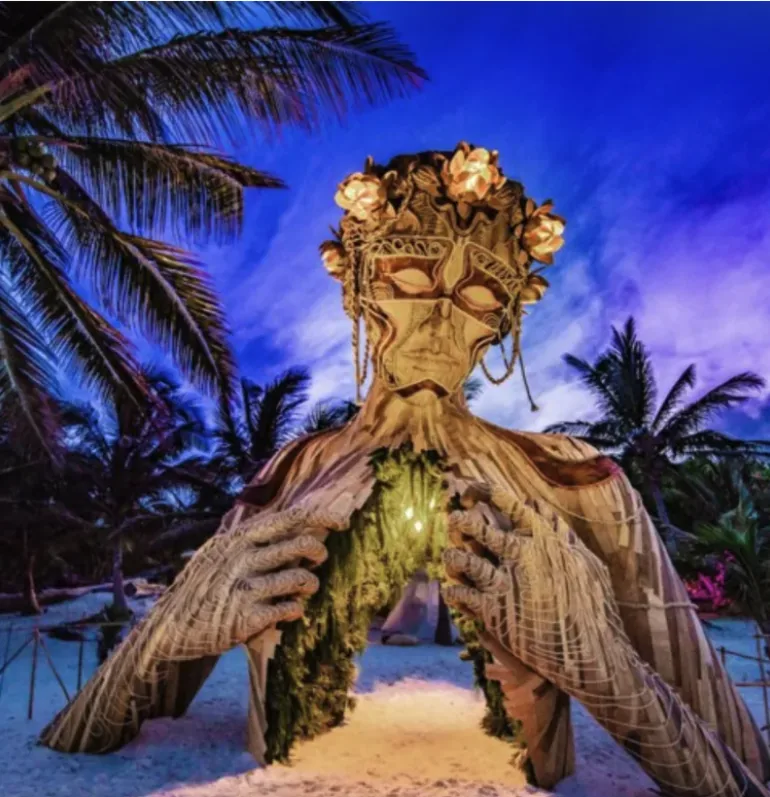
Geography as a clinical asset
Tulum sits roughly ninety minutes from Cancún International Airport, close enough for practical travel logistics but far enough from the resort corridor to offer real quiet. The jungle-meets-coastline setting — mangrove, cenote, reef and beach within a small radius — gives a facility genuine options for outdoor programming that would be impossible in a purely urban or purely resort environment.
That combination of accessibility and remove is precisely what allows a guest to travel out of their usual environment — away from the professional and social network where they are known — without the trip itself becoming a logistical ordeal.

Climate, light and the nervous system
Consistent year-round warmth, ocean proximity and natural light have practical clinical relevance: outdoor movement, morning sun exposure and time near water are frequently used, low-cost supports for sleep regulation and mood, and Tulum's climate makes them available essentially every day of a stay rather than intermittently.
None of this substitutes for clinical care, but it removes a category of environmental friction — cold, grey weather, indoor confinement — that can work against recovery in programs based in less forgiving climates.
A good setting does not do the clinical work. It removes the obstacles that would otherwise compete with it.
Sanctuary Tulum
What the setting actually contributes
Not marketing, but measurable inputs into a stay.
Ocean and reef access
Daily outdoor time without leaving the property.
Consistent climate
Predictable warmth supports outdoor movement year-round.
Jungle and cenote landscape
Variety of natural settings for meditation and rest.
Organic food supply
A mature local network for whole-food, superfood nutrition.
Ninety-minute transfer
Genuine remove without an exhausting journey.
A decade of wellness practitioners
Deep local bench of body-work and movement talent.
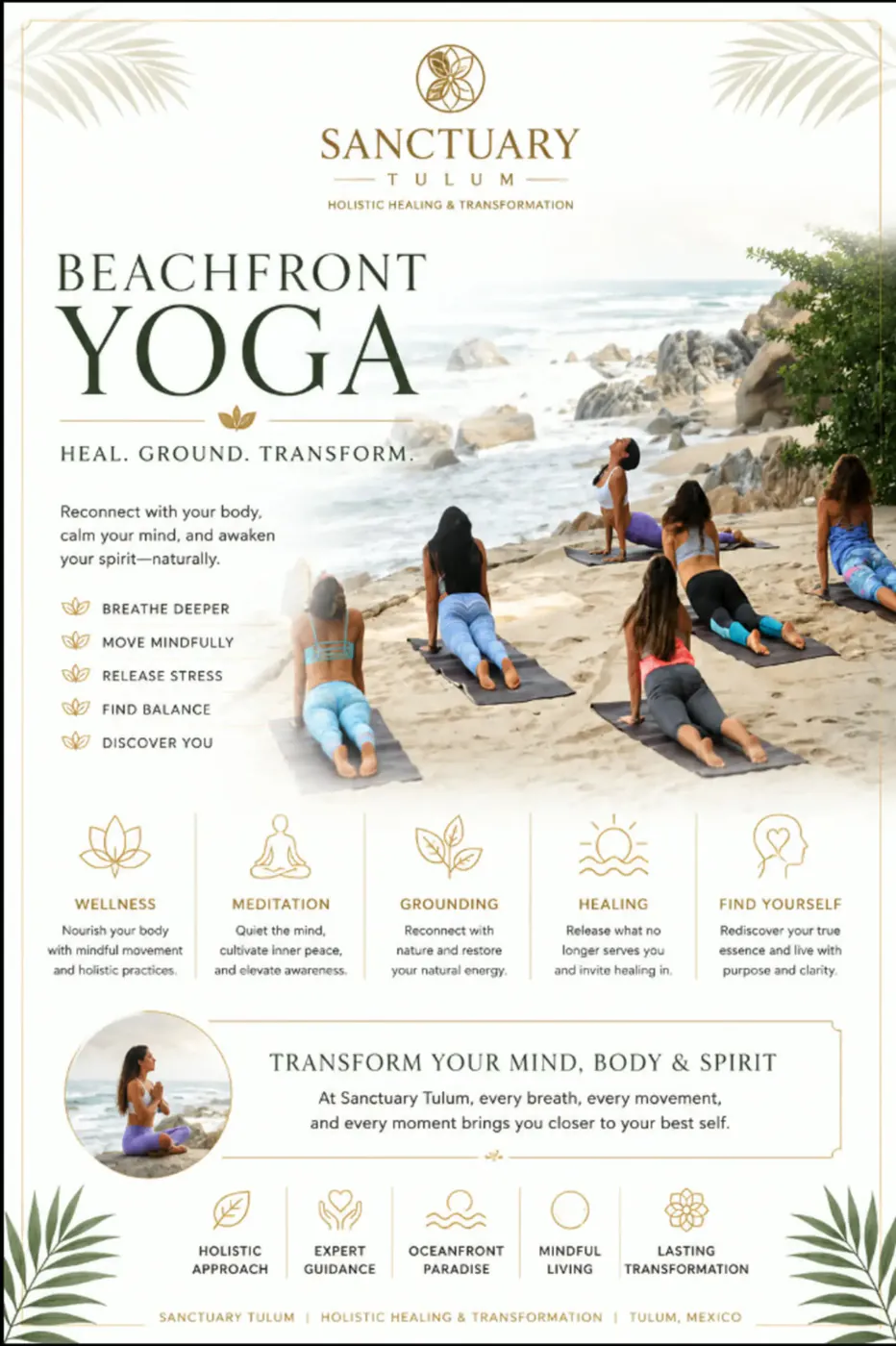
Movement and the outdoor program
At Sanctuary Tulum, the setting is used directly: outdoor yoga and meditation, oceanfront single-occupancy suites rather than shared indoor accommodation, and a daily rhythm that moves guests between clinical sessions and open-air recovery space rather than confining a stay to a single building.
This is one of the practical reasons the property model favors a small census: outdoor programming at scale loses exactly the quiet that makes it useful in the first place.
What the setting does not replace
It's worth being direct about the limits of geography. A beautiful location does not make a program clinically sound, and the wellness industry in Tulum, as elsewhere, includes operators with far less medical infrastructure than the setting implies. The World Health Organization frames effective substance-use and mental health treatment around individualized, evidence-informed clinical care — a standard that has nothing to do with a facility's postcard views.
The right way to weigh Tulum as a destination, in other words, is to treat the setting as one input among several — alongside licensing, medical staffing, and program structure — rather than the deciding factor.
Sanctuary Tulum's place in that landscape
Sanctuary Tulum is a licensed oceanfront healing center built on founder Johnny Tabaie's proprietary Pouyan Method™, delivering more than 35 hours of one-to-one clinical care per week within single-occupancy suites and a tiny census. Programs run four to sixteen weeks across the Gold, Platinum and Elite VIP tiers, detailed on the packages and pricing page.
For more on the clinical model itself, see the luxury wellness center and about us pages. Anyone considering Tulum as a destination for serious treatment, not just a wellness trip, is welcome to reach the clinical team directly through the contact page — Sanctuary Tulum operates as a luxury mental health recovery center with physicians on site.
A working week versus a vacation
Visitors sometimes assume that a clinical retreat in a resort town looks like a vacation with therapy attached. In a well-run program the reverse is closer to the truth: the setting exists to remove friction from a demanding clinical schedule, not to soften it. Days are structured around individual sessions, physical restoration and rest, with the ocean and jungle functioning as a backdrop for recovery work rather than the point of the trip.
That distinction is worth raising directly with any facility. A program that leads with excursions, entertainment and social programming is describing a wellness holiday. A program that leads with staffing ratio, physician availability and daily clinical hours — and treats the setting as one input among several — is describing treatment.
Practical considerations for travelers
Most guests reach Tulum through Cancún International Airport, with private transfer arranged for the final leg. Travel documentation, medication disclosure and any necessary customs paperwork for prescribed drugs should be confirmed well in advance of arrival. A licensed facility will coordinate this as a matter of course rather than leaving guests to work it out on their own.
Climate is also worth planning around: Tulum's hurricane season runs roughly June through November, and while serious weather events are infrequent, a facility with established protocols for schedule disruption is preferable to one without a plan.
Spa, retreat, or medically supervised facility — Tulum has all three
Tulum's density of wellness operators cuts both ways: it means genuine choice, but it also means the words "wellness" and "retreat" get applied to businesses with very different clinical capability. A beachfront spa or yoga retreat operates under a hospitality license, with no physician of record and no ability to manage medication or a medical event on site. A medically supervised facility, by contrast, is licensed by COFEPRIS, Mexico's federal health regulator, and carries a named medical director, nursing coverage, and a documented emergency protocol. The postcard setting looks the same in photographs; the licensing does not.
What clinical intake and daily sequencing look like on the ground
At a licensed facility, arrival day is a medical intake — history, medications, bloodwork, and where relevant an ECG — reviewed by a physician before the schedule is built, not after. Therapies are then sequenced rather than delivered as a fixed menu: outdoor movement, IV protocols and any adjunctive therapies are staged around how a guest is actually responding, with the plan adjusted as the stay progresses. That individualised approach is consistent with how the National Institute on Drug Abuse describes effective treatment planning — built around the person, not a template.
Who a Tulum-based clinical retreat is, and is not, appropriate for
A recreational wellness trip to Tulum is a reasonable choice for someone managing ordinary stress with no unstable medical condition. A licensed clinical retreat is the appropriate setting for anyone managing active withdrawal, a complex medication regimen, or a condition where an adverse event requires a physician on site rather than a call to a local clinic. Before booking, ask any Tulum facility directly for its license number or registration, its medical director's name, and its written emergency protocol — a beautiful coastline is not evidence of any of those things.