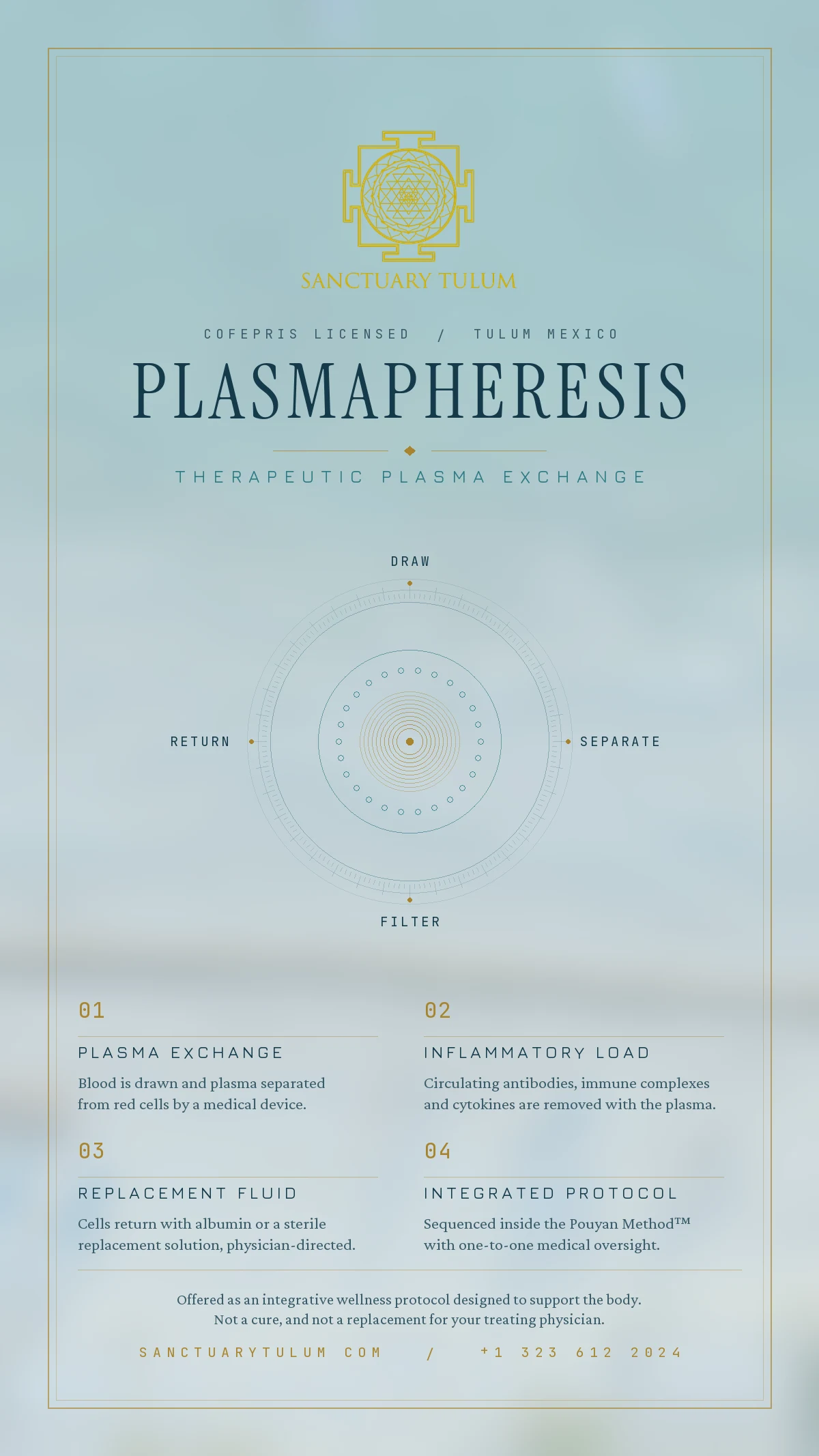
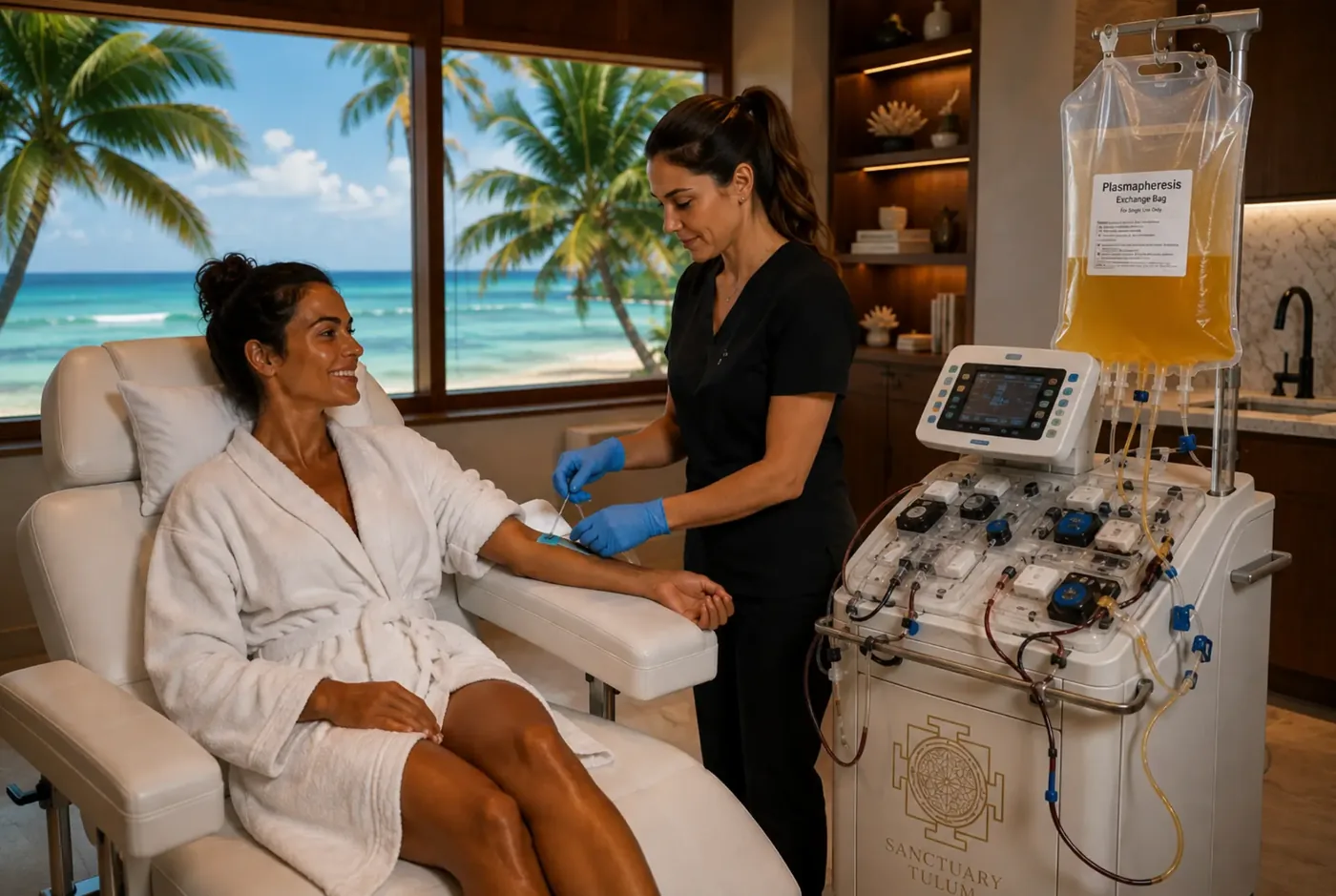
Mold mycotoxins are uniquely difficult to remove because they bind tightly to plasma proteins and recirculate through bile. Standard binders alone often fail to break the loop. Plasmapheresis offers something binders cannot: full removal of the protein-bound fraction.
Why CIRS Patients Often Stall
Chronic Inflammatory Response Syndrome involves persistent activation of the innate immune system. Even after mold exposure ends, circulating biotoxins and inflammatory complexes continue the cycle. Plasma exchange interrupts that cycle decisively.
A Layered Detox Strategy
We pair plasmapheresis with EBOO ozone therapy, colonic detoxification, infrared sauna, and bile-supportive binders for a complete mold elimination protocol.
Clinical Screening Before Any Session
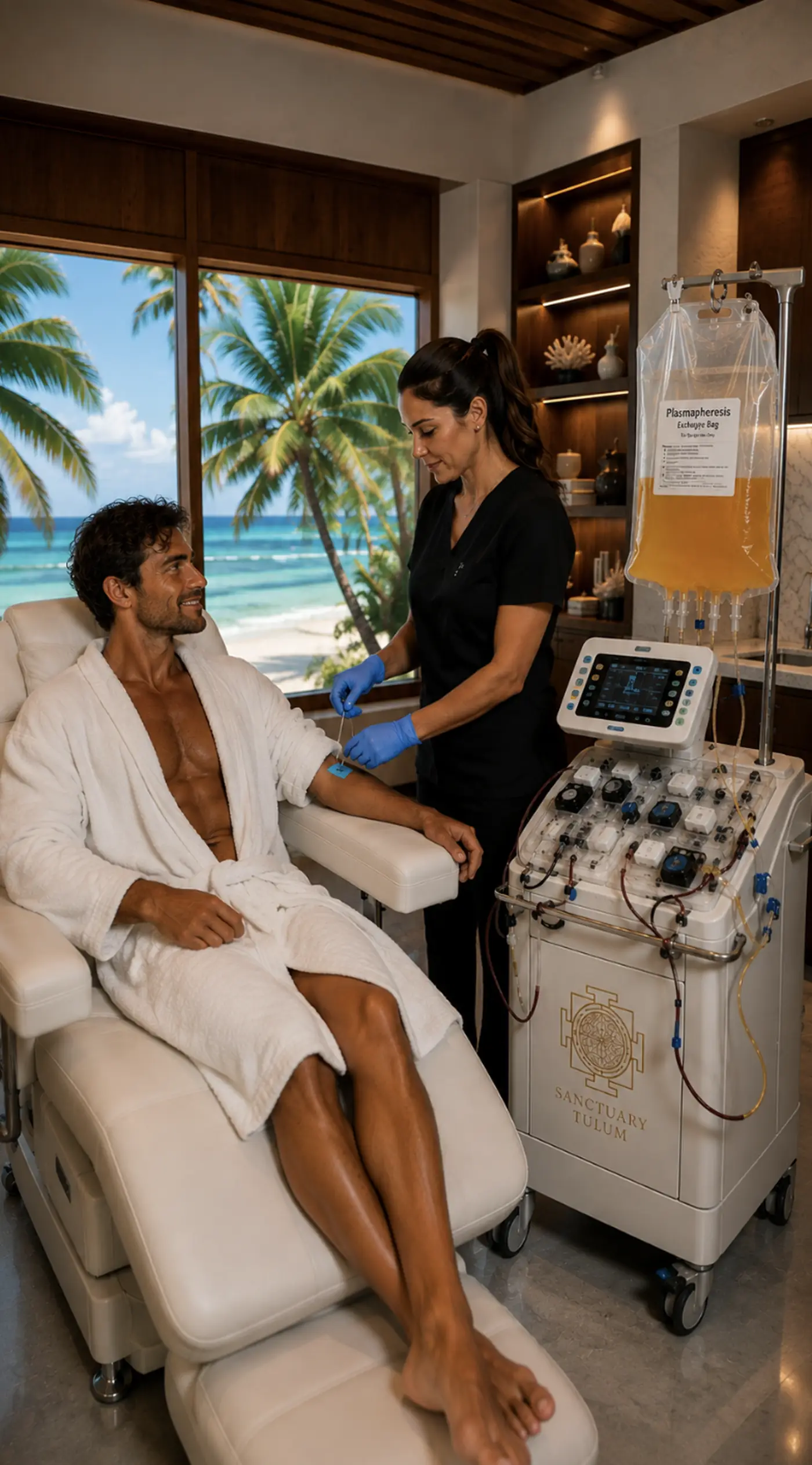
Every prospective guest at Sanctuary Tulum completes a confidential clinical intake and full medical screening before any plasmapheresis for mold and CIRS session is scheduled. The intake reviews cardiovascular status, kidney and liver function, current medications, coagulation history, and any recent infections. Guests currently prescribed anticoagulants, immunosuppressants, or SSRIs are reviewed on a case-by-case basis with their treating physician before a session is planned.1 The team never advises anyone to discontinue prescribed medication on their own.
On-Site Medical Oversight
A physician is on site during every session, supported by registered nurses and IV therapy specialists. Vital signs — blood pressure, oxygen saturation, and cardiac rhythm where clinically indicated — are monitored continuously across the session, with emergency medications and airway equipment on hand.2 Credentialing detail lives on the Medical Review Board page, and a broader description of the safety approach is available on the safest psychedelic facility page. Guests are encouraged to review both before deciding whether the program fits them.
How This Fits the Wider Program
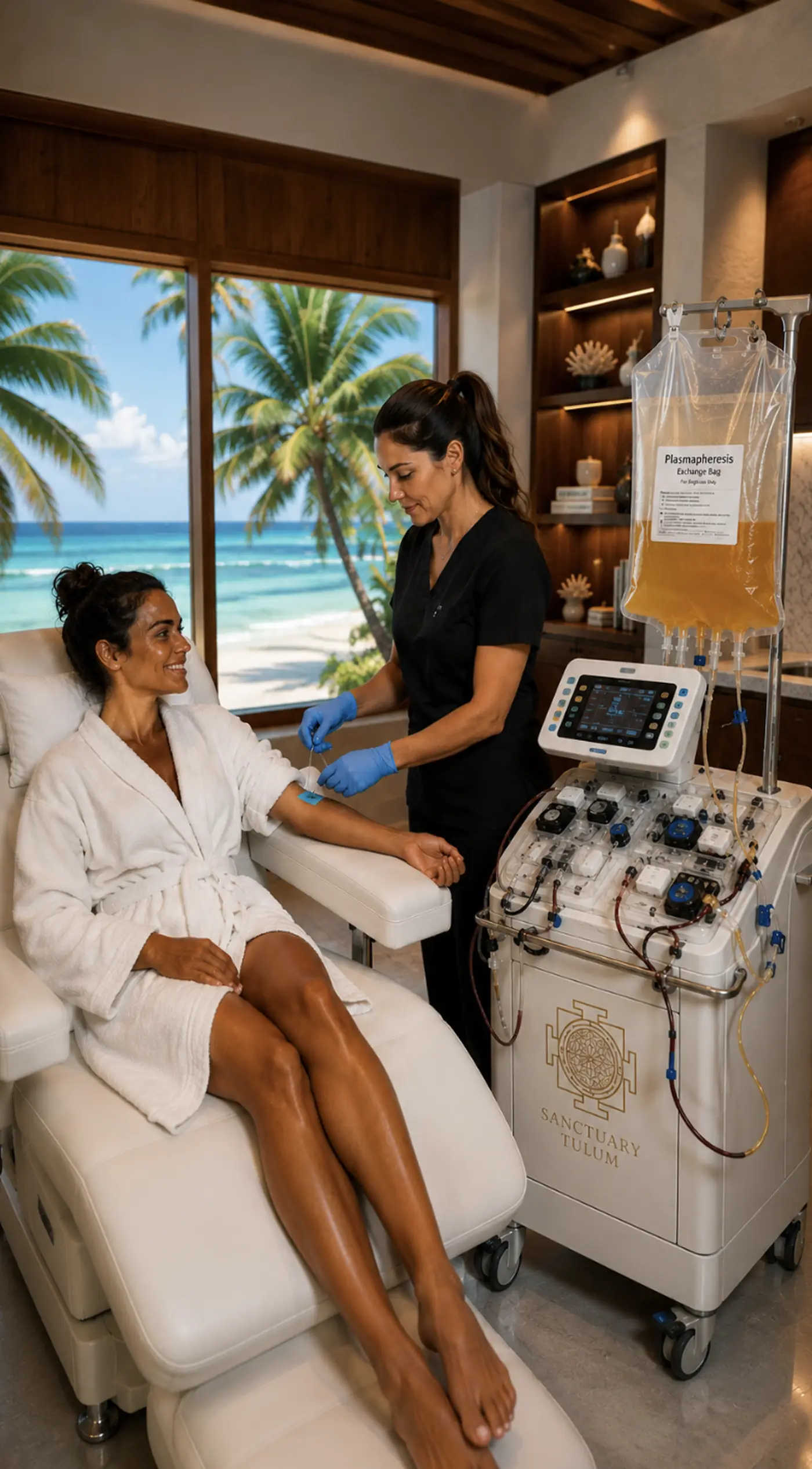
Therapeutic plasma exchange sits inside a broader biological and neurological protocol at Sanctuary Tulum rather than being offered as a standalone service. That means medical stabilization first, then a physician-scheduled combination of NAD+ IV therapy, HBOT, targeted nutrition, and — where clinically appropriate — medically supervised medically supervised ibogaine treatment, private ayahuasca ceremonies, or psilocybin therapy. The full framework is described in the proprietary Pouyan Method™. The exact sequence is individual and set by the medical team after intake — one guest's plan rarely looks identical to another's.
Honest Limits of the Evidence
Published research on plasmapheresis for mold and CIRS for the indications discussed here is still evolving. Therapeutic apheresis is well established for specific autoimmune and neurologic conditions in mainstream medicine,3 and ozone therapies have a longer clinical history in parts of Europe than in the United States. For broader wellness applications the evidence base is smaller and largely observational. Sanctuary Tulum does not present these protocols as cures or guaranteed treatments, and no diagnostic or prognostic claim is made outside a clinical evaluation.
Integration and Aftercare
A stay is only useful if it holds. Every program ends with a written integration and aftercare plan — continued check-ins with the integration team, referral to trauma-informed practitioners at home when appropriate, and lifestyle protocols covering nutrition, sleep, movement, and nervous-system regulation. Guests are encouraged to maintain their existing relationship with a treating physician and to return for booster sessions when a specific life transition benefits from it.
Why Mold Illness Is Different From Other Detox Cases
Mold-related Chronic Inflammatory Response Syndrome behaves differently from most toxic exposures because the biotoxins involved are lipophilic and protein-bound, which lets them recirculate through the enterohepatic pathway for months or years after the original exposure ends. Guests frequently arrive having already tried binders, air remediation, and elimination diets, only to plateau because the circulating antigen load was never directly reduced. Plasmapheresis addresses that specific bottleneck by mechanically removing the antibody-and-cytokine-laden plasma fraction rather than relying solely on the liver and gut to clear it.
What a Guest's First Week Typically Looks Like
Most guests begin with baseline labs — inflammatory markers, coagulation studies, and a review of any current binder or antihistamine regimen — before a single plasmapheresis session is scheduled. The medical team then sequences plasma exchange sessions across the stay, typically spaced two to four days apart to allow the body to re-equilibrate, while continuing supportive therapies such as EBOO ozone therapy and colonic detoxification in between. This sequencing, rather than the plasmapheresis session alone, is what most guests describe as the difference between short binder-driven cycles and a durable shift in how they feel.
Common Questions From Guests With CIRS
Guests often ask whether plasmapheresis will make them sensitive to future mold exposure again once they return home. It will not reduce the biological sensitivity itself — that requires ongoing avoidance of water-damaged buildings and, where needed, continued binder support — but it does lower the acute inflammatory burden that makes daily functioning difficult. Guests are also encouraged to bring recent lab work, prior mold testing (ERMI or similar), and a list of current supplements so the medical team can plan sessions around anything that affects coagulation or blood pressure.
A Note on Realistic Expectations
No single stay reverses years of chronic biotoxin exposure, and no clinician at Sanctuary Tulum frames it that way. What a well-run plasmapheresis protocol can reasonably deliver is a meaningful reduction in circulating inflammatory load, paired with the physical restoration — sleep, nutrition, movement — that a body under chronic inflammatory stress rarely gets time for on its own. Guests leave with a written continuing-care plan rather than an assumption that the work ends at discharge.
References
- Padmanabhan A, et al. "Guidelines on the Use of Therapeutic Apheresis in Clinical Practice." J Clin Apher. 2019;34(3):171-354.
- Elvis AM, Ekta JS. "Ozone therapy: A clinical review." J Nat Sci Biol Med. 2011;2(1):66-70.
- Reeves HM, Winters JL. "The mechanisms of action of plasma exchange." Br J Haematol. 2014;164(3):342-351.