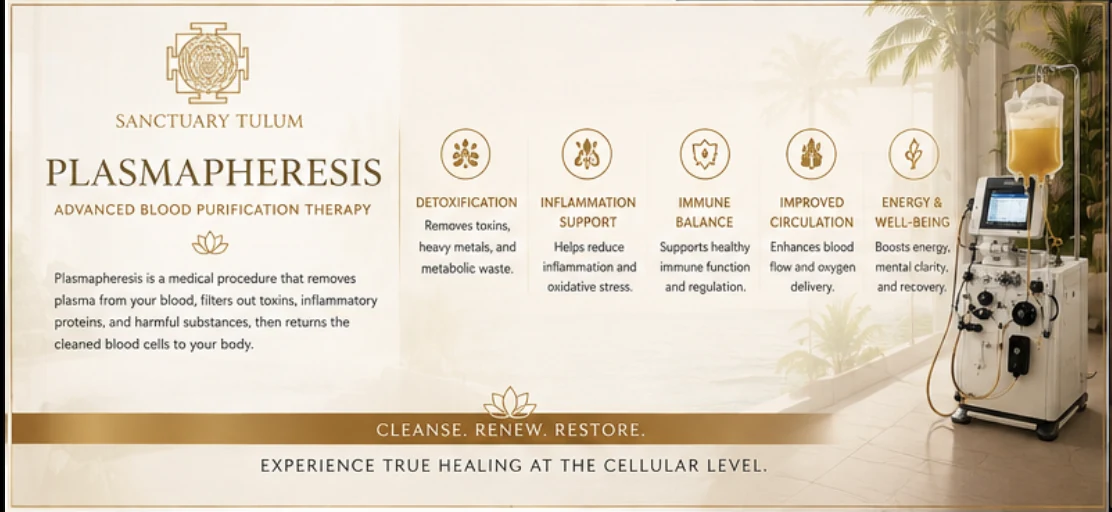
Many pharmaceuticals — SSRIs, benzodiazepines, opioids, statins, chemotherapy agents — bind tightly to plasma proteins and accumulate over years of use. Stopping the medication does not stop the exposure: the metabolites continue circulating long after the prescription ends. Plasmapheresis removes that bound fraction directly.
Why Plasma Exchange Outperforms Standard Detox
Sweating, binders, and IV nutrition cannot reach drug residues bound to albumin. Plasma exchange replaces the albumin itself — and with it, decades of pharmaceutical cargo.
Where It Fits
For clients in our SSRI / antidepressant and benzodiazepine programs, plasmapheresis is often the turning point — followed by our Brain Repair IV and NAD+ IV protocols.
Clinical Screening Before Any Session
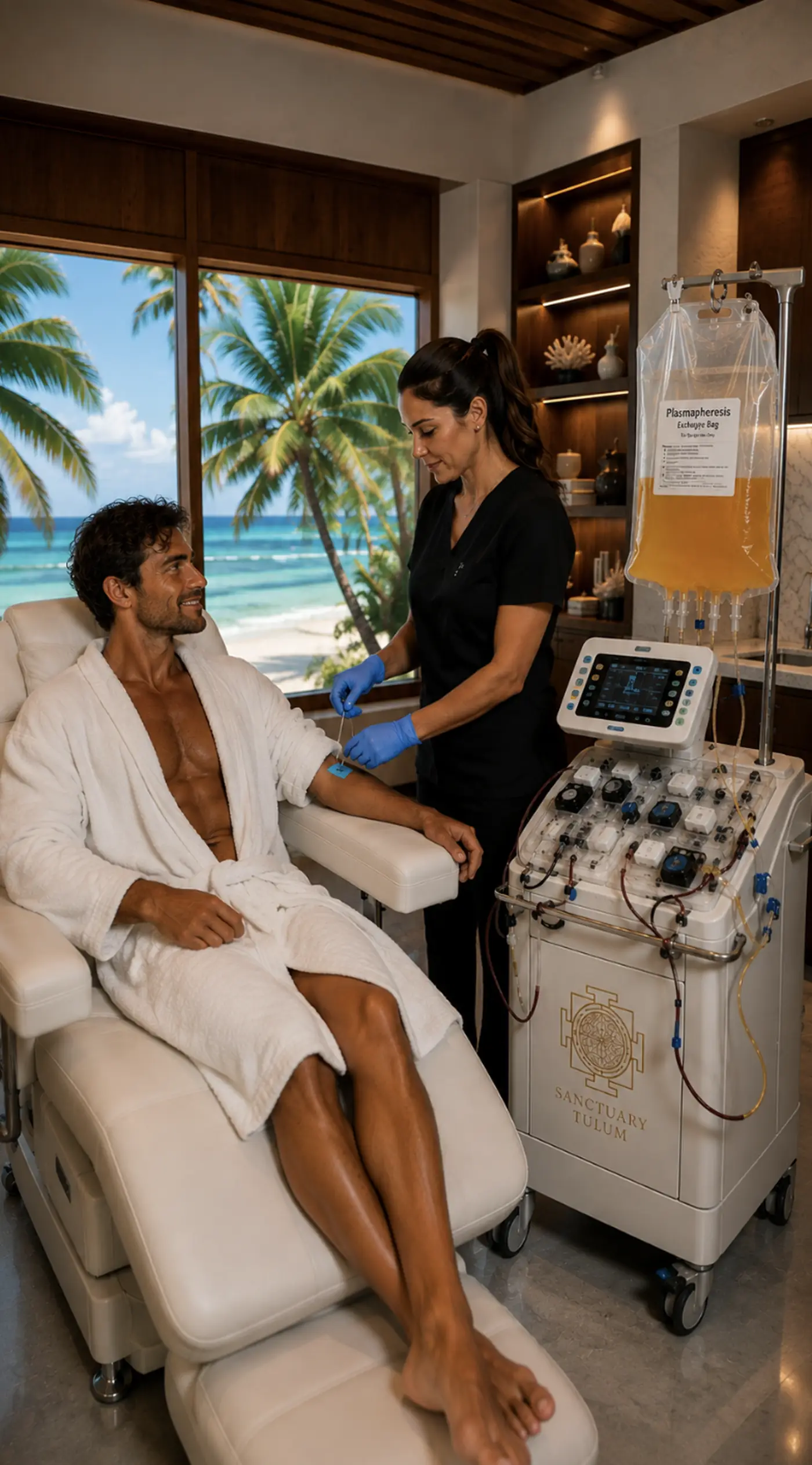
Every prospective guest at Sanctuary Tulum completes a confidential clinical intake and full medical screening before any plasmapheresis for medication detox session is scheduled. The intake reviews cardiovascular status, kidney and liver function, current medications, coagulation history, and any recent infections. Guests currently prescribed anticoagulants, immunosuppressants, or SSRIs are reviewed on a case-by-case basis with their treating physician before a session is planned.1 The team never advises anyone to discontinue prescribed medication on their own.
On-Site Medical Oversight
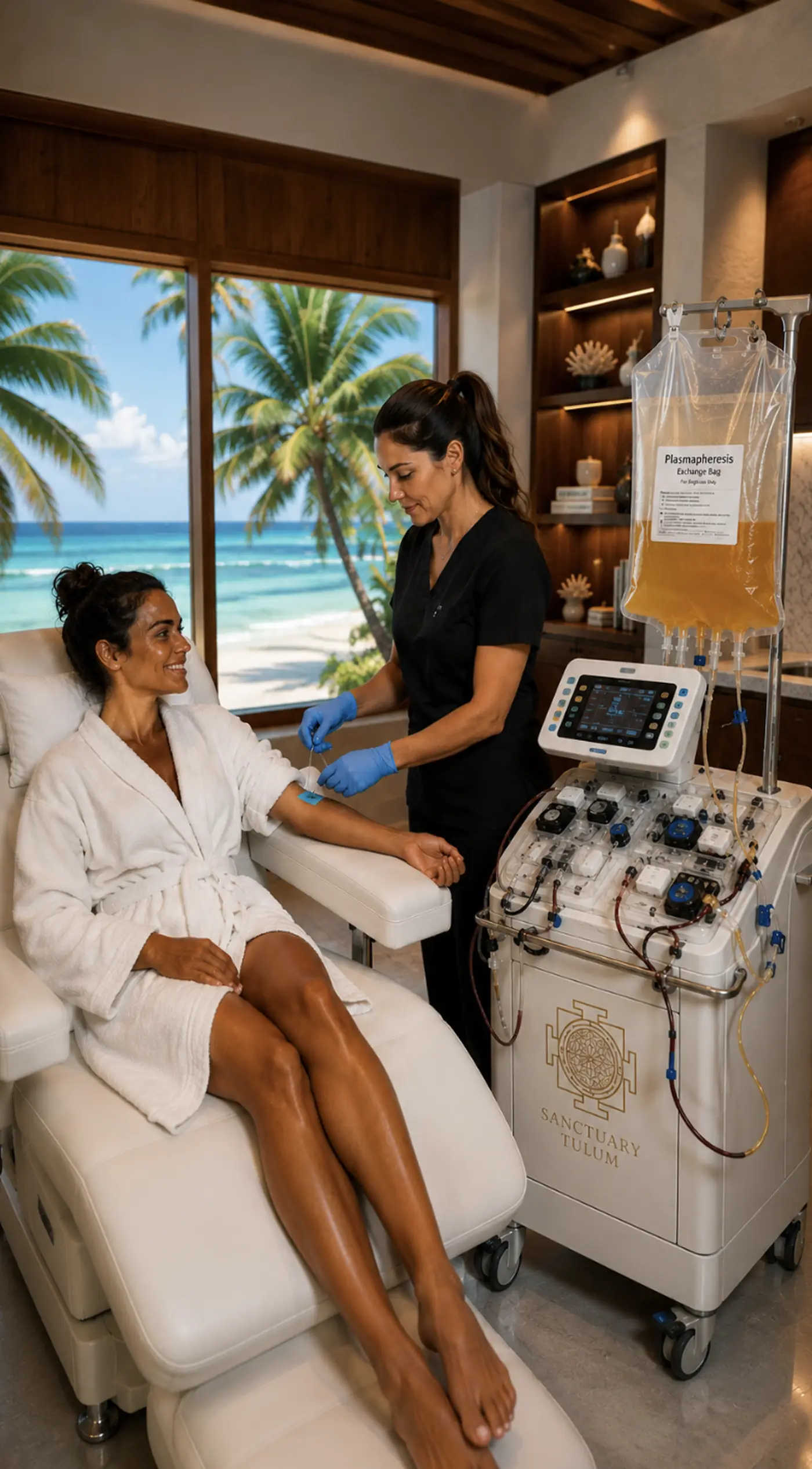
A physician is on site during every session, supported by registered nurses and IV therapy specialists. Vital signs — blood pressure, oxygen saturation, and cardiac rhythm where clinically indicated — are monitored continuously across the session, with emergency medications and airway equipment on hand.2 Credentialing detail lives on the Medical Review Board page, and a broader description of the safety approach is available on the safest psychedelic facility page. Guests are encouraged to review both before deciding whether the program fits them.
How This Fits the Wider Program
Therapeutic plasma exchange sits inside a broader biological and neurological protocol at Sanctuary Tulum rather than being offered as a standalone service. That means medical stabilization first, then a physician-scheduled combination of NAD+ IV therapy, HBOT, targeted nutrition, and — where clinically appropriate — medically supervised ibogaine treatment center, ayahuasca ceremony program, or psilocybin therapy. The full framework is described in the proprietary Pouyan Method™. The exact sequence is individual and set by the medical team after intake — one guest's plan rarely looks identical to another's.
Understanding Plasma Protein Binding
Most psychiatric medications are lipophilic and bind extensively to plasma proteins, particularly albumin and alpha-1 acid glycoprotein. This binding is why blood tests taken weeks or months after discontinuation can still detect measurable drug fractions in circulation, and why some guests describe a slow, uneven withdrawal experience that does not track cleanly with the calendar. Standard hepatic and renal clearance pathways eventually process this bound fraction, but the timeline varies enormously by individual metabolism, duration of use, and the specific pharmacokinetic profile of the medication involved. A physician-supervised plasma exchange protocol is designed to shorten that variable timeline by mechanically removing a portion of the protein-bound reservoir rather than waiting for the body to clear it unassisted.
This is distinct from home detox approaches such as fasting, sweating, or over-the-counter binders, which act primarily on the gut and skin rather than the vascular compartment where bound medication actually circulates. Therapeutic apheresis has decades of use in mainstream medicine for conditions such as myasthenia gravis, Guillain-Barré syndrome, and certain autoimmune disorders, and the technique applied here follows the same core apheresis principles under the oversight of our Medical Review Board.
A Typical Session, Step by Step
A guest arrives for a session already cleared through intake, with baseline labs on file and a physician-reviewed plan in place. Two intravenous lines are placed — one draws blood, the other returns it — and the apheresis unit separates plasma from cellular components in a closed circuit. The plasma removed is replaced with a physiologic replacement fluid, while red cells, platelets, and white cells are returned to the guest. A typical session runs one to two hours, during which vitals are checked at regular intervals and the guest can rest, listen to music, or simply be still in an oceanfront suite rather than a clinical ward.
Guests are asked to report any tingling, lightheadedness, or unusual sensation immediately, since these are the earliest signs of the citrate-related electrolyte shifts that anticoagulant use can occasionally produce. Calcium and magnesium levels are monitored as part of that safety protocol, and replacement is given if indicated. Sessions are typically spaced across a stay rather than administered back-to-back, allowing the body time to stabilize between exchanges and giving the medical team room to reassess the plan as new labs come back — an approach detailed further in the Pouyan Method™ framework.
Who Is a Reasonable Candidate
Plasmapheresis for medication detox is generally considered for guests with a long history of SSRI, benzodiazepine, or other pharmaceutical use who want a physician-supervised option to work alongside a structured taper — not as a substitute for one. It is not offered to guests with uncontrolled bleeding disorders, active severe infection, hemodynamic instability, or significant unmanaged cardiac disease, and pregnancy requires case-by-case obstetric consultation before any session is considered. Every candidate completes a documented intake covering current medications, prior surgeries, allergy history, and psychiatric status before the medical team determines whether the protocol is appropriate, and whether it should be paired with NAD+ IV therapy or other regenerative support already part of the wider program.
Honest Limits of the Evidence
Published research on plasmapheresis for medication detox for the indications discussed here is still evolving. Therapeutic apheresis is well established for specific autoimmune and neurologic conditions in mainstream medicine,3 and ozone therapies have a longer clinical history in parts of Europe than in the United States. For broader wellness applications the evidence base is smaller and largely observational. Sanctuary Tulum does not present these protocols as cures or guaranteed treatments, and no diagnostic or prognostic claim is made outside a clinical evaluation.
Integration and Aftercare
A stay is only useful if it holds. Every program ends with a written integration and aftercare plan — continued check-ins with the integration team, referral to trauma-informed practitioners at home when appropriate, and lifestyle protocols covering nutrition, sleep, movement, and nervous-system regulation. Guests are encouraged to maintain their existing relationship with a treating physician and to return for booster sessions when a specific life transition benefits from it.
What Guests Typically Notice
Individual experience varies considerably. Some guests report clearer thinking, steadier energy, and less inflammatory reactivity in the days after a session; others notice change over weeks as the wider protocol accumulates. Nothing on this page should be read as a promise of a specific outcome, and the medical team is deliberate about calibrating expectations during intake. Read more about the sanctuary philosophy in the Pouyan Method™ overview, and about admissions on the apply page. A brief confidential intake call is the honest first step.
References
- Padmanabhan A, et al. "Guidelines on the Use of Therapeutic Apheresis in Clinical Practice." J Clin Apher. 2019;34(3):171-354.
- Elvis AM, Ekta JS. "Ozone therapy: A clinical review." J Nat Sci Biol Med. 2011;2(1):66-70.
- Reeves HM, Winters JL. "The mechanisms of action of plasma exchange." Br J Haematol. 2014;164(3):342-351.
- Bocci V, et al. "Extracorporeal blood oxygenation and ozonation: clinical and biological implications of ozone therapy." Redox Rep. 2005;10(3):121-130.
- Biedunkiewicz B, et al. "Extracorporeal blood oxygenation and ozonation (EBOO): a controlled trial in patients with peripheral artery disease." Int Angiol. 2005;24(4):318-323.
- Bocci V, et al. "Extracorporeal blood oxygenation and ozonation (EBOO) in man. Preliminary report." Eur J Pharmacol. 1999;371(2-3):111-118.
- Braidy N, et al. "Evaluation of the safety and effectiveness of NAD⁺ in different clinical conditions." Front Aging Neurosci. 2023.
Related Plasmapheresis Articles
For the full program overview, read about our medically supervised luxury detox.