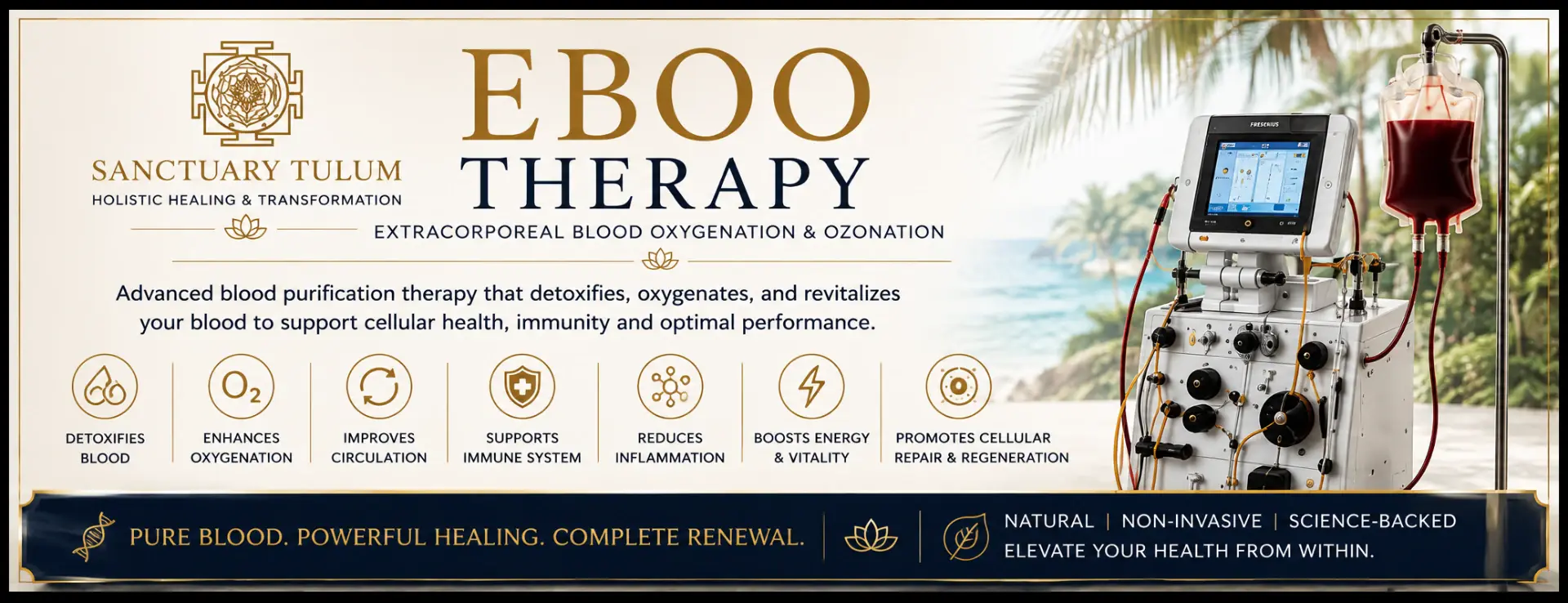
Some guests preparing for ibogaine or ayahuasca ask about EBOO (extracorporeal blood oxygenation and ozonation) as an optional step beforehand. The direct answer: EBOO is not an FDA-approved therapy for this or any indication, it is not a proven way to "detoxify the blood," and it is not required for a safe ceremony. Sanctuary Tulum offers it as an investigational, adjunctive option to certain guests after clinical screening — never as a substitute for the cardiac, psychiatric, and laboratory workup that actually determines whether ibogaine or ayahuasca can be administered safely.
Guests sometimes describe wanting to arrive at ceremony feeling physically "lighter." We take that seriously as a subjective goal, while being direct that we cannot claim EBOO clears specific toxins, prevents purging, or changes the pharmacology of ibogaine or ayahuasca. What we can say is what the session itself involves, who screens it, and how it is sequenced — the rest is left to the guest and the medical team to decide together.
Learn what actually happens during the ayahuasca ceremony itself — ritual structure, facilitator's role, the purge, and next-morning integration.
Why Pre-Ceremony EBOO Matters
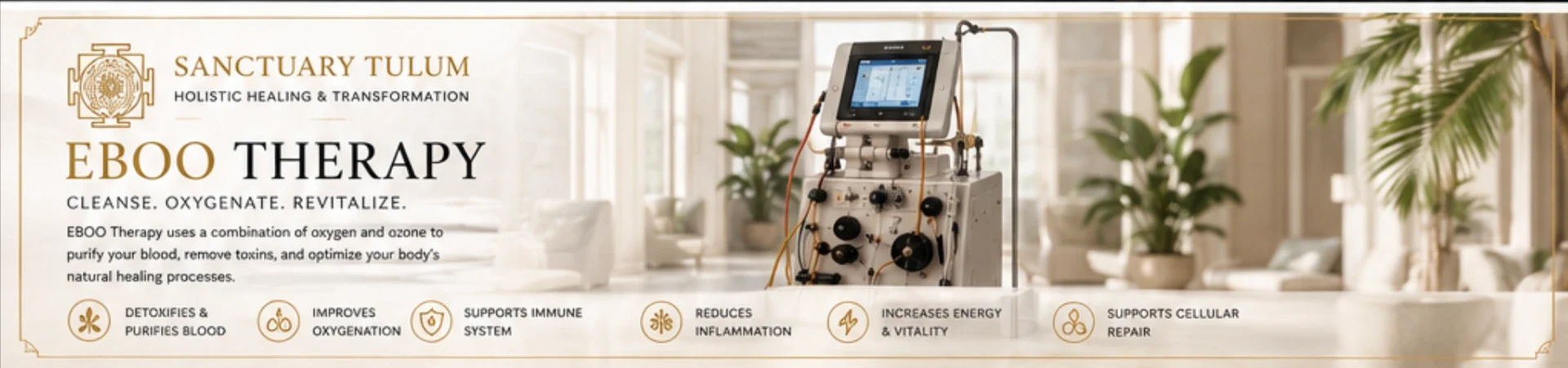
EBOO is investigational and not FDA-approved for this or any use. The items below describe what guests commonly report, not clinically proven outcomes.
- • Some guests report feeling less nauseated or fatigued going into ceremony, though this is anecdotal and not established in controlled research
- • A pre-ceremony session gives the medical team another opportunity to review bloodwork and flag drug-interaction concerns before dosing
- • Ozone exposure is associated with a transient rise in the body's own antioxidant activity in small studies, though clinical significance for ceremony outcomes is unproven1
- • Clients commonly describe subjective calm afterward — we do not claim this changes the pharmacological action of ibogaine or ayahuasca
- • It gives guests and the medical team a defined touchpoint in the days before dosing, alongside labs and vitals
The Sanctuary Tulum Pre-Ceremony Protocol
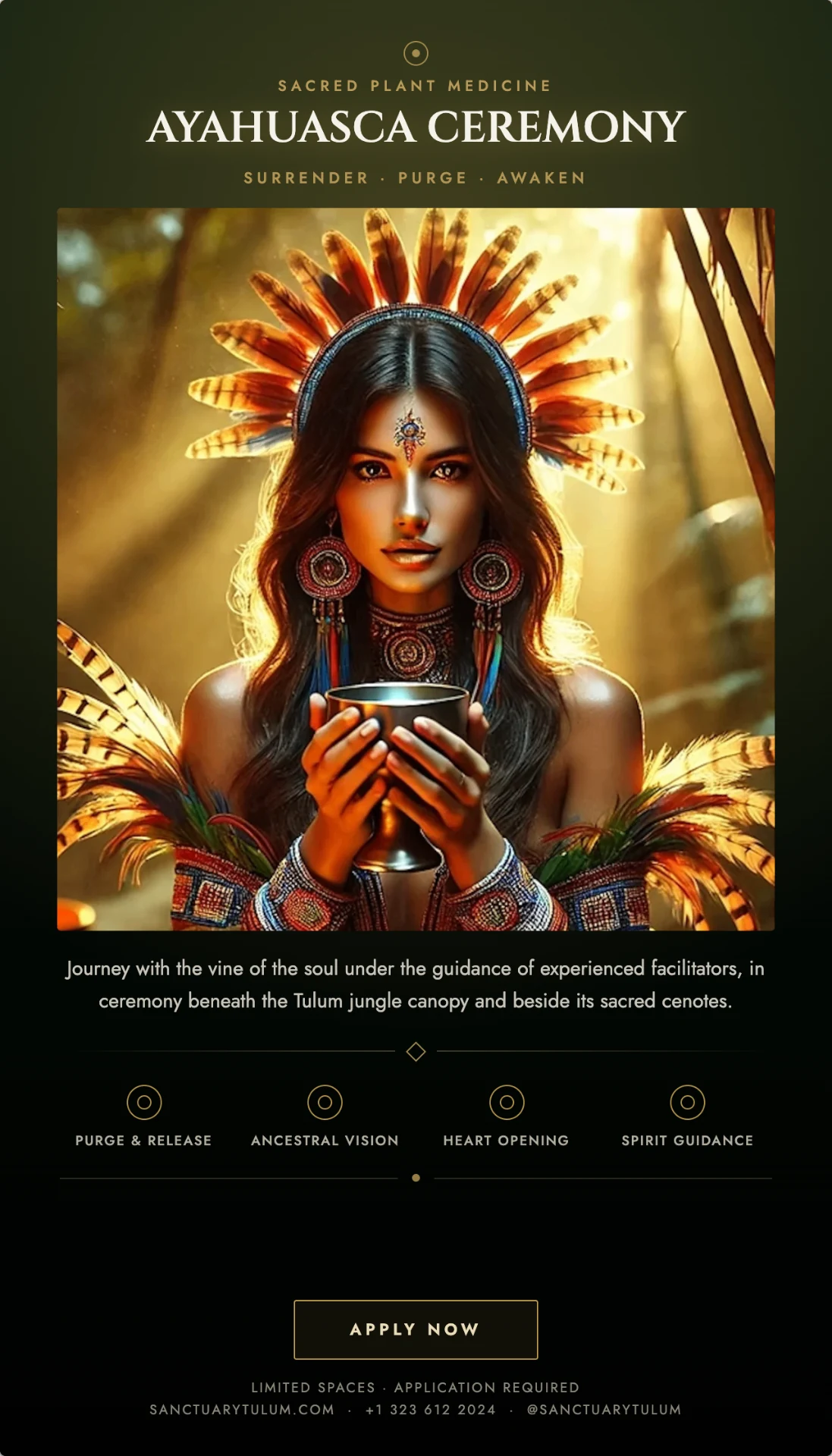
Clients preparing for Ayahuasca, Ibogaine, Psilocybin, or 5-MeO-DMT typically receive one to three EBOO sessions in the days before ceremony, integrated with our proprietary Plant Medicine Safety Protocol.
EBOO is one component of the broader detox and residential care at Sanctuary Tulum. Learn more about our medical detox center and full luxury rehab program.
Clinical Screening Before Any Session
Every prospective guest at Sanctuary Tulum completes a confidential clinical intake and full medical screening before any EBOO before plant medicine session is scheduled. The intake reviews cardiovascular status, kidney and liver function, current medications, coagulation history, and any recent infections. Guests currently prescribed anticoagulants, immunosuppressants, or SSRIs are reviewed on a case-by-case basis with their treating physician before a session is planned.1 The team never advises anyone to discontinue prescribed medication on their own.
On-Site Medical Oversight
A physician is on site during every session, supported by registered nurses and IV therapy specialists. Vital signs — blood pressure, oxygen saturation, and cardiac rhythm where clinically indicated — are monitored continuously across the session, with emergency medications and airway equipment on hand.2 Credentialing detail lives on the Medical Review Board page, and a broader description of the safety approach is available on the safest psychedelic facility page. Guests are encouraged to review both before deciding whether the program fits them.
How This Fits the Wider Program
EBOO ozone blood purification sits inside a broader biological and neurological protocol at Sanctuary Tulum rather than being offered as a standalone service. That means medical stabilization first, then a physician-scheduled combination of NAD+ IV therapy, HBOT, targeted nutrition, and — where clinically appropriate — medically supervised ibogaine treatment center, ayahuasca ceremony program, or psilocybin therapy. The full framework is described in the proprietary Pouyan Method™. The exact sequence is individual and set by the medical team after intake — one guest's plan rarely looks identical to another's.
Honest Limits of the Evidence
Published research on EBOO before plant medicine for the indications discussed here is still evolving. Therapeutic apheresis is well established for specific autoimmune and neurologic conditions in mainstream medicine,3 and ozone therapies have a longer clinical history in parts of Europe than in the United States. For broader wellness applications the evidence base is smaller and largely observational. Sanctuary Tulum does not present these protocols as cures or guaranteed treatments, and no diagnostic or prognostic claim is made outside a clinical evaluation.
Regulatory Reality: Not an FDA-Approved Therapy
EBOO has no FDA approval or clearance for use before, during, or after ibogaine or ayahuasca administration, and no regulatory body has evaluated it for this purpose. Sanctuary Tulum operates under a facility license issued by COFEPRIS, Mexico's federal health regulator, which governs the hospital and clinic — it is not a specific product approval for EBOO itself. We describe EBOO here as an investigational, adjunctive option, consistent with how the wider clinical literature treats extracorporeal ozone therapies: promising in narrow, well-studied contexts, but not validated as a pre-ceremony protocol.1 Guests should understand this distinction before deciding whether to add it to their stay.
Who This Is — and Isn't — Appropriate For
EBOO before plant medicine is generally not offered to guests with active bleeding disorders, uncontrolled cardiac arrhythmia, severe anemia, or unstable hemodynamics, and it is reviewed case-by-case for anyone on anticoagulants or immunosuppressants. It is not a workaround for a failed cardiac or psychiatric screen for ibogaine — a guest who does not clear that screening will not be dosed regardless of any EBOO session completed beforehand. Guests should also understand that EBOO does not replace short-acting opioid transition, electrolyte correction, or the other steps that determine whether ibogaine can be administered safely in their specific case.
Integration and Aftercare
A stay is only useful if it holds. Every program ends with a written integration and aftercare plan — continued check-ins with the integration team, referral to trauma-informed practitioners at home when appropriate, and lifestyle protocols covering nutrition, sleep, movement, and nervous-system regulation. Guests are encouraged to maintain their existing relationship with a treating physician and to return for booster sessions when a specific life transition benefits from it.
References
- Elvis AM, Ekta JS. "Ozone therapy: A clinical review." J Nat Sci Biol Med. 2011;2(1):66-70.
- COFEPRIS — Mexico's federal health regulator.
- Callaway JC, et al. "Pharmacokinetics of Hoasca alkaloids in healthy humans." J Ethnopharmacol. 1999;65(3):243-256.
- Alper KR, et al. "Fatalities temporally associated with the ingestion of ibogaine." J Forensic Sci. 2012;57(2):398-412.
- Koenig X, Hilber K. "The anti-addiction drug ibogaine and the heart: a delicate relation." Molecules. 2015;20(2):2208-2228.
EBOO is not FDA-approved for use before or after plant-medicine ceremonies. It is offered as an investigational, adjunctive option after clinical screening, not as a required or proven safety measure.
US-based readers evaluating travel logistics can also review our detailed guide on ayahuasca retreats near me for a NYC-focused breakdown of the legal landscape and licensed Mexico alternative.
Related EBOO Therapy Articles
EBOO before plant medicine is part of a larger sequencing philosophy at our luxury wellness center, which prepares the body physiologically before deep ceremonial work.
Ready to take the next step? Learn about our EBOO therapy program.
For the full program overview, read about our ibogaine treatment program.