
The short answer: the questions that matter most are not about thread count or ocean views. They are about who supervises your care medically, how many clients each clinician is responsible for, what happens to your medications, how privacy is actually enforced, and what support exists after discharge. The eleven questions below are the ones that reliably separate a clinically serious private program from an expensive hotel stay. This article is educational and is not medical advice; decisions about treatment and medication belong with your own physician.
Most people researching a private program are doing so during a stressful period, often for themselves or a family member, and it is easy to be swayed by a polished website or a warm admissions call. Admissions teams are, understandably, in the business of enrolling clients, so the questions below are designed to move the conversation past marketing language and toward specifics that can actually be verified. A good program will not be offended by direct questions about oversight, licensing, and limits — if anything, a willingness to answer plainly is itself a positive sign. Bring a notepad to these calls, write down the actual answers rather than your impression of them, and compare notes across every program you speak with before making a decision.

1–3: Medical Oversight, Licensing, and Staffing
1. Who provides medical oversight, and how often will I see them? Ask for the role and credentials of the physician responsible for clinical decisions, and how frequently clients are actually examined — daily, weekly, or only at intake. A program offering intravenous therapies, detox support, or plant medicine work carries real medical responsibility, and the answer should be specific rather than reassuring.
2. Which regulator licenses this facility? "Licensed" alone means nothing without a named authority. Sanctuary Tulum is licensed by COFEPRIS, Mexico's federal health regulator, which is a claim you can check. Ask the same of any program you are comparing, and ask what that licence actually covers.
3. What is the staff-to-client ratio, and how many clients are on site at once? A program with forty clients and a shared group schedule is a different product from one built around one-on-one sessions. Ask how many people will be in residence during your stay and how many hours of individual clinical time you can expect each day.
4–6: Assessment, Medication Policy, and the Daily Schedule
4. How is my individual plan built, and by whom? Ask what happens between arrival and the first full treatment day. A credible answer includes a medical history, a physical examination, laboratory work, a medication review, and a written plan that someone clinical signs off on. Ask whether the plan is revised during the stay and who decides.
5. What is your policy on my current medications? This question deserves the most attention of any on the list. No reputable program will instruct you to stop a prescribed medication before arrival, and no program should adjust psychiatric medication without physician involvement. Benzodiazepines in particular carry a documented risk of severe withdrawal when reduced abruptly, as the FDA's 2020 boxed warning update makes clear. If you take one, ask specifically how the program handles supervised reduction and read our benzodiazepine withdrawal overview before you travel.
6. What does a normal day look like, hour by hour? Ask for a real schedule, not a list of available therapies. The difference between four structured clinical hours a day and one massage plus free time is the difference between a treatment program and a holiday.
It can help to ask for a sample schedule from an actual recent week rather than an idealized template drawn up for marketing purposes. Look for a mix of individual sessions, structured group or educational time, and rest, and ask how the schedule changes as a stay progresses — a first week focused on assessment and stabilization should look different from a final week focused on integration and aftercare planning. If every day on the sample schedule looks identical, ask why, since most clinically structured programs adjust pacing and focus as a client's needs change over the course of a stay.

7–8: Scope, Exclusions, and Honest Limits
7. What do you treat, and what do you decline to treat? A program willing to name its exclusions is usually the more trustworthy one. Ask whether the facility accepts clients with acute psychosis, unstable cardiac disease, active suicidal intent, or complex medical conditions requiring hospital-level care. A program that claims it can help with everything is describing marketing, not medicine. Our issues we treat page is an example of the specificity you should expect.
8. What happens if I become medically unstable during the stay? Ask about on-site emergency equipment, the distance to the nearest hospital, transfer arrangements, and whether a physician is reachable overnight. This is a question worth asking even when you expect never to need the answer.
9: What Is Actually Included in the Price
9. What is included, and what is billed separately? Ask for the inclusions in writing: accommodation, meals, physician time, laboratory work, individual sessions, specific therapies, airport transfer, and aftercare. Then ask what is not included — additional intravenous therapies, imaging, specialist consultations, extended stays, or companion accommodation are common add-ons.
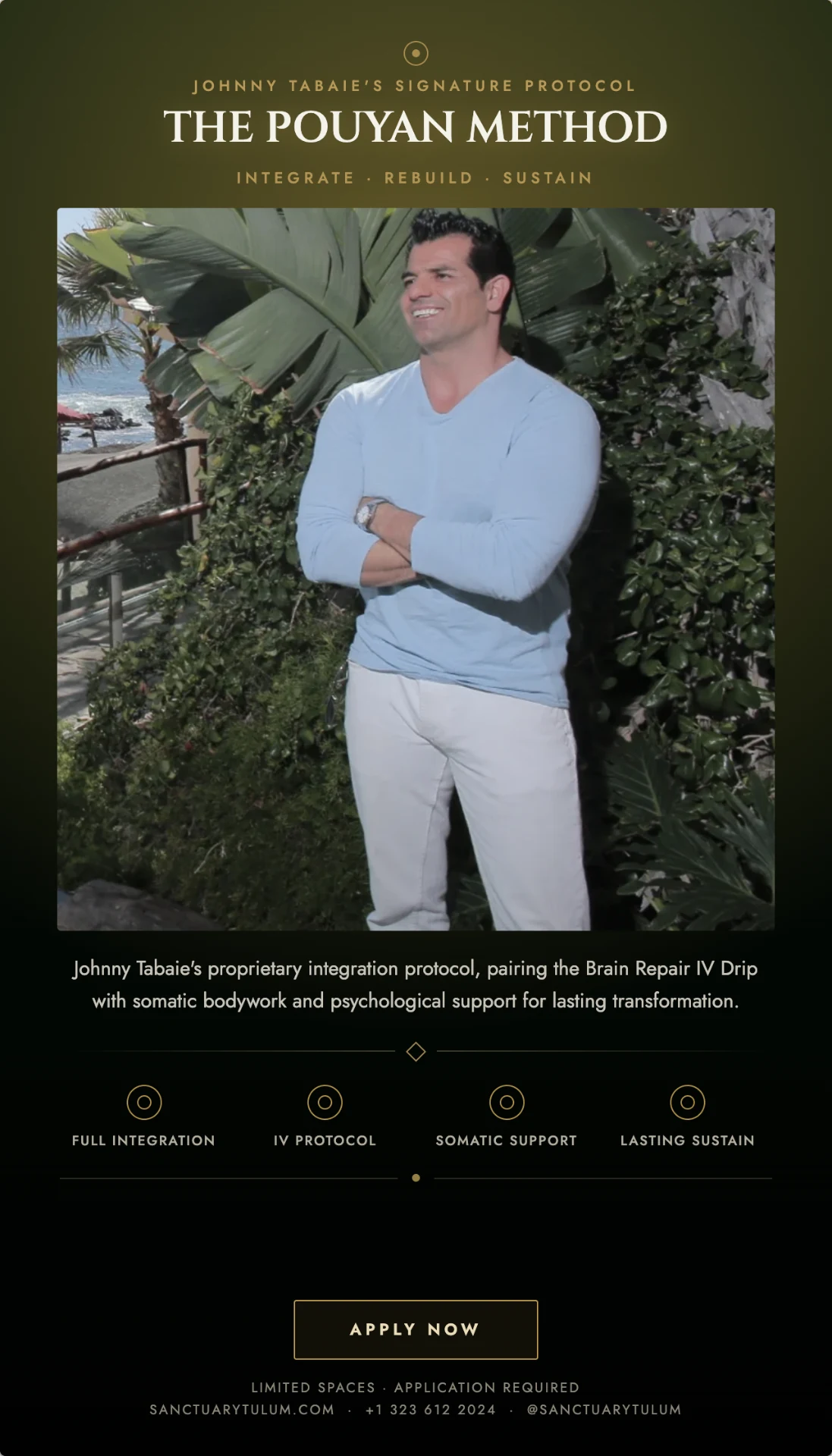
Ask also how the program is structured over time. A multi-week residential program built around a defined protocol — in our case the Pouyan Method™, a proprietary trademarked protocol — should be able to tell you what each week is intended to address. Compare that against the published programs and pricing of anywhere you are considering.
Get the inclusions and any conditions on refunds or program changes in writing before paying a deposit — a verbal assurance on a sales call is not something you can point back to later. Ask specifically what happens if you need to leave early for medical or personal reasons, whether any portion of the fee is refundable, and whether an extension of your stay is possible if your clinical team recommends more time, and at what additional cost.

10–11: Privacy and What Happens Afterwards
10. How is my privacy protected in practice? Confidentiality policies are easy to claim. Ask concrete questions: who has access to your file, whether staff sign confidentiality agreements, whether other clients share common areas, whether photography is restricted, how enquiries from employers or media are handled, and how your name appears on any payment record.
11. What does aftercare look like in month one, three, and six? The weeks after discharge are where progress is most often lost. Ask whether continuing contact is included or charged, who provides it, how often, and whether the program will coordinate with a physician or therapist at home. A program that goes quiet at checkout has answered the question.
A Short Checklist to Take Into Every Call
- Named physician responsible for clinical oversight, and their examination schedule
- Named licensing regulator and the country of licensure
- Clients on site at one time, and individual clinical hours per day
- Written medication policy, with no instruction to stop anything before arrival
- An hour-by-hour sample day, in writing
- Stated exclusions and medical emergency procedure
- Itemised inclusions and a list of likely additional charges
- Specific, checkable privacy measures
- A written aftercare plan with defined contact points
None of these questions are meant to catch a program in a lie — most admissions staff are answering honestly to the best of their knowledge. The point is simply that specific, checkable answers are more useful than reassuring ones, and a program confident in its own standards will not hesitate to provide them in writing before you commit to travel or payment.
If a program answers these openly, you are dealing with people who have thought about clinical responsibility. If the answers stay vague, or arrive only as brochures and testimonials, that is information too. To continue, read what a luxury program actually includes or speak with our team through the contact page.
Educational content only. This article does not diagnose, treat, or replace care from a licensed physician, and nothing here is a promise of any particular outcome. Never start, stop, or change a prescribed medication without medical supervision.
For the full program overview, read about our private luxury rehab program.
For the full program overview, read about our luxury mental health treatment.